
Vol. 43 Yanolja Festival Index
- Reg Date
- 2026.06.17


Yanolja Festival Index: A New Paradigm for Measuring Global Festival Attractiveness
Soocheong Jang, Professor at Purdue University & Director at Yanolja Research / [email protected]
Kyuwan Choi, Professor at Kyung Hee University & Director at H&T Analytics Center / [email protected]
The global tourism market is now rapidly shifting from a competition of "how many tourists can be accommodated" to "how intense and memorable of an experience can be provided." Over the past few decades, major tourist cities and countries around the world have focused on a supplier-oriented competition centered on "logistics" and infrastructure—such as expanding airport capacities, increasing the number of large hotel rooms, and broadening physical transportation networks—to efficiently accommodate massive influxes of visitors. However, entering the post-pandemic era, travelers' decision-making criteria and motivations for choosing destinations are undergoing a fundamental transformation. Modern tourists no longer remain passive observers who simply take pictures in front of famous buildings or landmarks and return home. They are evolving into active subjects who deeply immerse themselves in the unique cultural narratives offered by a destination, share emotional connections with local communities, and actively seek "meaningful experiences" and "emotional journeys" that allow them to expand their sense of self.
Amidst this shift in the demand paradigm, festivals have emerged as the most powerful and core asset for maximizing the experiential competitiveness of tourist cities. A festival is not merely a one-off event that takes place for a few days and disappears. It is a cultural stage that most compactly and intensely conveys a region's history, culture, identity, and the sentiments of its community to global tourists, serving as a global platform that generates explosive visitation demand. According to the "2026 Global Economic Significance of Business Events" study conducted by the Events Industry Council (EIC) and Oxford Economics, the global business events industry, including festivals, recorded approximately 1.65 billion participants, generated $1.3 trillion in direct spending, supported a total of 24.2 million jobs, and delivered a total GDP contribution of $1.8 trillion in 2025. Oktoberfest in Munich, Germany, imprints the city's brand on the world and generates a massive economic impact of roughly 1.4 billion euros annually from a single event. Similarly, the Edinburgh Festival in the UK and the Rio Carnival in Brazil have established themselves as iconic engines driving their respective national tourism industries.
However, despite the tremendous growth in the status and impact of festivals, the tourism industry and academia have thus far failed to provide a clear and scientific answer to the most fundamental question: "What makes a festival truly attractive?" Existing evaluations of festival competitiveness have heavily relied on supplier-centric quantitative indicators, such as the number of visitors, tourism revenue, economic spillover effects, frequency of media exposure, and the scale of the invested budget. These metrics may be useful for demonstrating operational performance from the administrative perspective of the suppliers who host the festival and execute the budget. Yet, they possess inherent limitations in adequately capturing the qualitative, consumer-centric evaluations—such as what level of emotion the visiting tourists felt in the on-site atmosphere, what inconveniences they experienced regarding amenities or movement paths, and whether they would strongly recommend the event to others or intend to revisit.
In other words, evaluating a festival using the existing approach is akin to determining whether a specific restaurant is worthy of 3 Michelin stars based solely on the price of the food, the number of chairs in the dining room, the daily number of patrons, and the financial scale of the kitchen equipment—without ever asking if the customers were satisfied with the taste of the dishes and the staff's service. The intrinsic value of a festival cannot be explained merely by how many people attended. What truly matters is what they felt, what they remembered and experienced, and whether they perceived the experience intensely enough to choose it again or recommend it to others. Therefore, moving away from past methods that rely solely on the perspectives of festival operators or administrative agencies, there is now an urgent need for an objective, consumer-based measurement system that systematically reads and analyzes the evaluations, emotions, and recommendation intentions left directly by millions of visitors and potential tourists.
Driven by this critical awareness and the limitations of existing academic measurements, Yanolja Research, in an international joint study with the CHRIBA Research Institute at Purdue University in the U.S. and the H&T Analytics Center at Kyung Hee University, has developed the 'Yanolja Festival Index,' officially named the 'Global Festival Attractiveness Index,' for the first time. Breaking away from the supplier's viewpoint, this index is a paradigm-shifting tool designed to measure the true attractiveness and global reputation of festivals using objective data, strictly from the perspective of the tourist—the consumer. This insight aims to comprehensively cover a wide spectrum, from the anthropological and sociological theoretical backgrounds that define the essence of festivals to an innovative Artificial Intelligence Natural Language Processing (NLP) framework utilizing vast amounts of multilingual social big data, and finally to a landscape analysis of the top 300 global festivals ranking published as a result of this research. Through this, we seek to deeply examine how festivals function as core assets for a tourist destination's competitiveness and what strategic implications data-driven festival evaluations will provide for future city branding and tourism policies.
Theoretical Background: The Intrinsic Value and Attractiveness of Festivals
To design sophisticated data indicators for measuring global festival attractiveness, an academic and fundamental understanding of "how to define a festival" and "why humans are so enthusiastic about leaving their daily routines for unfamiliar festival environments" must precede all else. Only when the conceptual boundaries of a festival are academically established and the motivations for human participation are identified, can we scientifically select which events to include or exclude from a global comparative analysis.
Historical Evolution and Three Essential Functions of Festivals
From a linguistic perspective, the Sino-Korean word for festival, Chukje (祝祭), combines Chuk (to pray) and Je (ritual). It originally began as a religious ceremony to offer sacrifices to the heavens and deities, praying for the community's abundance and well-being. The English word Festival similarly originates from the Latin festivus (meaning joy) and festus (meaning a religious holiday), perfectly illustrating its origins as a blend of sacredness and secular enjoyment.
Historically, if ancient society festivals possessed a strong ritualistic nature to overcome droughts and diseases while praying for communal survival, Middle Age festivals functioned as a time and space for liberation, allowing people to temporarily break away from strict feudal hierarchies and religious norms to release primal human desires. Moving into the modern era, festivals became a venue for identity formation, inspiring pride and strengthening the solidarity of scattered nations, states, or local communities. In contemporary capitalist society, they have evolved into "complex amusement assets" that highly integrate the pursuit of maximized personal enjoyment, cultural consumption, and local economic revitalization.
In this respect, festivals align with the spirit of civic bonds and communal participation emphasized by Jean-Jacques Rousseau in The Social Contract. For a community to sustain itself, trust, participation, and a sense of belonging among its members are essential, and a festival is precisely the arena where such social cohesion is symbolically practiced.
Although the historical background and purposes of hosting have changed significantly over thousands of years, three anthropological essences that distinguish festivals from ordinary permanent events or accidental street gatherings have remained powerfully intact. A festival is not simply an entertainment event; it is a special cultural device that simultaneously encapsulates a community's sacred origins, social liberation, and collective identity. Table 1 below summarizes these three essential functions and their operational principles, along with examples of how they are projected in modern festivals.
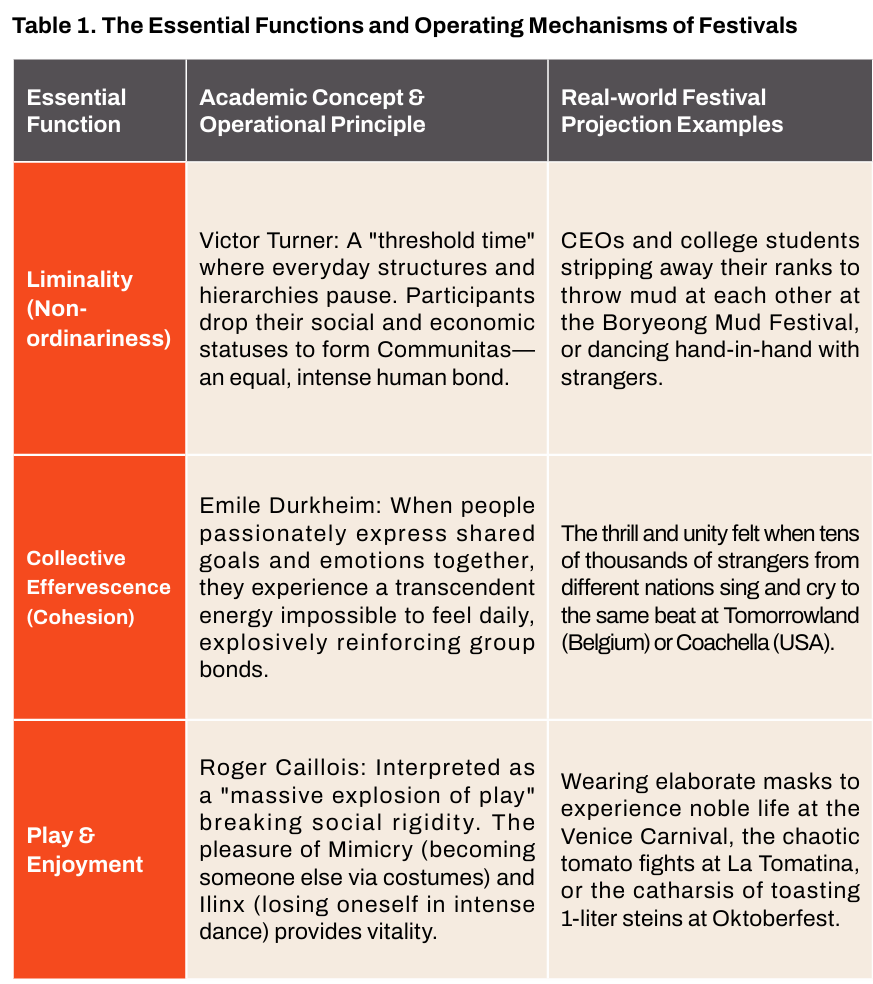
Thanks to these three essences, festivals have survived for thousands of years alongside human history. In the modern social media environment, these essential functions possess an even more powerful explosive force, amplified digitally. The emotion of communitas and collective effervescence felt by visitors on-site easily transcends text barriers, spreading instantly worldwide through Instagram Reels, YouTube Shorts, and TikTok videos. This creates a massive virtuous cycle that stimulates new desires for escape and visitation in those who watch them.
Tourism Motivation Theory and the Psychological Mechanism of Attractiveness
The aforementioned essential functions of festivals combine with Tourism Motivation Theory to theoretically complete the psychological measurement mechanism of "festival attractiveness," which induces physical spatial movement in humans. According to the classic Push-Pull Framework proposed by Dann (1977) and Crompton (1979), human tourism behavior occurs entirely through the interaction of internal motives and external incentives.
- Push Factors: These answer the question, "Why do I want to leave my daily life and go to an unfamiliar place?" This includes psychological deficiencies and motivations originating from within the tourist, such as the need to relieve extreme work stress, a desire for complete escape from a boring daily routine, and a primal craving for unfamiliar stimuli.
- Pull Factors: These answer the question, "With millions of travel destinations in the world, why go to that specific festival?" External environmental attributes that strongly draw people's footsteps to a specific time and space—such as the unique visual spectacle of the red tomato war at Spain's La Tomatina, the fantastic ice sculpture atmosphere of Japan's Sapporo Snow Festival, the stage energy exuded by global artists at Coachella, or positive global word-of-mouth—serve as pull factors.
Festival Attractiveness refers to the visitor's comprehensive perception of these powerful "pull" elements that successfully convert a tourist's internal desire to escape (push) into the physical action of actually visiting, ultimately leading them to choose a specific destination among countless alternatives.
Modern tourists accumulate information regarding a specific festival destination across two dimensions in their minds:
- Cognitive Evaluation: Fact-based, objective perception. (e.g., "The Coachella Festival currently features the most famous artists in the world.")
- Affective Evaluation: Emotion-driven descriptions. (e.g., "The sunset desert atmosphere of Coachella I saw on my friend's Instagram was insanely free and fantastic.")
The Yanolja Festival Index defines the sum of these combined cognitive and affective evaluations as the true essence of festival attractiveness, quantifying this psychological mechanism through empirical big data.
Operational Definition of the Research Subject and Categorization of Global Festivals
To rigorously ensure the statistical validity and comparability of the global index, this study established a strict and conservative operational definition of the scope of festivals based on the academic literature of Getz (2008) and Harry van Vliet (2019). If every event where a large crowd gathers is defined as a festival without clear criteria, the focus of the analysis would blur, the quality of the data would be severely compromised, and the reliability of the index would collapse.
Three Essential Prerequisites and Exclusion Criteria for Global Festival Comparison
For statistical consistency, the global festivals subject to this study must perfectly satisfy all three of the following prerequisites:
- Planning: The event must have a thoroughly intentional and structured organization and operational system. Spontaneous crowd gatherings triggered by specific events, such as street cheering for the World Cup, or regular, year-round permanent performances like university district theater plays, are excluded from the analysis.
- Spatiotemporal Fixity: The event must be held at a specific location with clear start and end dates. Fluid, guerrilla-style events where the timing or location randomly changes each time are excluded from comparative research, as they lack reliability and make consistent time-series data tracking impossible.
- Purposefulness: The event must be a gathering aimed at achieving a common purpose and enjoying culture. Commercial promotional events hosted by specific companies to sell new products, or private gatherings such as alumni reunions, weddings, and corporate workshops, are strictly excluded.
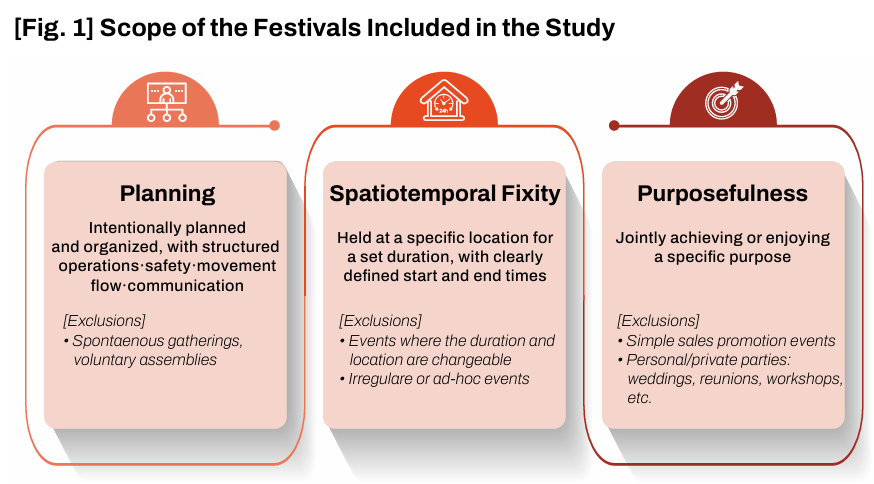
By strictly applying these academic criteria, sports competitions—even mega-events boasting astronomical scales like the Olympics or the World Cup—were fundamentally excluded from the analysis, as their core visitor experience is based on "competition and winning/losing" rather than "cultural enjoyment." Furthermore, international conferences and industrial trade shows, whose primary purposes are the exchange of industrial information and B2B business transactions, were also excluded. Solo concerts by specific artists were omitted as well, given that the purpose of consumption and the criteria for evaluation are extremely concentrated on the individual capabilities of a single singer.
However, "Music Festivals" such as Coachella, Glastonbury, and Tomorrowland were considered core forms of modern festivals and included as essential research subjects. These act as massive, complex platforms where extensive artist lineups seamlessly integrate with camping sites, food trucks, and local lifestyle cultures. This conceptual boundary of research subjects was strictly controlled at a laboratory level to fundamentally prevent the “statistical fallacy of comparing apples to oranges.”
Classification into 5 Typologies of Global Festivals for Data Consistency
Simply lining up the vast array of global festivals uniformly from 1st to 300th hinders the qualitative interpretation of the data. Evaluating Brazil’s Rio Carnival (cultural heritage) and the USA’s Coachella (music festival) on the exact same scale makes a fair comparison difficult. Above all, due to the nature of social data analysis, the linguistic structure and textual context of online reviews left by visitors diverge fundamentally depending on the festival's "theme and core content."
While reviews for music festivals are flooded with mentions of lineup brilliance, sound system quality, and the crowd's dancing and energy, reviews for food festivals focus heavily on the taste and freshness of ingredients, menu prices, overcharging, and waiting in lines. Therefore, by cross-referencing the classification systems of government agencies and academic research, global festivals were categorized into 5 major typologies to maximize the consistency of the social data analysis.
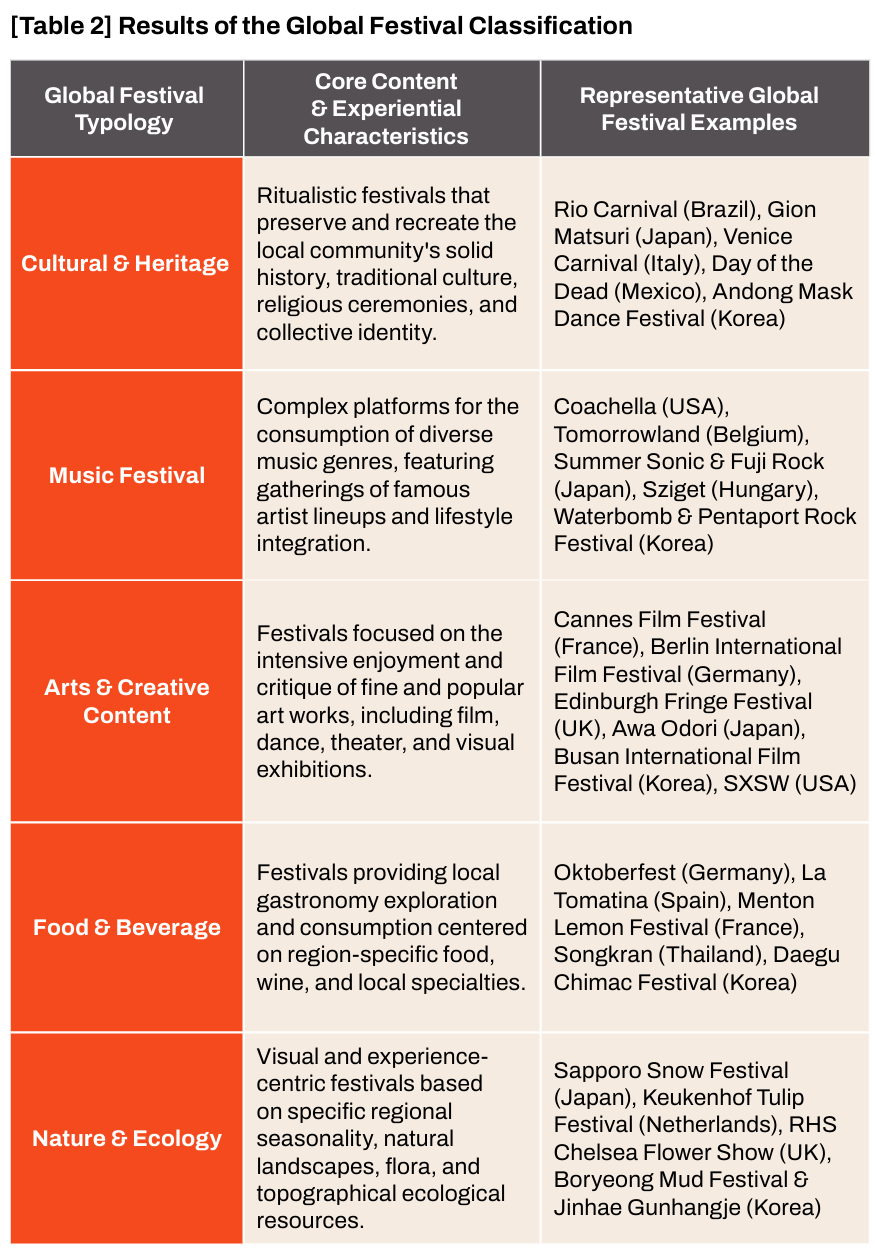
This detailed, theme-oriented classification enables segmented strategic benchmarking, such as asking "What is the world's best music festival?" or "What is the best nature and ecology festival in Asia?"—ultimately making the interpretation of the index data much more multidimensional and sophisticated.
Global Festival Attractiveness Diagnostic Framework: Anatomy of Two Core Axes and Three Macro Dimensions
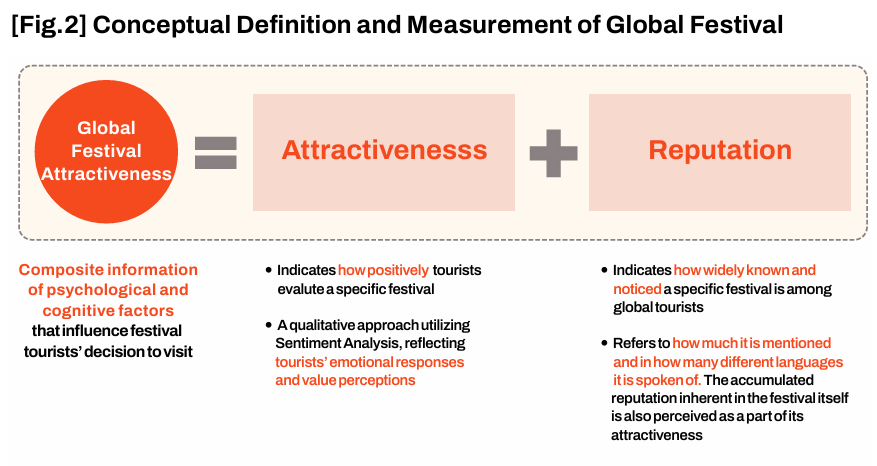
After strictly defining the concept and scope of a festival, we devised an attractiveness framework centered on two independent main engines—‘Popularity and Reputation’ and ‘Attractiveness’—to translate the abstract and intangible subject of "tourists' intimate experiences" into a substantively measurable indicator system.
Intersection of Cognitive and Affective Engines: Reputation and Attractiveness
In the tens of billions of dollars global festival market, the competitiveness of individual festivals must be measured comprehensively, yet separated strictly into two aspects.
First is the cognitive engine: 'Popularity and Reputation'. This refers to the quantitative aspect of the festival and the rational evaluation made by the tourist's 'head'. Specifically, it quantifies how widely known and frequently discussed a specific festival is within global tourism discourse. Even if a festival is a "hidden gem" with excellent content, if people around the world do not know of its existence, they will never even have the chance to book a flight and visit. Therefore, popularity is the foundational strength required to enter a visitor's Evoked Set. From a tourist's perspective, the fact that many people from other countries are talking about a certain festival acts as powerful Social Proof, significantly reducing the psychological risks and cost burdens associated with long-distance travel. This is quantified into two sub-indicators: 'Buzz Volume', which represents the absolute number of mentions on social big data, and 'Language Diversity', which measures how evenly those mentions are distributed across different global language spheres. An isolated event that records explosive buzz solely in its domestic language has a fundamentally different brand status than a global event evenly discussed in multiple languages such as English, Spanish, and Japanese.
Second is the affective engine: 'Attractiveness'. This represents the qualitative aspect of the festival and the emotional evaluation made by the tourist's 'heart'. Instead of relying on fabricated survey responses, this indicator extracts the direction and intensity of positive or negative emotions from the vast digital footprints visitors honestly left on their personal SNS spaces without filtering. From anger like "The entrance line under the scorching sun was terrible" to high praise like "The energy of the main stage was an unforgettable catharsis," artificial intelligence Sentiment Analysis systematically reads the actual consumers' emotional responses to the festival experience. Therefore, the 'Positive Ratio'—the proportion of positive responses among all opinions—becomes the most crucial metric defining a festival's qualitative attractiveness.
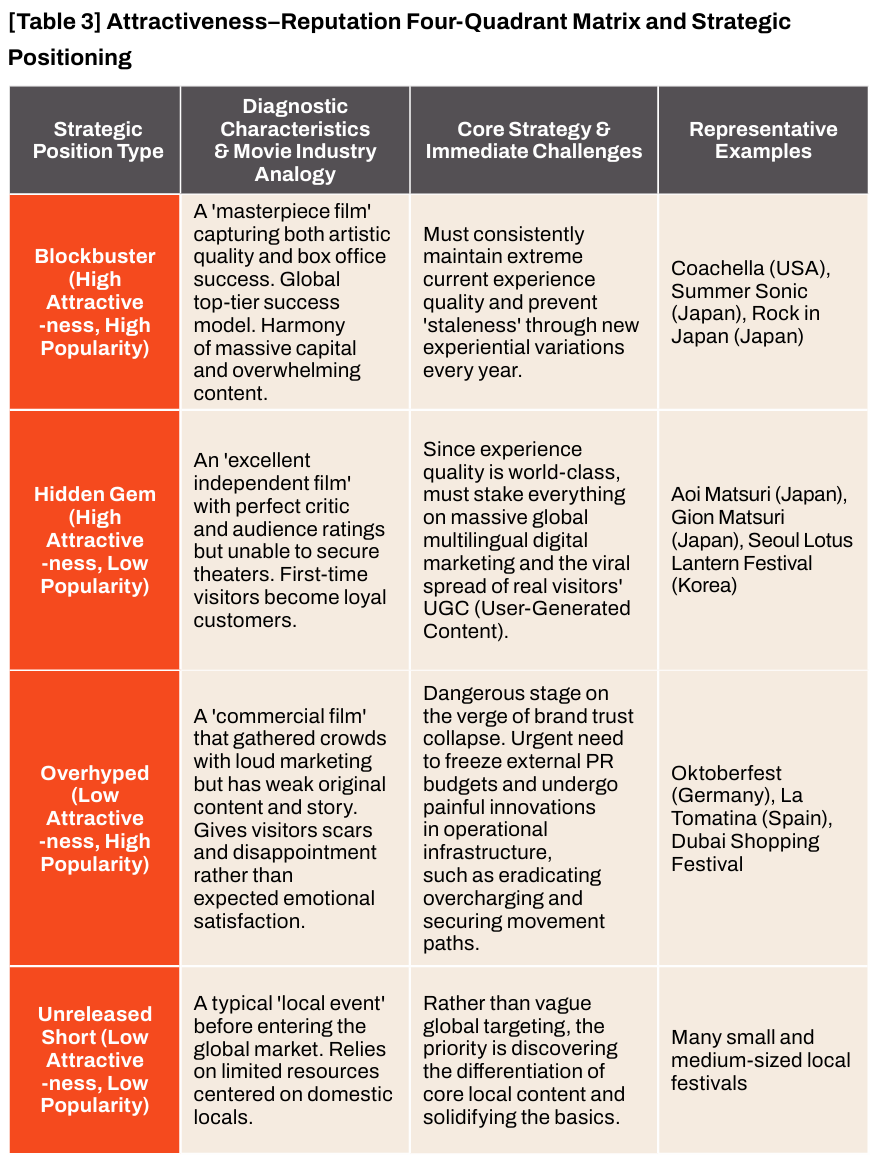
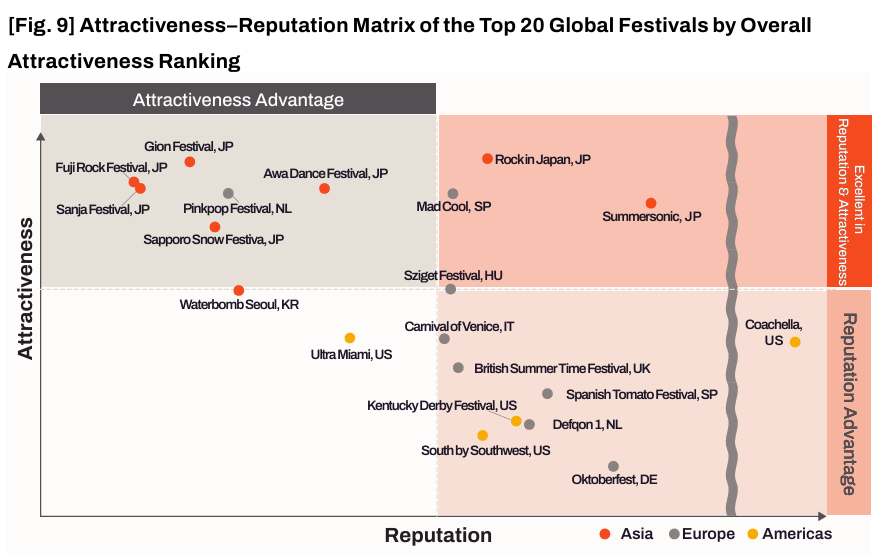
By cross-combining these two axes, an Attractiveness-Reputation 4-quadrant matrix is completed, revealing the exact current status and position of individual festivals within the ecosystem, much like the box office structure of the movie industry.
Anatomy of Experience: 3 Macro Dimensions and 10 Sub-dimensions
To dissect the multidimensional attractiveness tourists experience at a specific festival in detail, this index fuses the 4-realm experience structure of the Experience Economy theory (Pine & Gilmore, 1998) and the Festivalscape concept (Lee et al., 2008), which deals with the physical festival environment, to materialize an evaluation system of 3 macro dimensions and 10 sub-dimensions, as shown in Table 4.
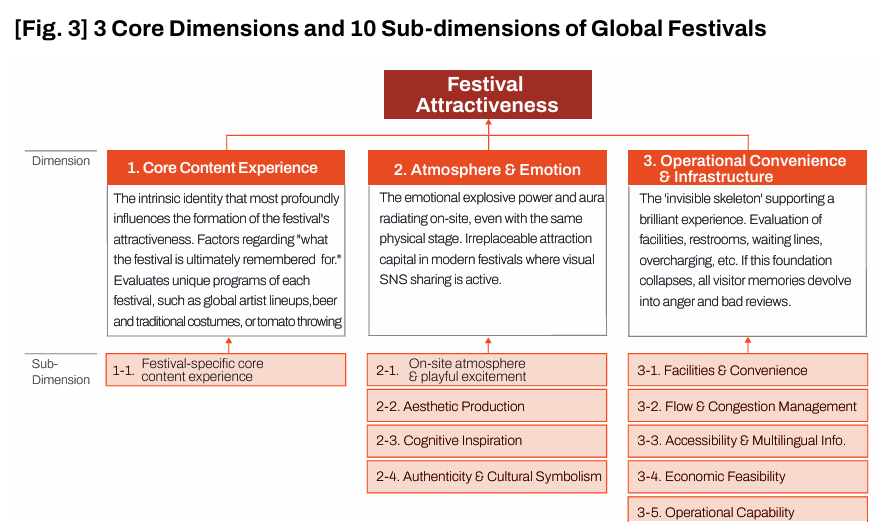
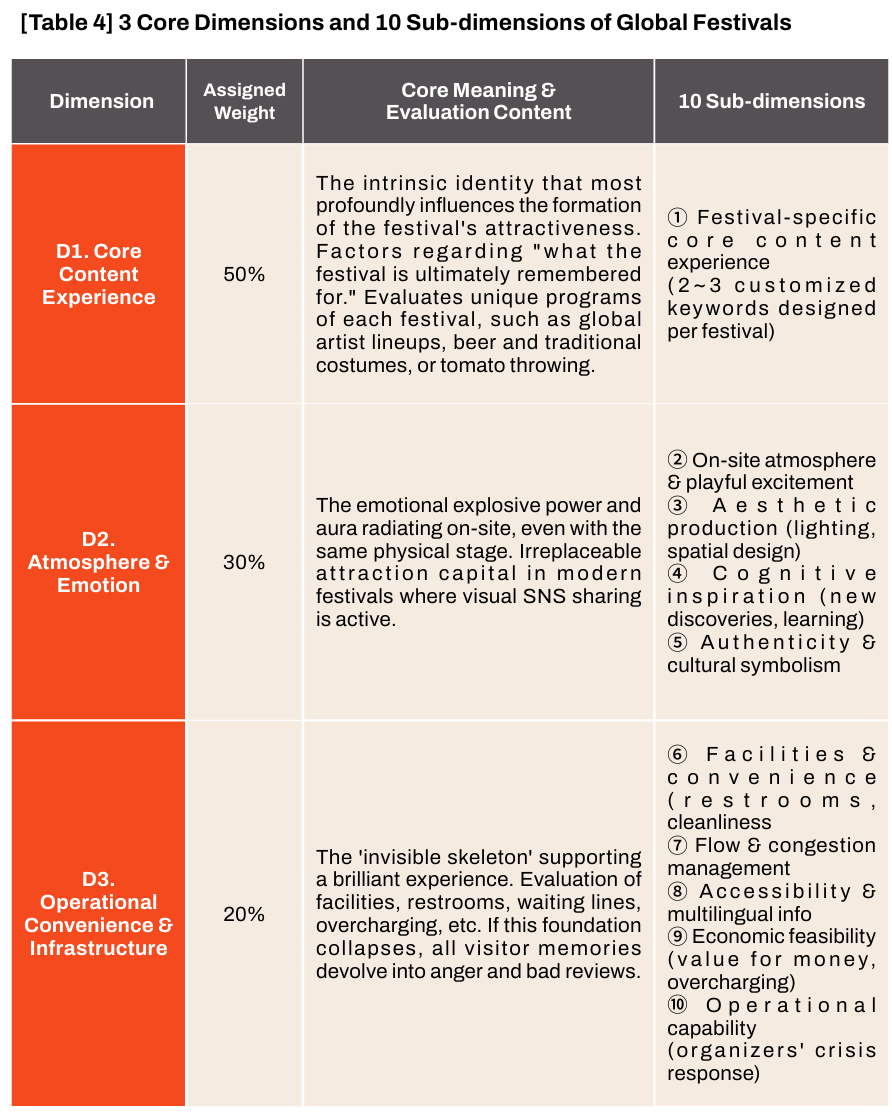
To avoid the error of simply evaluating a ramen shop and a steakhouse by the same standard, this study did not force mechanical common keywords across all festivals evaluated in D1 (Core Content Experience). It is characterized by maximizing qualitative consistency by precision-matching customized keywords for each festival—such as keywords related to performing artists and stage production for Coachella, and keywords related to Munich beer and traditional costumes for Oktoberfest.
Digital Ethnography and Multilingual Social Big Data-Based Analysis System
In modern society, hundreds of millions of tourists pour the excitement, emotion, and displeasure they experience at festivals into the digital space in real time. Tracking the vast digital footprints left by tourists worldwide, and scientifically collecting and analyzing them to read the collective meaning of the festival experience, can be called "Digital Ethnography" on a massive global scale. While traditional festival evaluations relied on small survey samples of a few hundred people and the inherent bias of respondents potentially tailoring their answers to the researcher's intent, this index takes the approach of decoding the vast digital emotional records voluntarily written by tens of millions of travelers into the language of data science.
Establishment and Refinement of a Global Multilingual Data Collection Infrastructure
To secure global representativeness and validity of the analysis, the scope of data collection languages was significantly expanded to 14 major global languages: English, Spanish, French, Portuguese, Arabic, German, Japanese, Korean, Russian, Indonesian, Turkish, Vietnamese, Italian, and Thai. The purpose of this is to holistically capture the collective perceptions of multinational tourists with diverse cultural backgrounds—such as those from South America, Europe, and Asia—rather than relying solely on English-based evaluations within the U.S. when evaluating an American festival. However, Chinese was inevitably excluded from this study's scope because it is difficult to fully guarantee data reliability due to the Chinese government's policies on overseas data transfer from social platforms and constraints on security system accessibility. This is an explicit limitation of the current index and a task to be supplemented in the future if data accessibility and verifiability are secured.
Data collection was conducted on digital records accumulated over a full year, from May 2025 to April 2026. For the platform, the world-class UK-based Brandwatch solution was utilized, boasting coverage of over 6 million social channels across 229 countries. First, a list of 1,436 festivals was compiled. Following a pilot test, festivals with an annual buzz volume of 500 or more mentions were initially selected. Subsequently, considering the representativeness of festival types and the maximum/minimum values of data distribution, a total of 560 festivals were selected as the final subjects for the main survey, and data for these festivals was collected in earnest. During the collection process, to maintain strict data purity, corporate press releases and unidirectional promotional news reports were excluded from the analysis. Instead, targeting was restricted exclusively to Instagram, Facebook, X (formerly Twitter), YouTube comments, Reddit, TripAdvisor, and global review forums, which vividly capture the "raw voices" of travelers via User-Generated Content (UGC).
The success or failure of data collection depends on the sophistication of keyword design, which filters out inappropriate information from tens of millions of text inputs to capture only meaningful signals. Through a three-stage expert verification and pilot testing process, the research team completed a final library of 1,025 keywords and conducted a refinement process to remove "contextual noise" based on this library. For example, when tracking nature and ecology festivals like the Dutch Tulip Festival, simply entering the word "Bird" could result in hundreds of thousands of irrelevant results pouring in, such as ads for the smartphone game "Angry Birds" or "Early Bird" discount tickets. Similarly, the keyword "Weather" could cause errors by randomly extracting meteorological agency forecast articles or general weather information instead of capturing the tourists' actual experiences.
Advancement of AI-Based Transformer Multilingual Sentiment Analysis
The collected and refined data was precisely classified into positive, negative, and neutral categories using Brandwatch's advanced Transformer-based AI multilingual sentiment analysis model. The power of this model lies not merely in mechanically counting the dictionary number of positive and negative words, but in contextually interpreting the overall context and subtle nuances of a sentence.
For instance, a sentence written by a young Gen Z tourist stating, "This festival was sick," contains the dictionary-defined negative word "sick." However, the algorithm discerns that in the actual context, the expression is used as a powerful compliment denoting joy and positivity. Furthermore, it distinguishes whether the expression "cheap" contextually means high praise for "good value for money" or anger that the "quality is terribly shoddy." It also scans complex compound hashtags (e.g., #bestdayever) as well as emotional signals from emojis—such as fire or heart marks—that represent extreme excitement more explicitly than text. Through this, the intimate satisfaction and dissatisfaction of visitors were quantitatively translated into a numerical "Positive Ratio."
Indicator Normalization and Dynamic Weighting Modeling
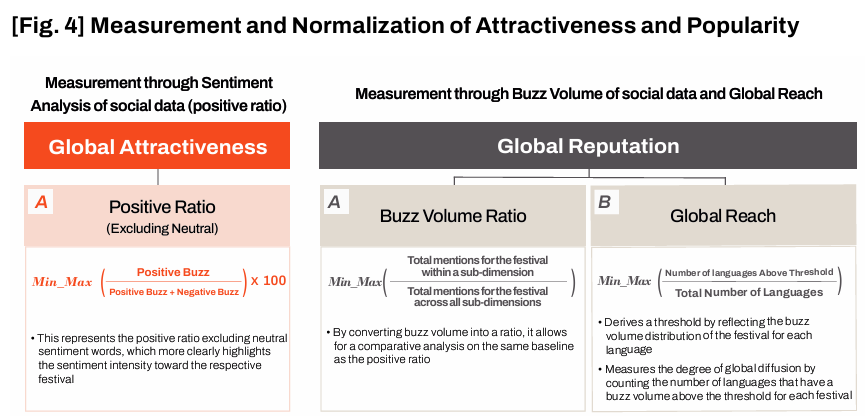
The "Positive Ratio (%)", absolute "Buzz Volume (count)", and "Global Language Diversity (count)" extracted for each sub-dimension essentially have completely different mathematical units of measurement. It is the same logic as being unable to directly add grams of flour to liters of water. To integrate these, the research team applied a "Min-Max Normalization" technique based on the minimum and maximum values of the collected data, transforming all indicators into mutually comparable standard scores ranging from 1 to 10 points.
The most innovative scientific approach in this process is the "Dynamic Weighting" method used to integrate the 10 sub-dimensions into the top 3 macro dimensions. Unlike previous studies that relied on the subjective intuition of scholars or expert panels to uniformly assign weights—such as stating, "Flow control is important, so let's assign a fixed weight of 20%"—this index's algorithm is designed so that the system reverse-calculates and applies the proportion of buzz volume for each element as the weight itself, based on how much visitors actually mentioned specific elements online in that given year.
For example, if audiences at a specific music festival held in 2026 poured out overwhelmingly more complaint texts about "terrible portable toilets" and "a 3-hour entrance line in a heatwave" than praises for the spectacular stage lineup, the AI algorithm determines that the influence of "operational infrastructure" on the experience quality of that festival was much greater than usual. Consequently, it heavily readjusts the weight of the infrastructure sector and reflects this in the total score. This is a rational evaluation modeling approach that minimizes the researcher's subjective bias by letting the data itself prove and vote on its importance.
Global Festival Attractiveness Index Calculation Process: From Sub-dimensions to Comprehensive Index
Based on this normalization and dynamic weighting calculation process, the final attractiveness of a global festival was calculated through three major steps.
The first step is the process of calculating the attractiveness of individual festivals for each of the 10 sub-dimensions. In this stage, the social data collected for each festival is classified according to the keyword system of each sub-dimension, and the positive ratio, mention volume ratio, and global language diversity are respectively calculated from that data. The positive ratio is an indicator of emotional attractiveness showing how positively visitors evaluated a specific festival, while the mention volume ratio and global language diversity are indicators of popularity and reputation showing how frequently and across how many diverse language spheres the festival is discussed within global discourse. As such, the attractiveness by sub-dimension is not a simple satisfaction score but is designed as a composite indicator combining visitors' emotional evaluations with global awareness and spreading power.
Specifically, this study considered "Attractiveness" and "Popularity/Reputation" as two equally important axes in the process of calculating the global attractiveness per festival. Attractiveness is measured by the positive ratio derived through sentiment analysis, and popularity/reputation is measured by combining the buzz volume ratio and global language diversity. Because these three indicators have different raw data units, they were normalized to identical scales between 1 and 10 points before integration. This aimed to reduce distortions where either only festivals with overwhelmingly high absolute mention volumes benefit, or conversely, festivals with high evaluations based solely on a few positive responses are favored, thereby seeking to reflect the quality of affective experience and presence within global discourse in a balanced manner.
The second step is the process of integrating the scores of the sub-dimensions into the top 3 macro dimensions. The 3 main dimensions of this study consist of the festival's core content experience, the atmosphere and emotion of the festival, and operational convenience and infrastructure. At this time, the attractiveness for each dimension is calculated by multiplying the attractiveness scores of the sub-dimensions included in that dimension by their respective sub-dimension weights. Importantly, the weights for each sub-dimension are not arbitrarily fixed values assigned in advance, but are calculated based on how much each sub-dimension was mentioned in that year's social data. In other words, what elements visitors talked about the most regarding a specific festival is directly reflected as the relative importance explaining that festival's experience.
The third and final step is the process of calculating the ultimate global festival attractiveness score by synthesizing the scores of the 3 main dimensions. Reflecting the intrinsic structure of the festival experience, this study assigned a priori dimensional weights of 50% to the 'core content experience of the festival,' 30% to the 'atmosphere and emotion of the festival,' and 20% to 'operational convenience and infrastructure.' This is based on the judgment that while a festival's competitiveness stems first and foremost from its unique content and programs representing the festival, sustainable global attractiveness is achieved only when combined with the emotional immersion and affective atmosphere of the site, along with the operational and infrastructure quality that supports them.
Therefore, the final global festival attractiveness score is the result of a stepwise combination of the specific experiences of visitors captured in the sub-dimensions, the structural characteristics of the festival experience integrated by dimension, and the a priori dimensional weights explaining the overall festival experience. Through this three-step calculation structure, this index goes beyond simply identifying "highly mentioned festivals" or "festivals rated well by a few visitors"; it functions as a multi-layered evaluation system that comprehensively reflects a festival's content competitiveness, emotional magnetism, global spreadability, and operational quality.
Strategic Tiering of the Top 300 Global Festivals
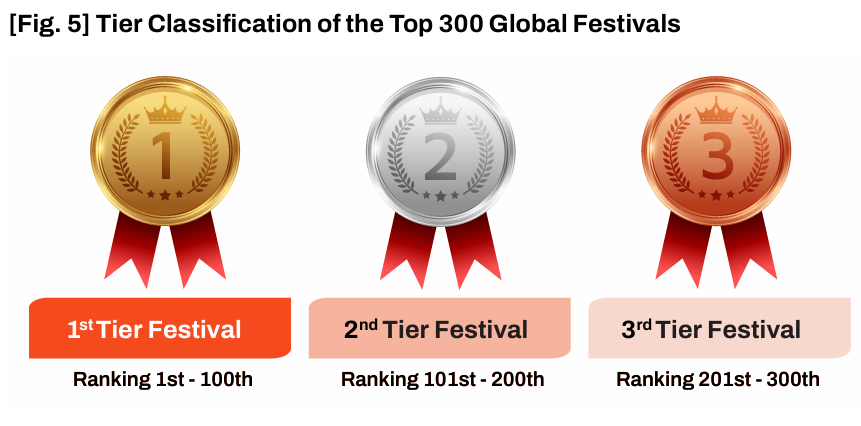
The final evaluation results intend to select and publish the top 300 out of the 560 target festivals. These festivals are classified into three groups according to their evaluation levels:
- 1st Tier (Ranks 1–100): The highest premium festival group overwhelmingly leading the global festival ecosystem.
- 2nd Tier (Ranks 101–200): An upper-middle festival group possessing solid regional dominance and global growth potential.
- 3rd Tier (Ranks 201–300): A promising festival group that has entered the stage of building global awareness through the formation of multilingual discourse.
This classification moves beyond a simple ranking announcement; it functions as a strategic baseline to holistically diagnose what level of awareness, experience quality, and growth potential each festival possesses within the global festival ecosystem.
Analysis of the 2026 Global Festival Attractiveness Evaluation
The King of Modern Tourism: The Overwhelming Global Hegemony of Large-Scale Music Festivals
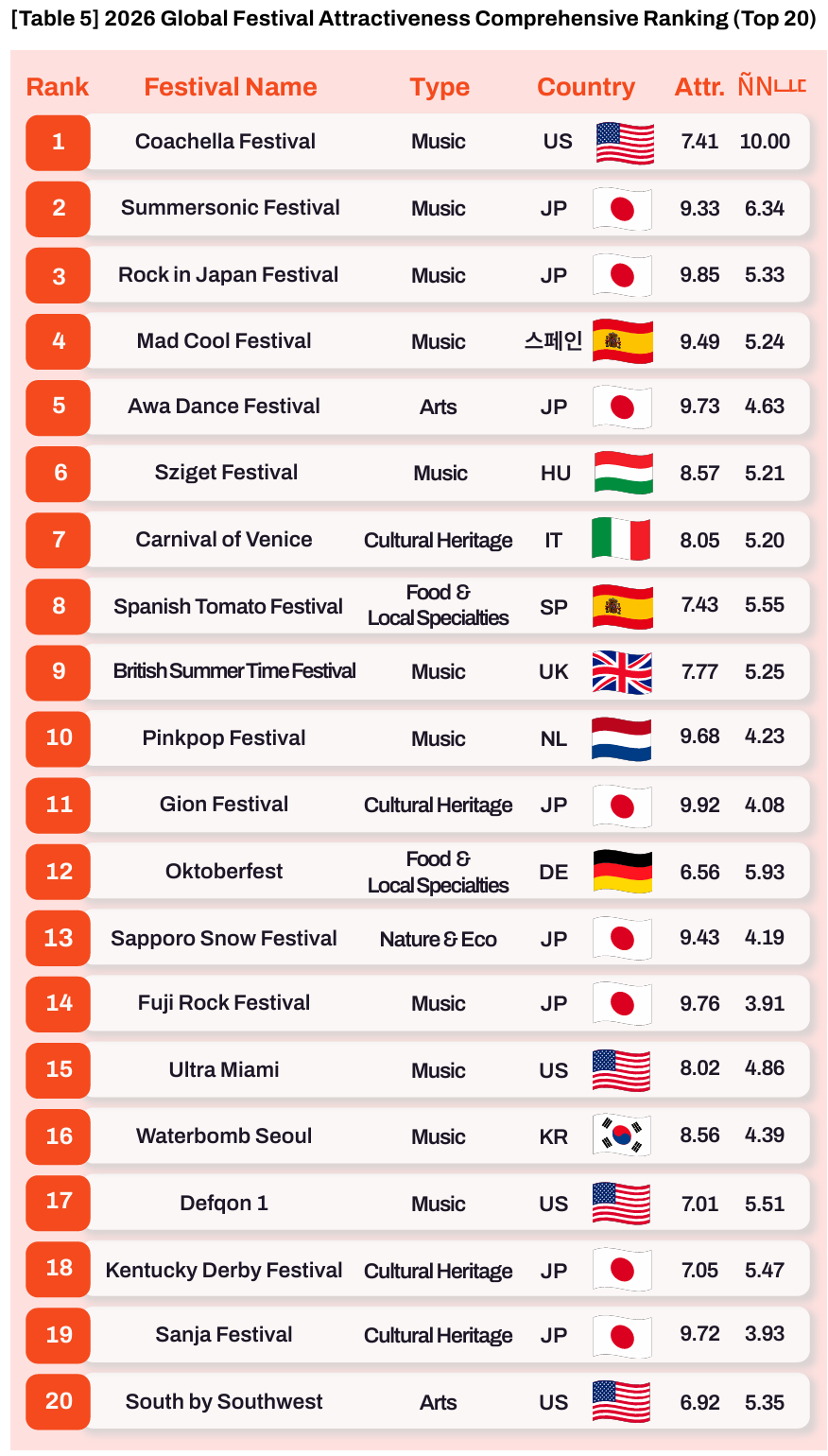
Table 5 presents the Top 20 festivals, representing the highest tier in the 2026 Global Festival Attractiveness comprehensive rankings. The most apparent fact confirmed through this research is that the global festival market's massive hegemony is heavily dominated by so-called 'Large-Scale Complex Music Festivals'.
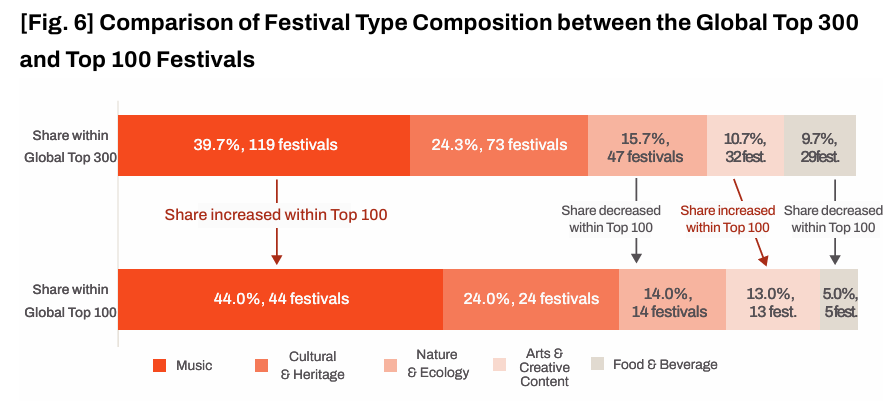
Over half of the Top 20 (11 festivals) are music festivals, and within the entire Top 300 list, music festivals account for an overwhelming 39.7%, ranking first among all single categories. Even more noteworthy is that within the highly competitive elite 1st Tier (Top 100 group), this proportion rises to 44.0%. This empirically demonstrates that as the global ranking climbs to the highest levels, the cross-border brand power and magnetic draw of music as content are maximized.
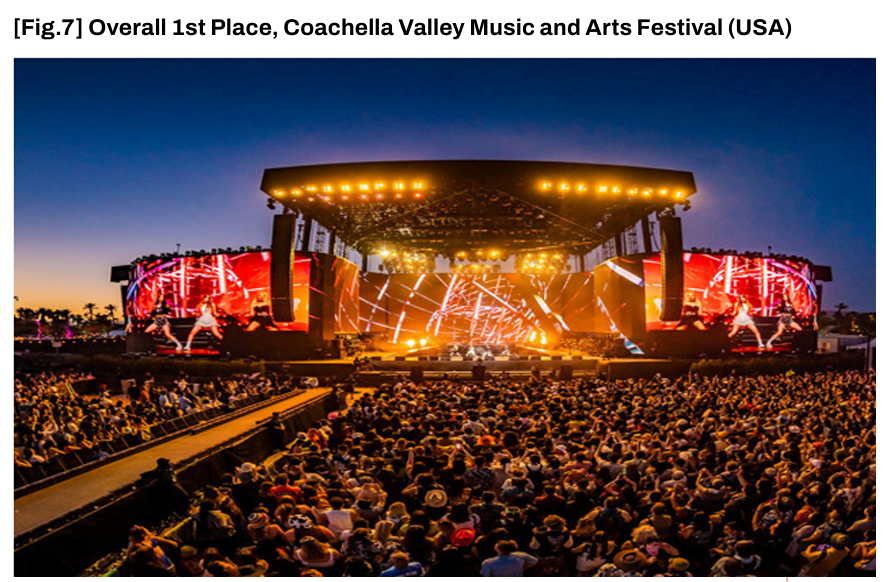
The glory of 1st place overall was claimed by the Coachella Valley Music and Arts Festival (USA). Held in the California desert, Coachella goes beyond simple music performances, creating an iconic aura that blends fashion, art, and cutting-edge lifestyle. It recorded an overwhelming total of approximately 14.69 million social media mentions. Notably, 10.03 million of these mentions were directly linked to core content experiences. It also outpaced all competitors in the multilingual spread index across 14 languages. Interestingly, however, Coachella's 'Attractiveness' ranking itself remained in the mid-tier. This proves that Coachella is a typical 'blockbuster-type' and 'popularity-dominant' festival that drives its overall ranking based on extreme viral spread and global awareness. In other words, Coachella is "the most talked-about masterpiece globally, but not necessarily the one with the highest average visitor rating."
Following Coachella, a multitude of music events aggressively positioned themselves within the global Top 10 and Top 20. These include Asia's top-ranked Summer Sonic (2nd) and Rock in Japan (3rd), Spain's Mad Cool (4th)—one of Europe's premier stages, Hungary's Sziget (6th), the UK's British Summer Time (9th), the world's oldest outdoor pop festival Pinkpop in the Netherlands (10th), and the symbol of European EDM, Defqon.1 (17th).
The reason music festivals exert such powerful global pulling power transcending nations and borders is clear:
- Universal Language: The melodies and beats of music are a powerful, universal language (Pull Factor) that easily overcomes complex textual and linguistic barriers.
- Fandom Amplification: The massive multinational fandoms of top-tier artists taking the stage instantly become voluntary promotional ambassadors, naturally amplifying viral marketing effects.
- Lifestyle Platform: Beyond mere viewing, music festivals induce a blended, stay-oriented experience—including camping, gastronomic exploration, and networking among global audiences—in vast outdoor venues. Consequently, they are establishing themselves as the "most evolved lifestyle platforms" that simultaneously increase visitor immersion and per-capita spending.
The Overwhelming Success of Japanese Festivals: 'High Attractiveness, Low Reputation' Structure and Exquisite Craftsmanship
From the perspective of national destination competitiveness, the country that achieved the most surprising results in this 2026 Festival Index announcement was undoubtedly Japan. Outpacing numerous massive-capital festivals worldwide, Japan placed an impressive 7 domestic festivals within the overall Top 20, boasting the world's highest density of festival competitiveness for a single nation. In addition to music festivals Summer Sonic and Rock in Japan, the traditional dance-based Awa Odori (5th), the thousand-year-old Kyoto Gion Matsuri (11th), the seasonal Sapporo Snow Festival (13th), the forest music camping festival Fuji Rock (14th), and the dynamic shrine palanquin procession of Asakusa Sanja Matsuri (19th) are the main protagonists. Japan ranked a total of 18 festivals within the entire Top 300.
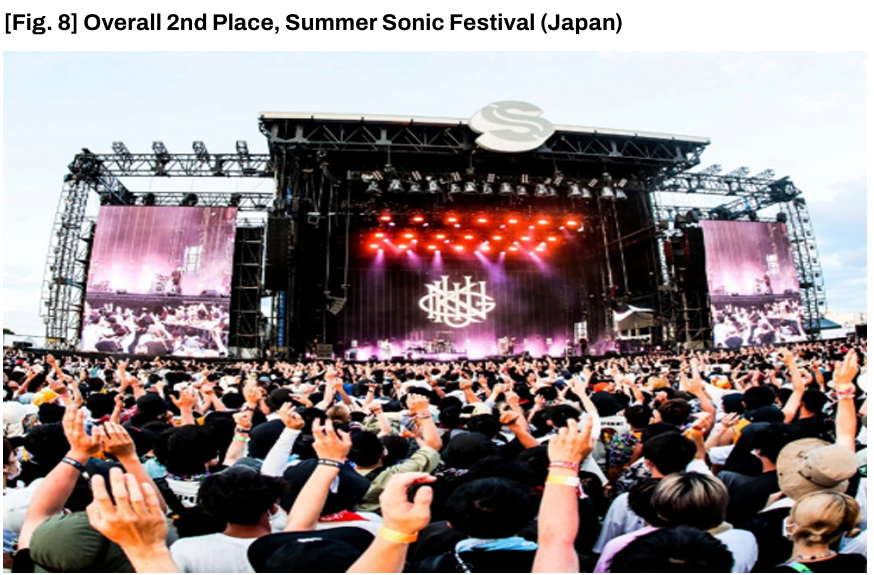
The core weapon and characteristic of Japanese festivals revealed by social data lies in their typical 'High Attractiveness, Low Reputation' structure. Compared to giant Anglo-American festivals in the West, their initial absolute buzz volume or multilingual spread speed in the global social space is clearly inferior. Furthermore, Far East Asia's geopolitical location acts as a certain limitation in attracting tourists.
However, the true reversal occurs in the on-site experience. The positive ratio in sentiment analysis (Attractiveness) left by actual tourists who visited the festivals and paid their own money recorded overwhelmingly high scores that defy comparison. Gion Matsuri recorded a near-perfect Attractiveness score of 9.92, while Fuji Rock (9.76), Awa Odori (9.73), and Sanja Matsuri (9.72) consistently drew world-class praise for their on-site experience quality.
Particularly noteworthy in the data is the massive ranking gap seen in Aoi Matsuri (Attractiveness 1st vs. Popularity 66th) and Hakata Gion Yamakasa (Attractiveness 2nd vs. Popularity 84th). This indicates that while they have not yet secured sufficient global awareness due to a lack of full-scale promotion in the West, there are "hidden gem" festivals scattered throughout Japan that strongly captivate visitors once they fly in and step foot on site.
Behind this overwhelming performance operate three solid competitive strengths:
- The profound hospitality of the local community based on Japan's unique spirit of 'Omotenashi'.
- Meticulous infrastructure operational capabilities rooted in Japan's unique communal trust capital—where even in extremely crowded situations, waiting lines are intricately managed and restrooms are kept clean.
- Cultural authenticity and craftsmanship that stubbornly preserve ancestral methods and inherent culture, rejecting shallow commercial packaging aimed at short-term profits.
The Paradox of Traditional Food & Beverage Festivals: 'A Famous Feast with Little to Eat'
Another paradoxical and shocking truth revealed by massive social data appeared in the 'Food & Beverage' category. While this category has long been a bucket list item for global tourists, it is also where the gap between overwhelming global awareness and the actual quality of experience encountered on-site clashes most starkly.
Oktoberfest, the pride of Munich, Germany, and the epitome of global beer festivals, ranked 4th worldwide in overall popularity, and Spain's La Tomatina also ranked 6th in popularity. The Dubai Shopping Festival, a massive feast of gastronomy and shopping, ranked 7th in popularity, proving overwhelming topicality. However, looking at the Attractiveness ranking—which reveals the true inner substance of a festival—the results are entirely different. Oktoberfest's attractiveness plummeted to 81st overall, La Tomatina to 63rd, and the Dubai Shopping Festival stalled at 85th.
The implications this massive ranking paradox holds for policymakers are chillingly sharp. While they succeeded in mobilizing millions of massive crowds every year thanks to decades of accumulated national reputation and immense promotional budgets, the actual experiences faced by tourists who arrived full of expectations fell far short. In the field, uncontrollable situations due to extreme crowd surges, unpredictable safety risks, exorbitantly priced food and beverages, and physical infrastructure limitations like long bathroom lines were repeatedly raised as problems. These festivals are walking the crisis trajectory of typical overhyped events—'a famous feast with little to eat'. Data sends a strong warning: unless operational innovations are made to improve on-site quality immediately, stepping away from outward promotion-focused strategies, the city destination brand itself could be severely damaged by negative electronic Word-of-Mouth (Negative eWOM).
Europe's Solid Market Dominance and the Power of Cultural Heritage
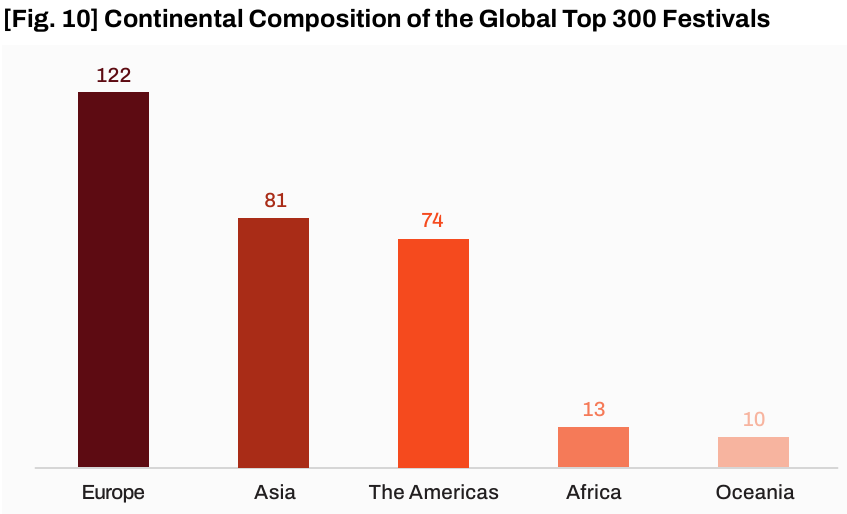
Examining by continent, Europe holds the most festivals in the global Top 300 with 122 (40.7%), demonstrating its position as the epicenter of the global festival market. Representative European festivals—such as Spain's Mad Cool (4th), Hungary's Sziget (6th), Italy's Carnival of Venice (7th), the UK's British Summer Time (9th), and the Netherlands' Pinkpop (10th) and hardstyle mecca Defqon.1 (17th)—successfully fuse the aura of magnificent cultural heritage accumulated over centuries with the dynamism of advanced modern pop culture, especially music and EDM. Europe's success stems from an exceptional curatorial ability that goes beyond passively displaying old cultural assets, overlaying immersive experiences and musical entertainment that Gen Z and Millennials worldwide rave about onto classical stages. Ultimately, Europe is not clashing 'historicity' and 'modernity' but combining them into a powerful festival experience ready for global tourist consumption.
The Global Status of South Korean Festivals
Dazzling Achievements and the Wall of 'Domestic-Oriented Local Feasts'
Despite being backed by the powerful national cultural premium of 'K-Culture'—including K-Pop and K-Drama, which possess unprecedented influence—the global report card for South Korean festivals showed a dual nature, exposing both potential and painful limitations. South Korea achieved a meaningful outcome by placing a total of 12 festivals into the global Top 300 rankings. However, only 6 entered the elite 1st Tier (Top 100) that leads global discourse, and only 1 entered the highest tier (Top 20), leaving a clear task for leaping forward as a global mega-destination.
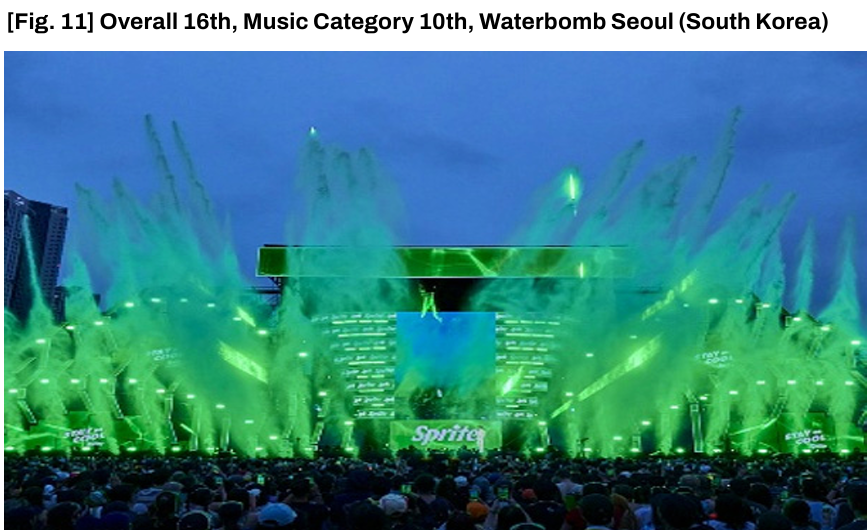
Surprisingly, the festival that outshone numerous government-led traditional Korean festivals to take an overwhelming 16th place overall and 10th in the music category was the privately-led, trendy 'Waterbomb Seoul'. The success formula behind Waterbomb's global box office hit is very clear: it combined the spectacular performances of globally popular K-Pop artists with the highly intuitive and dynamic visitor-participatory format of a 'massive midsummer water gun fight'. This largely neutralized nationality, race, and language barriers, allowing anyone to jump into the middle of the festival's chaos, shoot water guns at each other, and relish the playful thrill of getting soaked. Rejecting one-way, polite spectating and opening a space for multidimensional participation, this concept generated explosive multilingual short-form buzz across global social media platforms (especially Instagram and TikTok), presenting a new success grammar that Korean festivals should pursue.
Following Waterbomb, nature and ecology festivals that cleverly commercialized Korea's distinct four seasons and outstanding scenic resources also made significant leaps. The Busan Fireworks Festival (34th), featuring coastal night views and massive directing; the Boryeong Mud Festival (58th), where global tourists roll in the mud; the Jinhae Gunhangje (78th), the nation's premier cherry blossom spot; Ultra Korea (87th), a hub for global EDM fandoms; and the Seoul Lotus Lantern Festival (90th), showcasing the noble aesthetics of UNESCO intangible cultural heritage, all secured spots in the Top 100. In particular, the Seoul Lantern Festival (Attractiveness 9.74) and Busan Fireworks Festival (Attractiveness 9.30) received world-class praise matching Japan's top-tier festivals in terms of actual experience quality, proving the massive potential of Korean festivals. Additionally, the Daegu Chimac Festival proudly secured 8th place in the fiercely competitive global food festival category by bringing the K-lifestyle of chicken and beer to the forefront.
However, behind these dazzling achievements, the data candidly reveals a fatal, chronic disease afflicting numerous South Korean local government festivals into which massive amounts of taxpayers' money are injected annually. The issue is that the majority of regional festivals are trapped in the comfortable well of being "domestic-oriented events for locals," without sufficiently accounting for the visitation of foreign tourists from the outset. No matter how delicious the local specialties prepared are, or how valuable the traditional historical resources showcased may be, if the method of delivering and consuming them falls short of global tourists' expectations, the festival's attractiveness can never expand.
Structural barriers that block the access and communication of multinational tourists include:
- A lack of multilingual signage (English, Chinese, Japanese) at festival sites.
- The absence of foreign language audio and mobile guide apps.
- Systems where overseas credit card payments are unsmooth.
- Closed ticketing networks where it is difficult to purchase a ticket without local phone number verification.
Furthermore, a supplier-centric event format—such as uniformly setting up rows of Mongolian tents in a parking lot to sell local goods, repetitive appearances of traditional beggar (Gakseoli) performances, and long greeting speeches by local politicians on the main stage ending with trot singer performances—is far from the "immersive experience melting in unique local narratives" craved by modern Millennials. This supplier-convenient format not only fails to satisfy modern tourists but also blocks their desire for attractive visual sharing via social media. Consequently, this acts as a structural blunder dragging the global spread metrics of Korean festivals down to the bottom.
Strategic Recommendations for Destination Marketing Organizations (DMOs) and National Policies
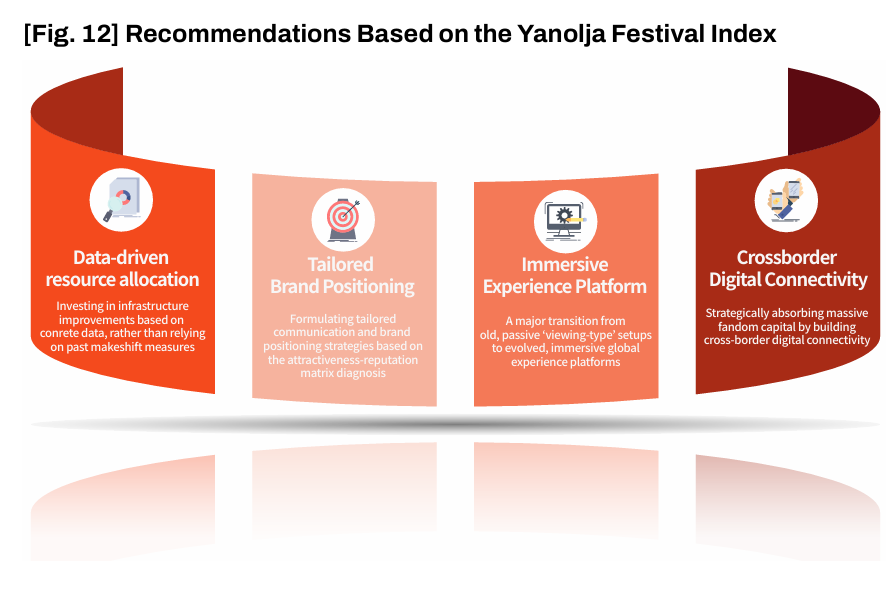
The Yanolja Festival Index is not a one-off report card created simply to rank festivals from 1st to 300th and call it a day. The true value of this global multilingual data lies in serving as a "digital stethoscope" and a "strategic compass" for survival. It empowers government ministries, local governments, and Destination Marketing Organizations (DMOs)—those at the forefront of global tourism planning, evaluating, and budgeting festivals—to break away from customary practices and political motives, enabling them to execute bold, data-driven innovations. To translate the hard-hitting insights revealed by the data into strategies for sustainable growth and revenue generation, this study proposes the following core action plans..
Data-Driven Scientific Resource Allocation and 'Precision-Strike' Infrastructure Improvement
In the past, when tax-funded festivals underperformed or faced public criticism, local governments often clung to one-dimensional, wasteful stopgap measures, such as "Let's pay a higher guarantee to book an A-list idol next year" or "Let's drastically increase the global media advertising budget."
However, a precise breakdown of the Yanolja Festival Index's sub-dimension data reveals that both the diagnosis and the prescription must change entirely. Suppose a local festival receives rave reviews—scoring 9.5 out of 10 in visitor satisfaction—for its main performance program ('Core Content Experience', D1) or its on-site energy ('Atmosphere & Emotion', D2), yet its overall ranking hits rock bottom. The reason likely lies elsewhere. Dissecting the data might reveal a massive volume of angry 1-point ratings and strong complaint texts directed at specific indicators of 'Operational Convenience & Infrastructure' (D3)—such as "stench and filth in portable toilets," "3-hour entrance lines under the scorching sun," or "chaos in the parking lot."
When faced with such data-driven diagnostics, the top priority for next year's limited budget is absolutely not paying hefty fees to book new pop stars. Instead, the budget must be deployed as a 'precision strike' to immediately alleviate visitors' physical fatigue and discomfort. This means introducing mobile smart queue notification systems, massively expanding fleets of comfortable, air-conditioned shuttle buses running directly from major transit hubs to the venue, and adding clean, comfortable restrooms staffed hourly by dedicated cleaning personnel throughout the site.
Even with world-class "Pull Factors," allowing the physical displeasure of dirty toilets and long lines to ruin the visitors' awe is a waste of budget and a clear policy failure for the responsible agencies. The Yanolja Festival Index is a diagnostic tool that highlights these issues not just as emotional complaints, but as mathematical data.
Customized Brand Positioning Based on the Attractiveness-Reputation Matrix
Festival organizers in each city and country must objectively face their current standing on the 4-quadrant matrix presented by this study and employ radically differentiated communication and brand positioning strategies tailored to their specific situations.
First, "Hidden Gem" festivals require a global digital viral strategy.
This applies to "low-popularity, high-attractiveness" festivals—like Japan's Aoi Matsuri, or South Korea's Jinhae Gunhangje and Seoul Lantern Festival—where satisfaction ratings from actual visitors are near perfect, but global brand awareness remains low. They must abandon the cliché approach of draining tight budgets to run generic TV commercials on global broadcasting networks. Their most powerful weapon is the actual visitor who has already been moved by the experience. Therefore, they must stake everything on viral marketing to ensure these genuine emotional experiences—User-Generated Content (UGC)—explode online. They should organize official social hashtag challenges translated into 14 languages and construct "overwhelmingly photogenic spaces" equipped with perfect lighting for young people to shoot TikToks and Instagram Reels. Above all, simply investing in a high-speed, free 5G Wi-Fi network that allows for seamless, instant upload of large video files on-site can turn tens of thousands of visitors into unpaid, voluntary global marketers, exponentially spreading the festival's reputation.
Second, "Overhyped" festivals require a painful trust-recovery strategy.
This applies to festivals like Germany's Oktoberfest, which maintain top-tier global awareness thanks to decades of history but suffer from plummeting attractiveness ratings from actual visitors due to extreme congestion and commercialization. This is a severe warning sign forecasting the collapse of a massive destination brand. They must immediately slash budgets for outward-facing global promotion and influencer marketing. Instead, they must launch operational innovations to cut out the festering internal rot: evicting merchants who overcharge, dismantling unsanitary booths, and introducing systems to disperse crowd congestion. Marketing messages must discard rhetoric like "World's Largest" or "Greatest on Earth," pivoting toward calmly communicating genuine service improvement efforts and the authentic cultural stories of the region. Rebuilding shattered visitor trust is the paramount policy challenge this type of festival must address first.
A Great Transition: From Outdated 'Spectator Exhibitions' to 'Immersive Global Experience Platforms'
If the pinnacle of manufacturing in the AI era is highly integrated semiconductor technology, the zenith of high-value-added service industries is tourism. And within that massive tourism industry, the most impactful, high-end convergent content is the festival. Festivals are no longer mere local pastimes; they are the frontline vanguard of national service exports, elevating a country's prestige and earning massive foreign currency.
For small local festivals in South Korea and many other Asian countries to claim a slice of the value in this massive global tourism market, they must completely overhaul their outdated formats. The "agricultural specialty expo" model—where dried fish and local products are piled under rented Mongolian tents while local politicians in ties read long opening remarks—is highly unlikely to be perceived as an attractive experience by modern global tourists.
Just as Spain's La Tomatina is not a simple tomato marketplace but a battlefield of play where people feel the catharsis of madness by throwing tomatoes at each other; and just as South Korea's Waterbomb is not a quiet K-Pop concert but an aquatic haven of liberation where tens of thousands mingle in a chaotic water gun fight—Gen Z and Millennial tourists in the post-pandemic era do not spend money to sit passively in front of a stage and spectate someone else's culture.
They crave a "participatory play" structure where they can instinctively bypass language, nationality, and text barriers to dive into a mud pit, shoot water guns, dance shoulder-to-shoulder with strangers, and clink beer glasses. Therefore, festivals must be fundamentally redesigned. While the roots of a region's unique characteristics must never be compromised, the method of consuming and enjoying them must be presented in a vessel of refined, global universality that a 20-something from London or a 30-something from New York can cheer for without feeling alienated. This convergent planning ability will determine the winners and losers of future global festival wars.
Strategic Absorption of Massive Fandom Capital Through Transnational Digital Connectivity
No matter how fantastic the world-class programs and content set up at an offline venue may be, if the online digital connectivity to book and access them is blocked in today's mobile-first era, the festival is no different from a ghost event that doesn't exist on the global destination map (Evoked Set).
South Korea, in particular, is facing an unprecedented era of opportunity. The "K-Culture Global Fandom"—solidified worldwide through K-Pop, K-Drama, and K-Beauty via the algorithms of Netflix, Spotify, and YouTube—is an intangible reserve asset of immense value. When these massive, highly loyal global Hallyu fans set foot in Korea through its international airports, pathways must be created so that their footsteps and wallets don't just stop at cosmetic shops in Seoul, but naturally permeate into beautiful local festivals in provincial towns like a capillary network.
To achieve this, local governments must move beyond poor machine translations on their websites and build integrated mobile guide apps and payment systems that perfectly support multiple languages (English, Japanese, Chinese, Spanish, etc.). Furthermore, active partnerships must be formed with massive global Online Travel Agencies (OTAs), major domestic OTAs, and famous overseas travel creators and influencers.
Foreigners should be able to bundle and pay for local festival tickets, nearby accommodations, and transportation in a single digital basket with just a few taps on their smartphones, all within their native language environment. In other words, a digital sales strategy that forcibly integrates Korea's local festivals as core modules into global tourism packages must run in parallel. Only then can Korean festivals truly leap forward as a high-value-added global tourism mega-hub.
Concluding Remark: The Future of Festivals—Entering the Era of 'Experience Capital' Engraved in the Heart
The fundamental message that the 'Yanolja Festival Index' delivers to global tourism policymakers and industry-leading planners is clear. As we stand in the midst of a transition away from an outdated tourism paradigm obsessed with numbers and scale, supplier-centric administrative briefings are no longer persuasive. Boasting about crowd sizes by mobilizing fleets of chartered buses to claim, "Hundreds of thousands of people visited our festival this year," or merely highlighting estimated economic impacts, simply won't cut it anymore.
A global festival with true greatness and sustainable competitiveness is never just an event that pours massive amounts of taxpayer money into building giant concrete stages and hiring high-priced celebrities to draw a one-off crowd. Even for a foreign tourist who flew in from afar to stay for just a single day or a few hours, the festival must be a venue of profound inspiration—leaving them with lasting memories of the joy of escaping daily life, a sense of communal bonding felt with strangers, and positive energy. The fact that Japan’s Gion Matsuri achieved an extraordinary visitor attractiveness score of 9.92 while resisting the temptation of commercialization despite the weight of its 1,200-year history proves that Authenticity is a powerful competitive asset that no amount of capital can easily imitate.
An even more important shift is that the thrills, inspiration, anger, or disappointment visitors feel at a festival site no longer vanish into thin air. They spread across borders in real time through the digital networks of global social media platforms like Instagram and TikTok, systematically accumulating on servers worldwide as digital big data—what we call "Experience Capital." This accumulated emotional data eventually influences new travelers on the other side of the globe, transforming into a sustainable "pull" that compels them to book a flight to that city and festival.
Moving forward, the Yanolja Festival Index released today will be published regularly every year. It aims to serve as a data-driven digital compass, helping festival planners in every country and city continuously improve the quality of the experience tourists actually feel. Through data-driven infrastructure innovation and operational improvements that focus on the genuine emotions and evaluations of visitors, we expect each festival to evolve into an experience that is deeply remembered and longingly revisited by tourists worldwide. Furthermore, we hope these festivals will serve as a foundation for sustainable growth, spreading regional cultural values and revitalizing local economies through tourism consumption.
In the high-value-added emotional service export arena known as the tourism industry, what ultimately survives in the long run is not merely the sheer size of physically mobilized crowds or the visual splendor of the venue. Ultimately, the true competitiveness of a festival depends on the depth of emotion, satisfaction, and affection left in the hearts of its visitors, making them want to return again and again.
To reference this article, please use the following citation: “Soocheong Jang, Kyuwan Choi(2026). Yanolja Festival Index: A New Paradigm for Measuring Global Festival Attractiveness, Yanolja Research Insights, Vol.43.”
References
Crompton, J. L. (1979). Motivations for pleasure vacation. Annals of Tourism Research, 6(4), 408–424.
Dann, G. M. S. (1977). Anomie, ego-enhancement and tourism. Annals of Tourism Research, 4(4), 184–194.
Events Industry Council & Oxford Economics. (2026). 2026 global economic significance of business events study: Executive summary. Events Industry Council. https://www.eventscouncil.org
Getz, D. (2008). Event tourism: Definition, evolution, and research. Tourism Management, 29(3), 403–428.
Lee, Y.-K., Lee, C.-K., Lee, S.-K., & Babin, B. J. (2008). Festivalscapes and patrons' emotions, satisfaction, and loyalty. Journal of Business Research, 61(1), 56–64.
Pine, B. J., II, & Gilmore, J. H. (1998). Welcome to the experience economy. Harvard Business Review, 76(4), 97–105.
van Vliet, H. (2019). What is a festival? Amsterdam University of Applied Sciences. https://www.researchgate.net/publication/330359431_
 Prev
Prev  Back
Back 