
Vol.42 Seoul and Busan as Experienced by Chinese Tourists
- Reg Date
- 2026.05.18


Seoul and Busan as Experienced by Chinese Tourists: A Comparative Analysis of Experience Structures Across Major Asian Cities
Yejin Ahn, Senior Researcher at Yanolja Research / [email protected]
Soocheong Jang, Professor at Purdue University & Director at Yanolja Research / [email protected]
Kyuwan Choi, Professor at Kyung Hee University & Director at H&T Analytics Center / [email protected]
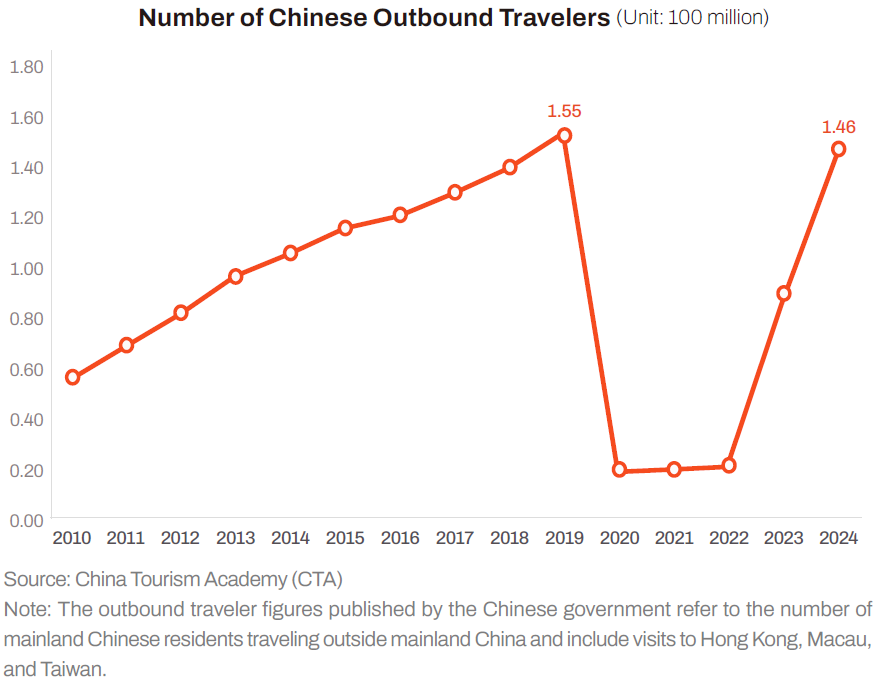
The influence of the Chinese outbound market on the global tourism landscape has become a defining force. According to the China Tourism Academy, the number of Chinese outbound travelers reached approximately 146 million in 2024, recovering to 94% of the pre-pandemic level recorded in 2019 (approximately 155 million). This figure signifies more than a simple rebound in cross-border travel demand. As years of suppressed travel demand are being fully released, it also indicates simultaneous changes in Chinese tourists’ consumption patterns, destination selection criteria, and expectations regarding travel experiences.
What deserves particular attention is the qualitative transformation of demand. In the past, tourism was largely centered on “what to see,” focusing on visits to famous landmarks and shopping. Recently, however, it has rapidly shifted toward “personalized experiential consumption,” emphasizing “what to experience and how to spend time.” According to analyses by Mastercard and Trip.com, Chinese outbound travel spending is expanding beyond traditional sightseeing into lifestyle-oriented sectors such as transportation, entertainment, and local experiences. Alibaba’s online travel platform Fliggy also reported double-digit growth across all categories of overseas experiential travel products in 2025. These trends suggest that the Chinese outbound market has moved beyond simple quantitative recovery and entered a new stage in which the quality of travel experiences has become increasingly important.
This shift in Chinese outbound travel demand, combined with broader changes in the Northeast Asian tourism landscape, is contributing to the increase in visits to Korea. In particular, following the Chinese government’s restrictions on exchanges with Japan (“anti-Japan travel restrictions”), part of the demand previously directed toward Japan has shifted to Korea, creating a short-term opportunity for Korean tourism. However, this should not be regarded merely as a temporary spillover effect. The current situation represents a critical test of Korea’s intrinsic tourism competitiveness. If Korea remains merely a “substitute destination” for Japan, demand may quickly dissipate once external conditions change. Sustainable growth is determined not by geopolitical variables, but by internal competitiveness. The essential question, therefore, is whether Korea can establish itself not as a temporary alternative, but as a destination that Chinese tourists actively choose and genuinely wish to revisit.
At this point, Korean tourism faces a more fundamental set of questions. How are Seoul and Busan—the two cities most frequently visited by Chinese tourists—actually perceived? What aspects of Seoul attract Chinese visitors, and which experiences in Busan are evaluated as distinctive? Are the characteristics that Koreans themselves regard as strengths perceived in the same way by Chinese tourists? Without clear answers to these questions, the current opportunity is likely to remain no more than a temporary increase in demand.
Seoul and Busan, in particular, constitute the two central pillars of Korea’s inbound tourism industry. Although both cities represent Korean tourism, the nature of their appeal differs substantially. Seoul symbolizes Korean tourism through K-culture, shopping, culinary experiences, and urban dynamism, whereas Busan offers a distinct experiential value characterized by coastal scenery, regional cuisine, a more relaxed urban atmosphere, and the openness unique to a port city. Understanding how Chinese tourists perceive and evaluate these two cities is therefore critically important for establishing differentiated urban positioning strategies within Korean tourism.
However, the attractiveness of these representative Korean cities cannot be assessed solely through a domestic lens. Chinese tourists’ choices are by no means limited to Korea. Major Asian tourism cities—including Tokyo, Osaka, Bangkok, Singapore, and Hanoi—are all competing for the same Chinese outbound market. Accordingly, the tourism appeal of Seoul and Busan must be evaluated not only in absolute terms, but also relative to these competing destinations: where they stand competitively, in which dimensions they hold advantages, and in which areas improvement is required. Furthermore, Furthermore, it is necessary to examine objectively whether the factors regarded as strengths of Korean tourism are actually reflected as competitive advantages in the evaluations of Chinese tourists.
This study originates from these concerns. Specifically, it seeks to provide a data-driven assessment of how Seoul and Busan are perceived through the actual travel experiences of Chinese tourists—the largest inbound market for Korea—and to identify their relative competitiveness in comparison with major Asian tourism cities. The ultimate objective is not merely to evaluate urban attractiveness, but to identify the values most highly appreciated by Chinese tourists as well as the areas perceived as relatively weak, thereby exploring strategies for building sustainable inbound competitiveness. Rather than relying on short-term growth in demand, the central task of this study is to generate a precise understanding of how such demand can be transformed into long-term loyalty and repeat visitation.
Competitive Landscape Among Major Asian Tourism Cities
The Chinese outbound tourism market represents the world’s largest single-country source market and has become a strategically critical driver of global tourism demand. As noted earlier, the number of Chinese outbound travelers reached 146 million in 2024, approaching pre-pandemic levels at an accelerated pace. What is particularly noteworthy is that short-haul destinations in Southeast and Northeast Asia now constitute the core of this demand. This suggests that Chinese outbound travel is moving beyond mere quantitative recovery and is increasingly transforming competition among Asian tourism cities into a genuine zero-sum game.
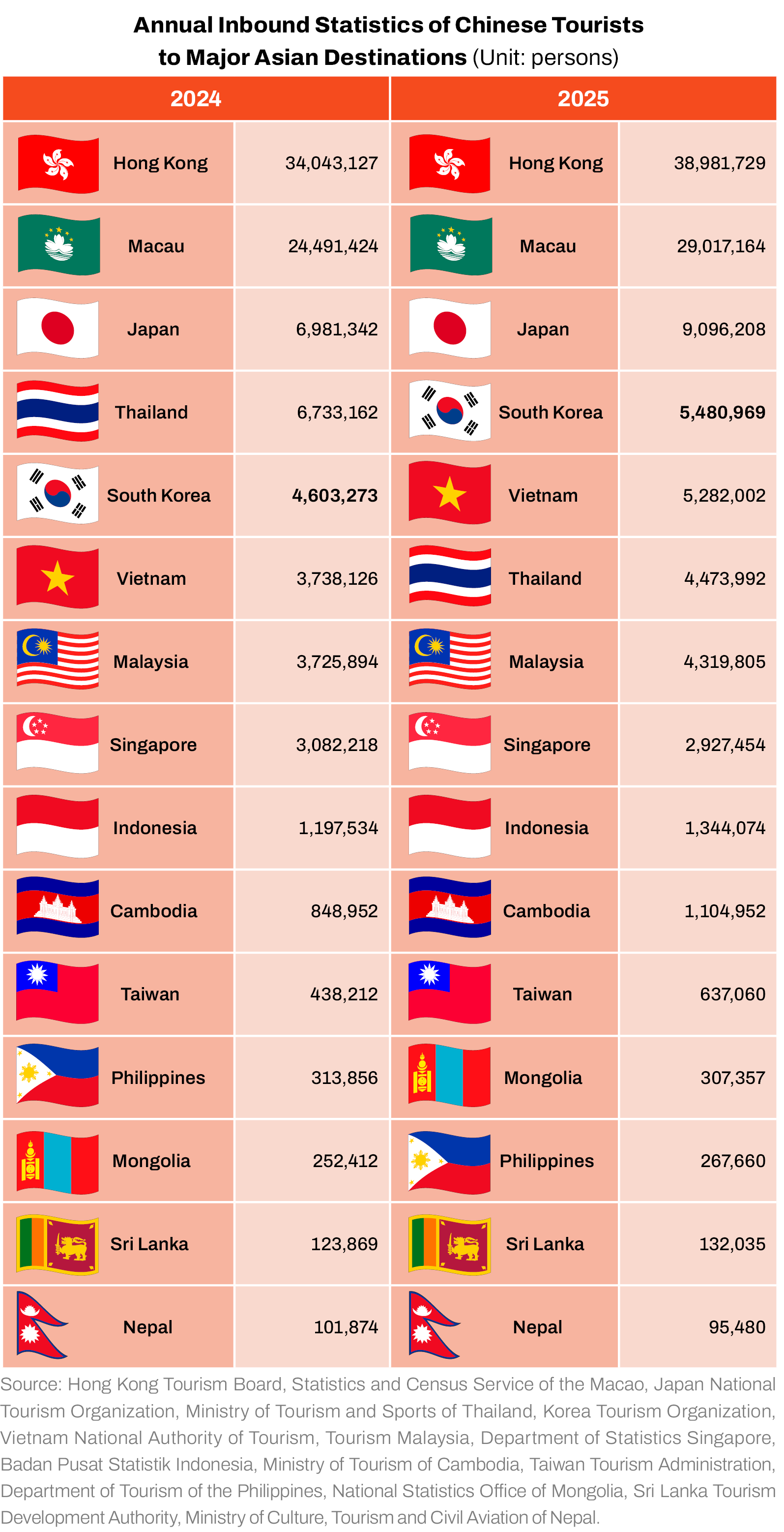
Within this competitive landscape, the impact of the previously mentioned 'Anti-Japan Restrictions' has been directly reflected in Korea’s inbound tourism performance. In December 2025, the number of Chinese visitors to Korea reached 394,000, surpassing the 330,000 Chinese visitors to Japan for the first time. The share of Chinese visitors among Korea’s inbound tourists also rose from a low of 23.7% in November 2025 to 35.3% in February 2026, returning to the pre-pandemic range of around 30%.
These developments carry significant strategic implications for Korea’s position within the Asian tourism market. As of 2024, Korea ranked in the upper-middle tier among major Asian destinations, behind Japan and Thailand. However, in 2025, Korea recorded rapid year-on-year growth and attracted 5.48 million Chinese visitors, surpassing both Thailand and Vietnam. Excluding Hong Kong and Macau, which possess distinctive political and economic characteristics, Korea secured an effective “Top 2” position within Asia’s core competitive group, following Japan. This indicates that Korea is no longer merely a secondary destination in Northeast Asia, but has entered the mainstream competitive market directly competing with Japan, Thailand, Vietnam, Singapore, and Malaysia for Chinese tourists.
Nevertheless, considerable caution is required before interpreting this rise in ranking as evidence of a structural strengthening of Korea’s tourism competitiveness. Despite experiencing severe geopolitical risk in late 2025—including an approximately 45% year-on-year decline in Chinese arrivals in December due to diplomatic tensions with China—Japan still maintained its position as Asia’s leading destination on an annual basis. In other words, Korea’s strong performance in 2025 was driven in large part by spillover demand resulting from travel restrictions and avoidance of Japan. Whether Korea can secure self-sustaining attractiveness as a preferred destination for Chinese tourists, independent of external geopolitical conditions, remains an unresolved challenge.
At the same time, the contemporary tourism paradigm is rapidly shifting from competition between countries to competition between cities. Tourists no longer consume an abstract national identity; rather, they consume the streets, brands, lifestyles, and unique atmospheres of specific cities. From this perspective of city-to-city competition, Seoul’s positioning is particularly noteworthy. According to the 2024 popular destination ranking released by Umetrip, China’s civil aviation travel platform, Seoul ranked second after Bangkok, positioning itself alongside Bangkok, Tokyo, and Singapore within Asia’s premier tourism city group. This outcome reflects Seoul’s successful development of a powerful urban tourism brand built upon the convergence of K-culture, luxury shopping, high-end beauty services, and nightlife experiences.
In contrast, Busan stands at a critical juncture requiring the establishment of a distinctly differentiated strategy from Seoul. Whereas Seoul functions as a concentrated hub of global trends and consumption, Busan is strengthening its identity as a “staycation city” by combining the scarcity value of coastal and mountain scenery, the openness characteristic of a port city, rich culinary assets, and cultural resources such as the Busan International Film Festival. Accordingly, Busan’s central challenge is to position itself not as a secondary itinerary attached to a trip to Seoul, but as an independent destination capable of motivating travel in its own right. In addition, Busan is increasingly expected to serve as the tourism hub of Korea’s southeastern region by connecting competitive spoke cities such as Gyeongju and Geoje, thereby functioning as a core gateway within a broader Asian-centered tourism network.
Against this backdrop, the focus of this study extends beyond national tourism rankings. Its primary objective is to examine where Seoul and Busan stand in terms of perceived experience value from the perspective of Chinese travelers when compared with major competing cities such as Tokyo, Osaka, Bangkok, Singapore, Hanoi, and Kuala Lumpur.
Experience Structures of Seoul and Busan from the Perspective of Chinese Tourists
Methodology
As the consumption paradigm of Chinese tourists increasingly shifts toward experience-centered consumption, supply-side quantitative indicators alone are insufficient for identifying the underlying drivers of destination choice. Accordingly, this study examined user-generated content (UGC) related to travel experiences in the selected cities on Xiaohongshu (Red Book), a Chinese social media platform with approximately 300 million monthly active users (MAU) that is particularly influential among consumers in their 20s and 30s and the urban middle class. To capture the post-normalization phase of international travel demand following the end of the WHO-declared COVID-19 Public Health Emergency of International Concern (PHEIC) in May 2023, this study analyzed 11,270 posts and 457,014 sentences uploaded between 2024 and 2025.
To establish the analytical framework, this study adopted the methodology of the Yanolja Brand Equity Index (Yanolja Research Insights, Vol. 26, April 2025) and conducted a comparative analysis of Seoul and Busan alongside six major competing Asian tourism cities: Tokyo, Osaka, Bangkok, Singapore, Hanoi, and Kuala Lumpur. For this purpose, the seven core experiential dimensions previously used to evaluate direct tourism experiences in Korea—shopping, food, nature, leisure and entertainment, history and tradition, content, and beauty—were redefined from a global perspective. A refined keyword dictionary, including proper nouns, was then constructed to transform unstructured text into a structured dataset.
This methodological approach is significant in that it moves beyond simple comparisons of visitor numbers and enables an objective comparison of how each city is positioned in the perceptions of Chinese tourists in terms of “experiential value” using a common analytical framework. The seven core experiential dimensions are defined as follows:
- Shopping: Experiences directly related to commercial facilities and consumption activities, including department stores, shopping malls, markets, duty-free stores, brands, products (fashion, cosmetics, souvenirs), pricing factors (discounts, value for money), and purchasing behaviors such as shopping and proxy purchasing. In essence, this category defines tourism experiences centered on purchasing activities.
- Food: Experiences related to food and beverage consumption and gastronomy, including restaurants, street food, cafes, taste, menus, regional specialties, and dining activities such as breakfast, lunch, and dinner. The category extends beyond simple consumption to encompass local culinary culture.
- Nature: Experiences associated with appreciating natural scenery, including parks, beaches, mountains, and lakes, as well as perceptions of landscape beauty and activities such as hiking, walking, and viewing sunrises or sunsets. This dimension represents nature-based appreciation and relaxation experiences.
- Leisure and Entertainment: Tourism experiences centered on amusement, participation, and experiential activities, including theme parks, performances, sports and adventure activities, clubs, and karaoke. This category reflects experience-oriented tourism focused on active participation and immediate enjoyment.
- History and Tradition: Tourism resources reflecting historical and cultural identity, including historical sites, religious facilities, traditional architecture, museums, palaces, temples, rituals, traditions, and lifestyles. This category captures tourism experiences centered on historical significance and cultural meaning.
- Content: Tourism experiences based on popular culture and the cultural industries, including films, dramas, music, animation, games, and exhibitions. Rather than focusing on physical places themselves, this category explains tourism driven by content intellectual property (IP) and cultural consumption.
- Beauty: Experiences related to appearance management and beauty services, including cosmetics purchases, skincare, plastic surgery, medical beauty services, massages, and spas. This category reflects tourism activities oriented toward self-care and aesthetic enhancement, particularly Korea’s strong medical and beauty tourism demand.
Experience Structures of Seoul and Busan: A Comparison with Competing Tourism Cities
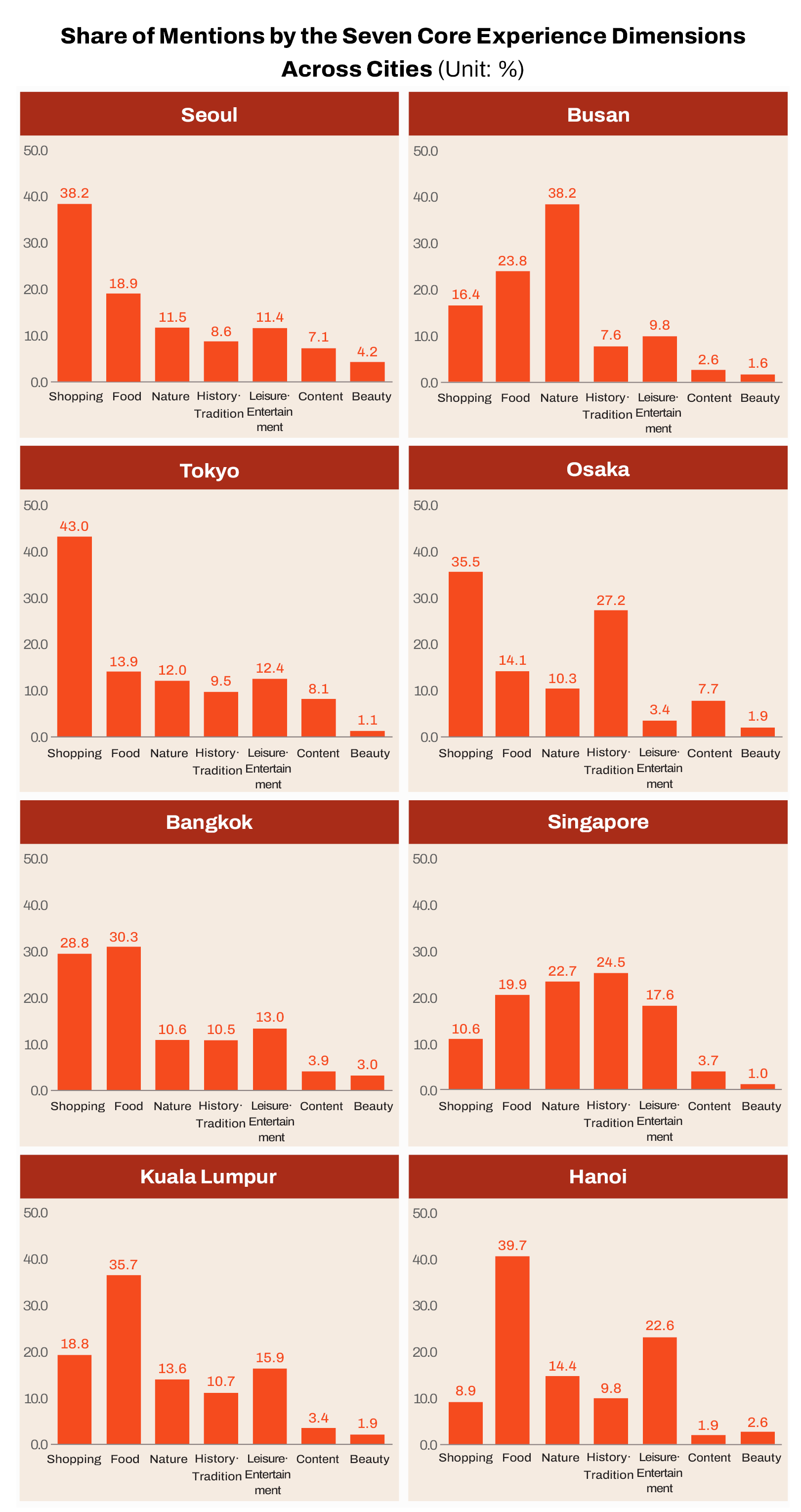
The tourism experience structure of each city demonstrates clear typological differences depending on the relative share of mentions across experiential dimensions. This goes beyond simple differences in mention volume and serves as an indicator of how Chinese tourists cognitively structure and prioritize their experiences within each city. In other words, the distribution of experiential mentions reflects both what tourists expect from a destination and which forms of experiential value they most actively consume on-site, while simultaneously revealing how the city is encoded in tourists’ memories and perceptions. Accordingly, the structure of experiential mentions provides an important lens through which to understand not only the superficial popularity of a tourism destination, but also the underlying formation of destination branding in tourists’ perceptions.
1. Seoul’s Core Experience Structure: “Purpose-Driven Consumption” and “K-Content”
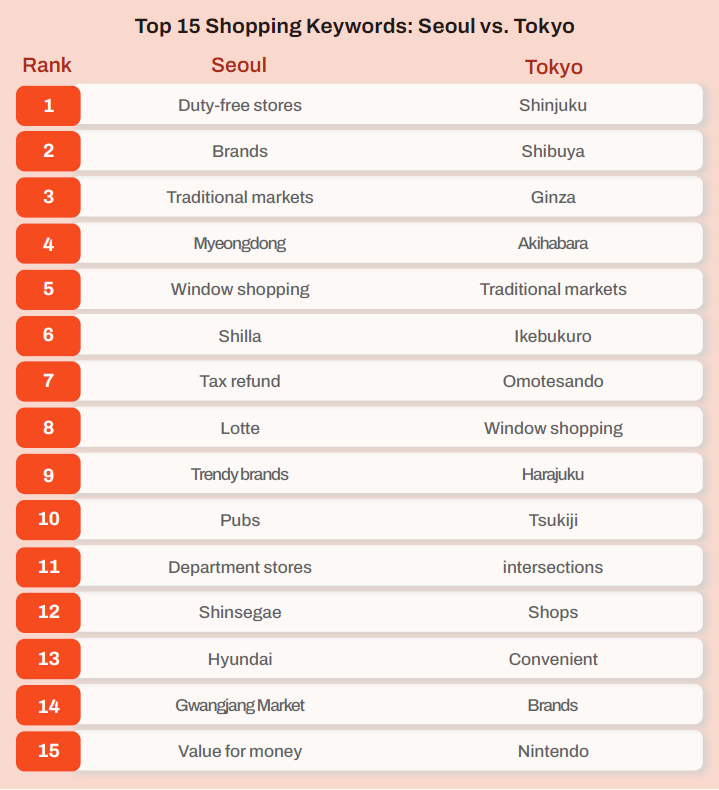
The analysis reveals that Seoul exhibits an overwhelmingly high share of mentions related to shopping, accounting for 38.2% of all experiential references. This indicates that Seoul is perceived as a highly advanced consumption-oriented destination in which commercial consumption constitutes the dominant axis of the tourism experience. A particularly notable finding emerges when Seoul is compared with Tokyo, which also records a high shopping-related mention share of 43.0%, yet demonstrates a fundamentally different qualitative structure.
The dominant shopping-related keywords associated with Seoul include duty-free stores, brands, markets, Myeong-dong, window shopping, Shilla, tax refund, Lotte, trendy brands, department stores, Shinsegae, Hyundai, Gwangjang Market, and value for money. These keyword clusters consistently reflect the characteristics of “planned purchasing” and “practical benefit-seeking.” In other words, Chinese tourists approach Seoul with relatively clear intentions regarding what to purchase, where to shop, and how to maximize price advantages. As a result, Seoul is structured not as a city where consumption occurs incidentally while wandering through urban space, but rather as a “purpose-driven consumption city” visited with explicit expectations regarding products and economic benefits.
In this respect, Seoul differs fundamentally from Tokyo. Although Tokyo also demonstrates a high proportion of shopping-related mentions, its experiential structure is qualitatively distinct. Tokyo’s dominant keywords are concentrated around commercial districts such as Shinjuku, Shibuya, Ginza, Akihabara, and Ikebukuro. This suggests that shopping in Tokyo is experienced less as targeted product purchasing and more as the exploration and enjoyment of commercial urban spaces themselves. Whereas Seoul’s consumption structure begins with the question, “What should I buy?”, Tokyo’s structure begins with the question, “Where should I walk?” Seoul therefore represents a purpose-driven consumption model, while Tokyo represents a spatial exploration-oriented consumption model. These findings suggest that Seoul’s current tourism competitiveness relies heavily on the practical utility of products and pricing advantages—elements that can increasingly be substituted through digital commerce channels.
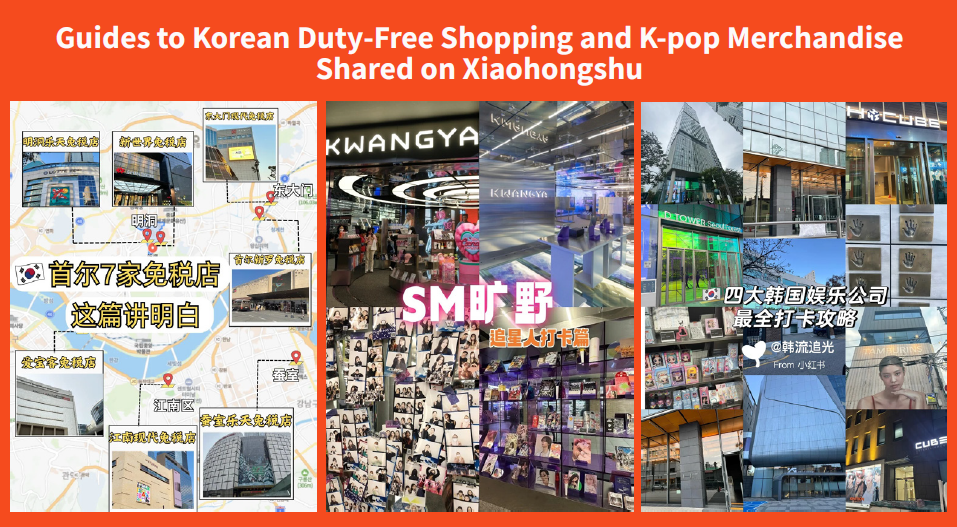
Another uniquely distinctive asset of Seoul is K-content. Seoul’s content-related tourism experiences are strongly structured around the K-pop and K-entertainment industries. Keywords such as fandom culture, concerts, and celebrities appear frequently, while the names of entertainment agencies such as SM, YG, and HYBE are directly referenced in travel reviews. This indicates that content consumption is no longer confined to online viewing, but is actively translated into physical tourism behavior.
At the same time, Seoul’s content tourism remains strongly characterized by fandom-driven visitation. Compared with Tokyo, where content is connected to spatial and merchandise consumption, and Osaka, where global IP is transformed into immersive theme park experiences, Seoul demonstrates a different structural trajectory. In Seoul, the movement is primarily “from IP to people”; in Tokyo, “from IP to space and merchandise”; and in Osaka, “from IP to immersive experiential worlds.” Consequently, although Seoul possesses a vibrant and globally influential K-entertainment ecosystem, relatively limited evidence suggests that this ecosystem has yet been fully transformed into permanent and immersive physical tourism experiences.
2. Busan’s Core Experience Structure: From Static Scenery to an Experiential Marine Tourism City
An examination of Busan’s tourism experience structure shows that nature-related mentions account for the largest share at 38.2%, followed by food at 23.8% and shopping at 16.4%. These figures indicate that Busan is perceived not merely as a consumption-oriented metropolitan destination, but as a multifaceted experiential tourism city where coastal scenery, relaxation, leisure, and gastronomy are organically integrated.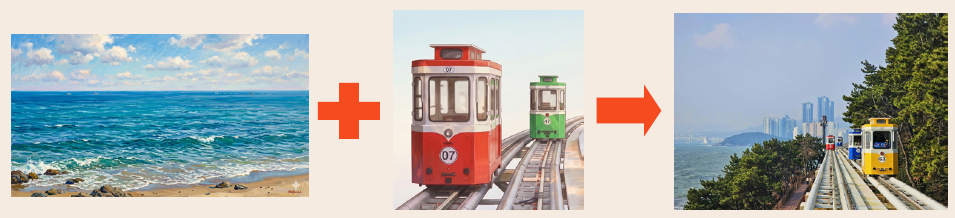
An analysis of tourist discourse reveals the simultaneous presence of “appreciation-oriented keywords” such as Haeundae, Gwangalli, beaches, and night views, alongside “activity-oriented keywords” including yachts, marine activities, skyline luge, capsule trains, and experiential programs. This suggests that Busan’s natural environment has already evolved from “nature to observe” into “nature to experience.” Tourists are no longer consuming nature passively as a scenic backdrop; instead, they engage with it through direct participation, movement, and physical immersion. The Blue Line Beach Train symbolically illustrates this transformation. By integrating transportation, panoramic views, and tourist movement into the coastal landscape, a conventional beach environment has been reconfigured into multidimensional tourism content.
This transformation becomes even more evident when Busan is compared with leading tourism cities across Asia. Just as Singapore has enhanced the density of its nature-based experiences by integrating lighting, nighttime programming, and urban design into destinations such as the Botanic Gardens and Gardens by the Bay, Busan is likewise expanding the tourism value of its marine assets by combining coastal scenery with mobility, experiential activities, nightlife, and leisure experiences. Similarly, while Kuala Lumpur and Hanoi reinforce their urban identities through night markets, street food, and authentic local cuisine, Busan possesses the potential to establish a differentiated urban identity by organically connecting its distinctive culinary assets—such as seafood, dwaeji-gukbap, milmyeon, market foods, pojangmacha street stalls, and ocean-view restaurants—with its marine tourism experiences. These comparisons suggest that Busan should not be understood merely as a beach city, but rather as a new model of an “Asian-style experiential tourism city” built upon marine nature.
Within this context, food must be reinterpreted not as a supplementary element to nature-based tourism, but as a core mechanism completing the narrative structure of the Busan travel experience. Walking along the beach, visiting local markets, enjoying night views before moving into street stalls and cafes, and concluding the experience with seafood after traveling across the coastline—this sequence constitutes Busan’s uniquely integrated tourism structure. Ultimately, Busan’s marine environment is no longer perceived simply as scenery to be viewed from a distance. Rather, it has become participatory content that tourists physically experience, sense, and consume, firmly establishing itself within social media discourse.
Satisfaction Analysis of Chinese Tourists’ Experiences in Seoul and Busan
Methodology
The relative share of experiential mentions identified through the preceding social media analysis reflects the “pre-visit image” and “travel motivation” associated with each city—namely, how tourists perceive a destination, what they expect from it, and which types of experiences they seek to consume. However, image does not necessarily translate into satisfaction. A city may be perceived as highly attractive on social media, yet this does not guarantee that expectations are fully realized during the actual visit experience. The competitiveness of a tourism destination depends not only on its ability to generate expectations, but also on its capacity to deliver those expectations in practice. Just as even an appealing menu photograph is unlikely to lead to repeat visits if the actual food falls short of expectations, a tourism city that fails to narrow the gap between expectations and actual experience is likely to remain merely “a place worth visiting once.” Accordingly, this section focuses on post-visit evaluation—that is, tourist satisfaction formed after actual travel experiences—and examines the extent to which the attractiveness promoted by each city is successfully realized on-site.
For this purpose, Chinese-language reviews posted by actual visitors were collected from Ctrip, China’s largest online travel platform, covering tourist attractions and tourism products in eight cities: Seoul, Busan, Tokyo, Osaka, Singapore, Bangkok, Hanoi, and Kuala Lumpur. To ensure analytical consistency, attractions determined to represent the same tourism site were consolidated into a single category, and tourism products were integrated into their associated attractions. For example, Namsan Park, N Seoul Tower, and the Namsan Cable Car were grouped together under the unified category of “Namsan.” In addition, to reflect the normalization of tourism demand after the pandemic, only reviews posted between 2024 and 2025 were included in the analysis. Tourist attractions with fewer than three reviews were excluded to ensure statistical reliability. Differences in ratings between cities were subjected to statistical significance testing in order to distinguish meaningful differences from random variation. Ultimately, a total of 18,694 reviews collected from 250 tourist attractions were used for analysis.
Each tourist attraction was classified into one of three categories—▲Natural Landscape ▲History and Culture ▲Entertainment—based on the classification methodology employed in Korea’s Top 500 Tourist Destinations(Yanolja Research Insights, Vol. 34, December 2025), conducted by Yanolja Research.
Natural Landscape includes natural resources such as mountains, coastlines, rivers, and lakes, as well as urban skylines and night views. This category centers on “observation- and relaxation-oriented experiences,” emphasizing scenic appreciation and staying experiences.
History and Culture includes historical sites, traditional architecture, religious facilities, museums, and art galleries that embody the historical and cultural context of a region. The core of this category lies in “meaning-oriented experiences” based on learning and exploration.
Entertainment includes theme parks, performances, and integrated leisure and commercial facilities designed primarily for amusement and commercial consumption. Active participation and immediate enjoyment constitute the principal motivations for visitation.
The following sections examine where Seoul and Busan stand relative to major competing Asian tourism cities across these three categories, while identifying the principal strengths and areas requiring improvement for each city.
Satisfaction Levels of Seoul and Busan Based on Chinese Tourist Experience Reviews: A Comparative Analysis with Competing Cities
An examination of overall experience satisfaction among Chinese tourists, measured through review ratings, shows that Busan ranked first among the eight cities with an average score of 4.723, whereas Seoul ranked fifth with a score of 4.676. On the surface, both cities appear to belong to the upper-middle tier. However, a more nuanced interpretation emerges when statistical significance testing is applied.
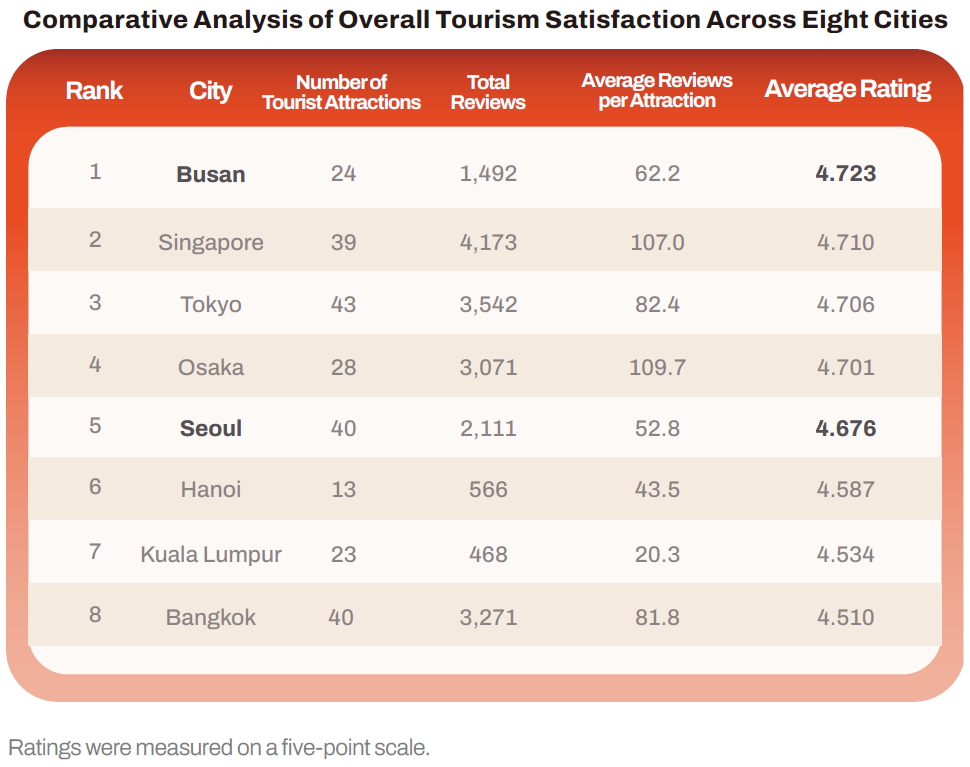
The statistical analysis indicates that Busan, Singapore, Tokyo, and Osaka formed a higher-rated cluster, recording significantly higher scores than Hanoi, Kuala Lumpur, and Bangkok. Seoul received significantly higher ratings than Kuala Lumpur and Bangkok, but its difference from Hanoi did not meet the threshold for statistical significance. This suggests that although Seoul possesses abundant tourism resources and strong global recognition, a measurable gap remains between Seoul and the top-tier cluster in terms of actual tourist satisfaction. In other words, Seoul’s primary challenge is no longer the quantitative expansion of tourism assets, but rather the enhancement of experiential quality capable of converting its existing resources into higher levels of visitor satisfaction.
Busan’s results, by contrast, are noteworthy for a different reason. Busan included only 24 tourist attractions and a total of 1,492 reviews, representing a relatively smaller quantitative scale compared with Seoul, Tokyo, or Singapore. Nevertheless, Busan achieved the highest overall satisfaction score among all cities analyzed. This finding suggests that Busan’s tourism competitiveness is evaluated less on the quantity of attractions and more on the concentration, coherence, and completeness of its experiential delivery. Ultimately, Busan appears to function not as a city that simply offers “more things to see,” but rather as a destination that successfully delivers a clearly structured and highly satisfying tourism experience through a focused set of core assets.
1. Natural Landscapes: The Power of Coastal Cities, but the Key Lies in Experience Design
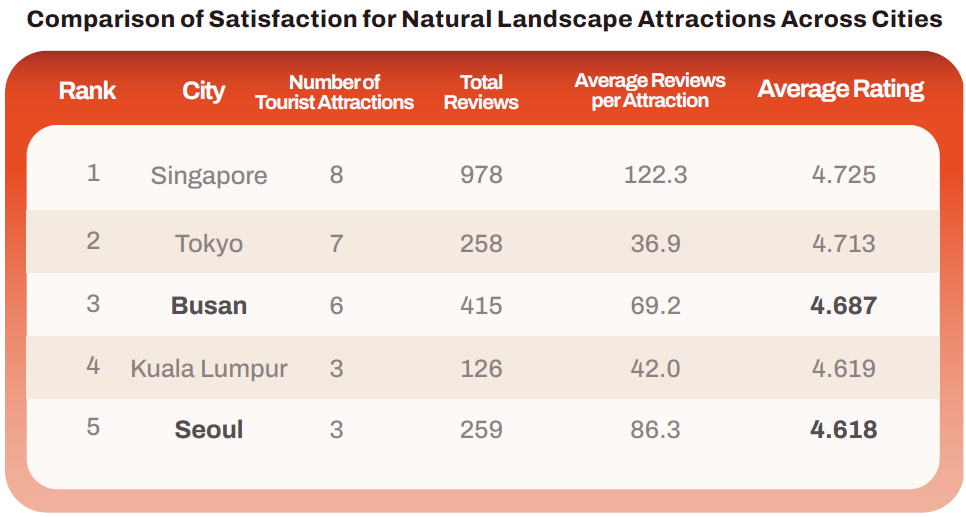
Among the cities analyzed, only five possessed at least three natural landscape attractions sufficient for statistically meaningful comparison. Within this group, Busan recorded a satisfaction score of 4.687, ranking third after Singapore (4.725) and Tokyo (4.713). This represents a clearly higher level of satisfaction than Seoul, which recorded a score of 4.618.
1-1. Busan: A City That Transformed Marine Resources into “Experiences”
Busan’s competitiveness in the natural landscape category originates from its distinctive marine assets, extending from Haeundae and Gwangalli to Cheongsapo and Songdo Beach. However, the city’s high satisfaction score of 4.687 cannot be explained merely by the existence of the sea itself. Underlying this outcome is a sophisticated design framework concerning how tourists encounter the ocean, how they move through it, and ultimately how they remember it.
The Beach Train and Sky Capsule transformed the sea from a static object of observation into an experience encountered dynamically through movement, while the X the Sky Observatory introduced a sensory layer through panoramic views of the marine city from above. The moment natural resources are transformed from “objects of viewing” into “platforms for mobility and experience,” the qualitative nature of satisfaction changes fundamentally. The ocean viewed passively from a breakwater and the ocean encountered while traveling along the coastline by train create entirely different forms of memory for tourists. Busan has successfully converted this experiential distinction into a tourism asset. Rather than simply presenting nature as scenery, the city has constructed a storytelling structure in which tourists move through nature, remain within it, photograph it, and later recount the experience. This constitutes the central mechanism behind Busan’s high satisfaction level in the natural landscape category.
This pattern also becomes evident when Busan is compared with leading cities. Singapore offers carefully designed nature-based stay experiences through destinations such as the Botanic Gardens and the National Orchid Garden, while Tokyo creates seasonally immersive urban nature experiences through cherry blossom parks and panoramic views from Tokyo Tower. The common characteristic shared by these cities is that they do not rely solely on the intrinsic beauty of natural resources. Instead, they reconstruct nature into integrated tourism products by combining it with urban circulation, seasonality, visual perspectives, and stay-oriented experiences. Within this global trend, Busan demonstrates strong competitiveness through its successful transformation of marine nature into experiential tourism assets.
1-2. Seoul: High Recognition, but an Incomplete Nature Experience
Although Seoul possesses only three major natural landscape attractions within the analysis, the average number of reviews per attraction reached 86.3—the highest among the five cities examined. This indicates that destinations such as Cheonggyecheon, Han River, and Namsan already enjoy strong recognition and visitation appeal among Chinese tourists. In other words, Seoul’s natural landscape resources do not suffer from low awareness; rather, they remain insufficiently developed as immersive tourism experiences.
The Han River, in particular, possesses substantial potential in terms of both scale and accessibility when compared with waterfront spaces in major global cities. Yet current visitor experiences along the Han River remain largely limited to fragmented activities such as walking, relaxation, and night-view appreciation. If water-based mobility, seasonal programming, nighttime content, scenic circulation routes, and stronger connections with surrounding commercial districts were further developed, the Han River could evolve beyond a simple recreational space into Seoul’s signature experiential natural tourism asset. The same applies to Namsan and Cheonggyecheon. By integrating multidimensional experiential components such as panoramic viewpoints, movement-based circulation, interpretive storytelling, and nighttime experiences, Seoul’s satisfaction level in the natural landscape category could likely be elevated substantially beyond its current level.
2. History and Culture: A Shared Weakness for Both Cities, but with Different Solutions
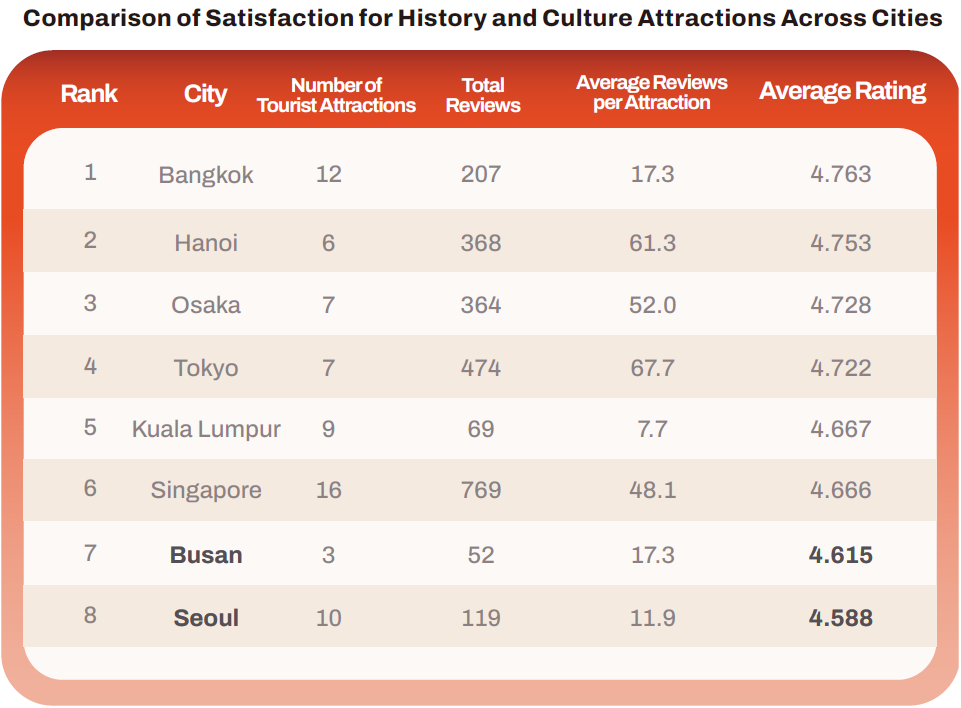
From the perspective of Chinese tourists—who themselves originate from a country with extensive historical depth and abundant cultural heritage—the history and culture category emerged as the clearest area requiring improvement for both Seoul and Busan. Among the eight cities analyzed, Seoul ranked last with a satisfaction score of 4.588, while Busan ranked second lowest at 4.615. In contrast, the highest-performing cities in this category were Bangkok (4.763), Hanoi (4.753), Osaka (4.728), and Tokyo (4.722).
However, these results should not be interpreted simply as evidence of insufficient historical or cultural resources. Seoul, in particular, possesses ten history-and-culture-type attractions, which is by no means an insignificant number. The fact that satisfaction nevertheless remains low demonstrates that tourism competitiveness depends not merely on whether heritage resources exist, but on how effectively those resources are designed to be understood, experienced, and remembered by visitors. In other words, the essence of historical and cultural tourism lies not in the heritage itself, but in the extent to which that heritage is made to feel alive within the sensory and experiential framework of contemporary travelers. In Busan’s case, the problem is partly one of limited quantitative foundations. At the same time, however, several individual resources demonstrate considerable potential.
Consequently, although both Seoul and Busan require improvement in the history and culture category, the nature of the solution differs between the two cities. For Seoul, the primary challenge lies in redesigning the quality and delivery of historical experiences. For Busan, the more pressing task is the discovery of additional cultural resources and the expansion of narrative storytelling frameworks capable of enriching the city’s historical identity.
2-1. Busan: Limited in Quantity, but Rich in Narrative Potential
On Ctrip, the travel platform examined in this study, Busan was represented by only three history-and-culture-type attractions. Compared with other cities possessing between six and sixteen such attractions, this constitutes a clear disadvantage in quantitative terms. Nevertheless, among these three attractions, Haedong Yonggung Temple recorded an exceptionally high satisfaction score of 4.792, while Gamcheon Culture Village and Huinnyeoul Culture Village also demonstrated meaningful appeal as spaces embodying Busan’s distinctive urban history.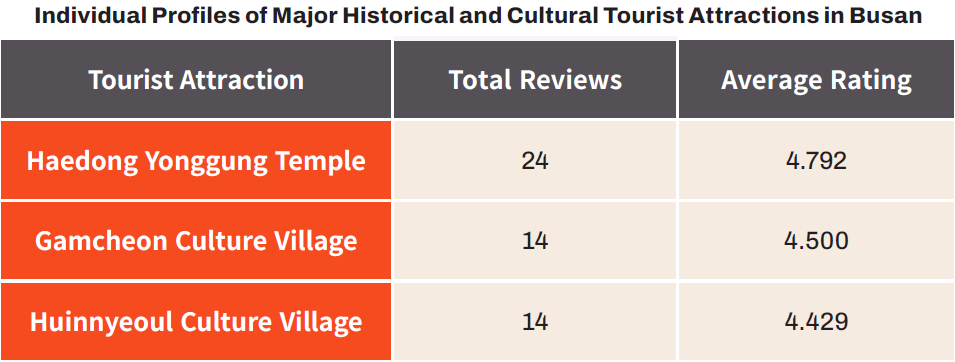
Busan possesses a unique historical narrative as a port city, a wartime provisional capital, and a cinematic cityscape. The memories embedded in Gamcheon Culture Village, where refugees settled along the hillsides and rebuilt their lives during the Korean War, the history of the harbor shaped by the lives and hardships of dockworkers, and the open urban ethos formed at the intersection of the sea and the city together constitute a narrative uniquely characteristic of Busan, distinct from the temple-centered identity of Kyoto or the royal heritage of Bangkok.
The problem, however, is that this narrative has not yet been sufficiently organized into tourism content. If Busan can extend the experience-oriented planning approach demonstrated in its marine tourism resources to its historical and cultural assets, the city can evolve beyond a conventional coastal tourism destination into a maritime historical and cultural city where narrative and experience are organically integrated. In particular, if Busan’s unique memories and identities—as a port city, wartime refuge, and film city—are connected with spatial experiences, storytelling, nighttime content, and everyday cultural experiences, its historical and cultural tourism could acquire substantially stronger differentiation and greater power to generate repeat visitation.
2-2. Seoul: Sufficient Resources, but Insufficient Experiential Density
Seoul possesses ten history-and-culture-type attractions, indicating that its historical and cultural resource base is by no means inadequate compared with major competing Asian cities. Nevertheless, its average rating stands at 4.588, the lowest among the eight cities analyzed. This suggests that the issue lies not in the absence of heritage resources, but in the city’s limited ability to convert those resources into experiential and interpretive satisfaction at the level expected by contemporary tourists.
At the same time, successful examples already demonstrate Seoul’s potential. Ikseon-dong Hanok Village (4.929) and Bukchon Hanok Village (4.818) show that Seoul’s historical and cultural resources can generate exceptionally high satisfaction when combined with contemporary lifestyle experiences. The strength of these hanok villages does not stem merely from the existence of traditional architecture itself. Rather, satisfaction derives from the ability to walk, stay, dine, photograph, and experience everyday culture within traditional spaces. In other words, the key success condition for Seoul’s historical and cultural tourism lies not in “preserved heritage,” but in “livable and experiential cultural environments.”
The relatively lower ratings of major palaces such as Gyeongbokgung and Deoksugung suggest that substantial improvement remains possible through enhancements in viewing environments, interpretive content, circulation design, nighttime programming, and connections with surrounding commercial districts. The successful formula demonstrated by hanok villages—that is, integrating historical places with sensory and lifestyle-based experiences—needs to be expanded into palace and heritage tourism spaces more broadly. Ultimately, Seoul’s competitiveness in historical and cultural tourism does not emerge from the authority of heritage itself, but from the city’s ability to translate heritage into experiences that contemporary travelers can actively understand, consume, and emotionally engage with.
3. Entertainment: Busan Ranks First, While Seoul Maintains a Strong Upper-Tier Position
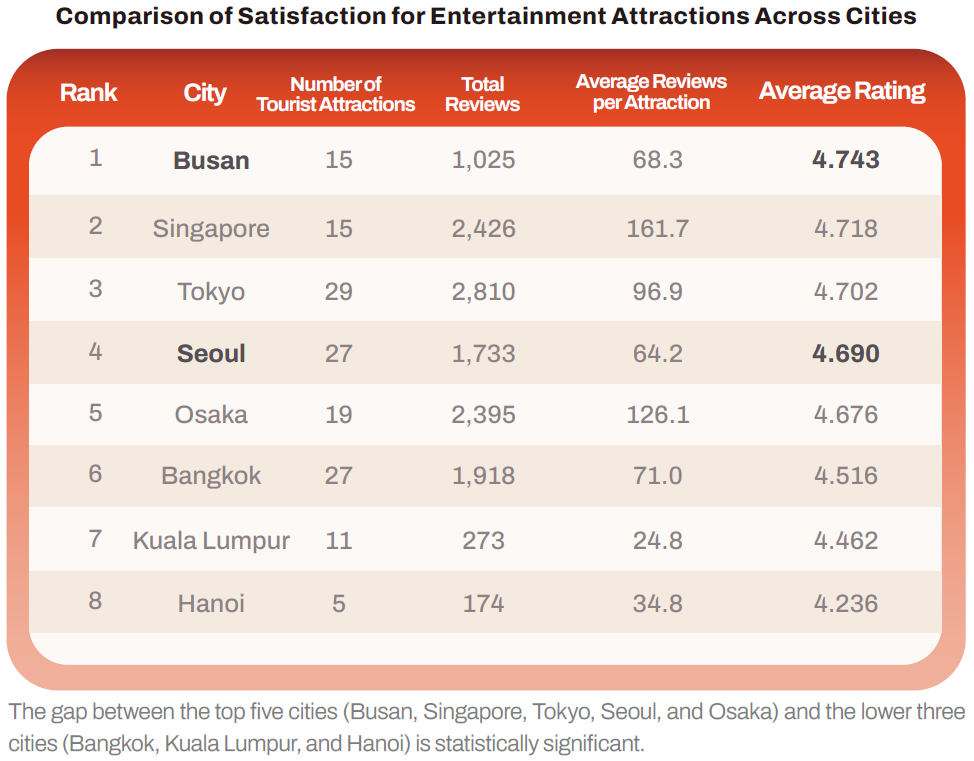
In contrast to the history-and-culture category discussed earlier, the entertainment category produced markedly different results in evaluations by Chinese tourists. Whereas both Seoul and Busan ranked relatively low in historical and cultural satisfaction, both cities entered the upper-tier cluster in entertainment-related tourism experiences.
Busan, in particular, recorded the highest score among all eight cities at 4.743, representing the most notable performance in this category. Seoul also demonstrated strong competitiveness, ranking fourth with a score of 4.690. The satisfaction gap between the top five cities (Busan, Singapore, Tokyo, Seoul, and Osaka) and the lower three cities (Bangkok, Kuala Lumpur, and Hanoi) was statistically significant, indicating that major Northeast Asian cities possess comparatively strong competitiveness in entertainment-oriented tourism experiences.
Busan’s first-place ranking is especially meaningful. It demonstrates that Busan is no longer perceived solely as a natural scenery destination, but is increasingly evolving into an experiential entertainment city by integrating marine resources with observatories, mobility-based attractions, leisure activities, and mixed-use recreational experiences.
In Seoul’s case, the city possesses substantial quantitative foundations in both the number of attractions and review volume, while also holding significant potential to integrate K-content with urban leisure resources. However, for Seoul’s entertainment experiences to translate into even higher satisfaction levels, a strategic shift is required—from isolated attraction-based consumption toward an integrated experiential flow linking K-pop, beauty, nightlife tourism, performances, pop-up stores, and mixed cultural spaces into a continuous urban tourism circuit.
However, Seoul currently faces a structural limitation in delivering such integrated spatial experiences, lacking even a properly scaled large-scale K-pop concert venue commensurate with the city’s status. As a result, Seoul has yet to fully translate the global appeal and competitiveness of K-content into the spatial and experiential dimensions of the city itself. Accordingly, Seoul’s central challenge going forward lies not merely in promoting the existence of its content assets, but in transforming them into physical spatial experiences where tourists can meaningfully stay, engage, and consume.
Strategic Recommendations for the Sustainability of Seoul and Busan
This study examined Seoul and Busan through two complementary analytical lenses. The first was the “structure of expectations” identified through social media analysis, revealing what tourists expect from each city and which experiences motivate their visits. The second was the “structure of satisfaction” measured through post-visit reviews, showing the extent to which those expectations were actually fulfilled on-site. At the intersection of these two lenses, the structural challenges facing Seoul and Busan emerge with greater clarity.
Seoul: Transforming Strong Demand Drivers into Deeper Experiences
Seoul possesses one of the strongest tourism pull factors among Asian tourism cities. Shopping, K-beauty, and K-content collectively form powerful motivations attracting Chinese tourists. However, the satisfaction data indicate that these strong demand drivers are not yet being fully converted into experiences of sufficient depth. The fact that Seoul ranks near the bottom among the eight competing cities in both natural landscape and history-and-culture categories suggests a gap between the city’s tourism assets and the actual quality of visitor satisfaction they generate.
This challenge becomes particularly evident in the structure of Seoul’s shopping tourism. Seoul’s shopping experiences are organized around purpose-driven consumption centered on questions such as “What should I buy?”—duty-free shopping, cosmetics, and branded goods. Tokyo, by contrast, operates through a spatial exploration-oriented structure built around questions such as “Where should I walk?” in districts such as Shinjuku, Shibuya, and Harajuku. This distinction is not merely stylistic. As online duty-free platforms and cross-border e-commerce channels continue to expand within China, tourism demand driven solely by product purchasing is likely to weaken over time. Products and price advantages can increasingly be substituted through digital channels, whereas on-site experiences cannot. For this reason, Seoul’s shopping tourism must evolve from transactional purchasing toward experiential consumption.
K-beauty represents the clearest example of this transformation potential. When expanded beyond cosmetics purchases into skincare treatments, personal color consulting, makeup classes, and wellness programs, K-beauty can evolve into an independent tourism driver capable of positioning Seoul as a “capital of beauty.” The same logic applies to K-content. Although Seoul possesses a globally influential and continuously evolving K-entertainment ecosystem, its ability to translate this ecosystem into immersive physical spaces and experiential infrastructure remains limited. Beyond converting fandom into visitation, Seoul must develop experiential systems capable of extending visitor stay duration, encouraging spatial consumption, and generating repeat visitation.
The required direction is similar in the history-and-culture and natural landscape categories. The exceptionally high ratings of Ikseon-dong and Bukchon Hanok Villages demonstrate that traditional spaces can achieve high satisfaction when combined with contemporary lifestyle experiences. The relatively lower satisfaction levels of Gyeongbokgung and Deoksugung do not result from insufficient scale or historical significance, but from insufficient experiential density. This issue could be addressed by developing integrated historical and cultural experience routes linking Gyeongbokgung, Seochon, and Bukchon into more immersive tourism circuits.
The Han River and Namsan likewise possess global-level potential, yet current experiences remain largely limited to sightseeing and relaxation. Seoul’s challenge is therefore not to create additional resources, but to enrich existing assets through longer stays, interpretation, mobility-based experiences, nighttime programming, and lifestyle-oriented cultural layers that deepen the density of urban tourism experiences.
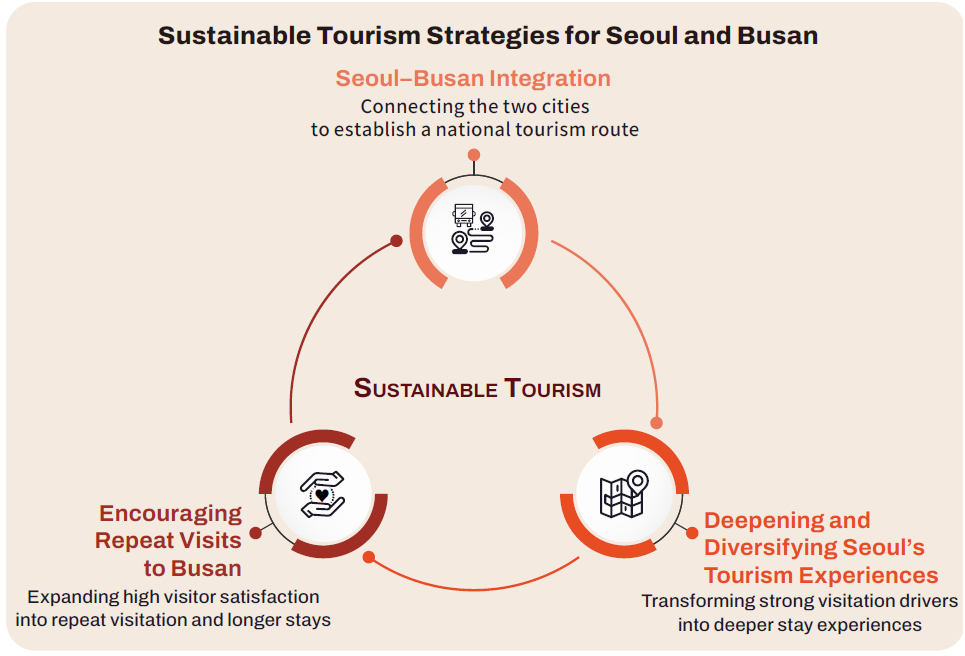
Ultimately, Seoul’s strategy converges into a single imperative: transforming tourists drawn by powerful demand drivers into visitors who remain within the city longer and engage with it more deeply through carefully designed experiential structures.
Busan: Expanding High Satisfaction into Repeat Visitation
Busan’s current performance among Chinese tourists is highly significant. Ranking first overall in satisfaction among the eight cities analyzed, and first again in the entertainment category, demonstrates that Busan is already delivering tourism experiences of exceptionally high quality to Chinese visitors. Particularly noteworthy is the fact that Busan achieved these outcomes despite possessing only approximately half the number of tourist attractions found in Seoul. This clearly indicates that Busan’s competitiveness derives not from the quantity of resources, but from the density and concentration of its experiential design.
Importantly, many Chinese tourists visiting Busan are likely to have previously visited Seoul. Their evaluations therefore implicitly reflect comparisons between Korea’s two representative tourism cities. Busan’s distinctive tourism assets have clearly generated strong satisfaction among Chinese tourists. This does not imply that Seoul lacks tourism resources; rather, it suggests that Busan currently holds a remarkably strong comparative advantage even among Asia’s leading tourism cities.
Busan’s tourism experience structure is centered on natural landscapes (38.2%), complemented by food experiences (23.8%) that complete the experience on a sensory level. These figures represent more than simple preference rankings. They reveal the manner in which Busan intervenes in tourists’ sensory memory formation. Walking along the beach, visiting local markets, enjoying night views before moving into pojangmacha street stalls, and concluding the day with seafood after traveling along the coastline together form Busan’s distinctive stay-oriented tourism structure. In Busan, food is not simply a matter of “what to eat,” but rather a mechanism shaping “how visitors remember Busan’s sea,” providing narrative closure to marine tourism experiences.
The Capsule Train and the X the Sky Observatory symbolically embody this structure. Busan’s natural environment has already evolved from “nature to observe” into “nature to experience.” By integrating transportation, panoramic views, emotional circulation routes, and marine scenery, the city has transformed ordinary coastal landscapes into multidimensional tourism content. This ability to combine nature with mobility, visual perspectives, photography, gastronomy, and nightlife constitutes Busan’s current strategic strength.
However, the city’s heavy dependence on marine resources also represents a long-term structural risk. The fact that Busan possesses only three history-and-culture-type attractions and continues to rank relatively low in this category may ultimately limit its ability to convert “first-time visitors” into “repeat visitors.” To ensure that current satisfaction levels do not remain merely temporary impressions, Busan must add greater humanistic and narrative depth on top of its marine tourism strengths.
Busan possesses unique stories that are difficult for competing cities to replicate. The refugee histories embedded in Gamcheon Culture Village, the memories of dockworkers preserved in the harbor, the city’s identity as the cinematic capital of Korea, and the open atmosphere formed through the intersection of the sea and urban life collectively constitute Busan’s unique narrative assets. As demonstrated by the success of Haedong Yonggung Temple and Gamcheon Culture Village, Busan’s next stage lies in extending the experiential planning model proven effective in marine tourism into historical and cultural tourism assets. When the traces of the wartime capital, the emotions of the film city, the identity of the harbor, and regional lifestyle culture are transformed into walkable, consumable, and immersive tourism content, Busan can evolve beyond a high-satisfaction marine city into a repeat-visit-oriented experiential tourism hub within Asia. Furthermore, by connecting with nearby destinations such as Gyeongju, which possesses rich historical heritage; Geoje, with its exceptional natural environment; and Tongyeong, known for its traditional fishing villages, Busan could establish itself as the hub of a broader regional tourism network. Such a strategy would simultaneously compensate for Busan’s relative limitations in historical resources while further strengthening its natural tourism competitiveness, potentially transforming the southeastern region of Korea into one of Asia’s premier tourism zones.
Seoul–Busan Integration: Two Complementary Axes Completing Korean Tourism
When viewed independently, Seoul and Busan each reveal distinct strategic challenges. However, when considered together, a broader strategic direction for Korean tourism emerges. The relationship between Seoul and Busan is not competitive, but structurally complementary. If Seoul functions as the capital of K-consumption and K-content—a city where tourists admire and consume Korea—then Busan functions as the capital of Korean-style marine leisure—a city where tourists physically experience and emotionally remember Korea. Rather than repeating the same experiences, the two cities satisfy different layers of tourism demand.
Just as Osaka forms a broader regional tourism ecosystem through integration with Kyoto and Nara, Seoul and Busan should likewise be connected within a unified national tourism route. The Seoul–Busan high-speed rail corridor should be understood not merely as transportation infrastructure, but as a strategic route linking Korea’s tourism experiences into a coherent narrative structure. When tourists experience K-content and K-beauty in Seoul, marine landscapes and regional cuisine in Busan, and subsequently develop motivations for repeat visitation to Korea, the country can be recognized not as a single-city destination, but as a tourism nation offering multiple interconnected layers of experience.
Ultimately, tourism competitiveness is determined not by the scale of resources, but by the sophistication of experiential design. Seoul must convert strong demand drivers into deeper and longer stay experiences, while Busan must enrich its exceptional marine experiences with stronger historical and cultural narratives. When these two directions are successfully integrated into a unified national tourism narrative, Korean tourism can move beyond temporary demand growth toward sustainable inbound competitiveness.
Conclusion: The Competitiveness of Seoul and Busan Ultimately Depends on Experience Design
Tourism competitiveness is no longer determined simply by how many resources a destination possesses, but by how effectively those resources are embedded into travelers’ senses and memories. This is precisely why the present study analyzed both experiential perceptions expressed on social media and post-visit reviews collected from OTA platforms. The former reveals what tourists expect from a city, while the latter demonstrates how faithfully those expectations are realized in actual on-site experiences. In other words, one reflects “pre-visit expectations,” while the other captures “post-visit evaluations.” The message emerging at the intersection of these two datasets is unequivocal: cities that succeed in tourism competition are not necessarily those with the largest quantity of resources, but those most capable of transforming their existing resources into dense and memorable experiences.
The Chinese outbound market has already moved beyond quantitative recovery and entered a stage of qualitative transformation. The central criterion of travel is shifting from “what to see” toward “how to spend time, what to experience, and what memories to take away.” At the same time, tourism competition across Asia is rapidly evolving from country-level competition into city-to-city competition centered on experiential value.
Seoul is a city with exceptionally strong demand drivers. K-shopping, K-beauty, and K-content function as powerful attractions drawing Chinese tourists to the city. The critical challenge, however, lies in whether these attractions are successfully translated into meaningful stay experiences and motivations for repeat visitation. Purpose-driven consumption centered on duty-free shopping and cosmetics purchases can ultimately be substituted through online channels and price competition. Seoul must therefore evolve shopping into experiential consumption, transform K-beauty into participatory self-care tourism, and expand K-content beyond fandom-based visitation into immersive spatial experiences. In parallel, assets such as the Han River, Namsan, royal palaces, and hanok villages need to be enriched through mobility-based experiences, interpretive programming, extended stay opportunities, and nighttime content in order to increase the experiential density of the city as a whole. Seoul’s central challenge is no longer simply attracting more tourists, but converting powerful visitation drivers into deeper and longer-lasting urban experiences.
Busan, by contrast, already demonstrates a different model of possibility. Although it possesses fewer attractions than Seoul, Busan achieved exceptionally high overall and entertainment satisfaction scores, indicating that its competitiveness derives not from the quantity of resources, but from the density of experiential delivery. Busan’s sea is no longer consumed merely as scenery. It has been transformed into an experiential asset that tourists ride through, walk along, photograph, dine beside, and ultimately remember. The Blue Line Beach Train and Sky Capsule, panoramic marine night views, drone shows, seafood markets, and local cuisine collectively position Busan not simply as “a city to observe,” but as “a city to physically experience and remember.”
However, Busan’s next strategic task lies in extending the successful experiential formula demonstrated in its marine tourism sector into the domains of history and culture. The memories of the port city, the narratives of the wartime provisional capital, the urban histories embodied in Gamcheon and Huinnyeoul Culture Villages, and Busan’s identity as Korea’s cinematic city constitute narrative assets unique to Busan alone. When these resources are transformed into tourism content that visitors can actively explore and experience, Busan can evolve beyond a high-satisfaction marine city into an Asian experiential tourism hub capable of generating repeat visitation and long-term stays. In this sense, Busan’s future competitiveness will not be secured merely by preserving the attractiveness of its coastline, but by layering historical and cultural depth upon its marine foundation. At the same time, strengthening Busan’s position as a hub city through the creation of a broader regional tourism network linking surrounding destinations will also be critically important.
Ultimately, the strategies of Seoul and Busan cannot be understood separately. If Seoul is the city that makes visitors admire and consume Korea, Busan is the city that makes visitors physically feel and emotionally remember Korea. The two cities are therefore not competitors, but complementary experiential axes that together complete the structure of Korean tourism. When the attraction generated by K-consumption and K-content in Seoul is organically connected to Busan’s marine experiences and regional narratives, Korea can be perceived not as a single-city destination, but as a multidimensional tourism country offering multiple layers of experience.
The era of resource-centered tourism is fading. The future competitiveness of Korean tourism will depend not on how many resources the country possesses, but on its ability to design experiences that shape how travelers encounter Korea, remember it, and ultimately desire to return. Seoul must convert powerful demand drivers into deeper experiential engagement, while Busan must enrich its exceptional marine experiences with stronger humanistic and cultural narratives. When these two cities are connected within a unified national tourism narrative, Korean tourism can move beyond temporary demand growth and toward sustainable long-term competitiveness.
To reference this article, please use the following citation: “Yejin Ahn, Soocheong Jang, Kyuwan Choi(2026). Seoul and Busan as Experienced by Chinese Tourists: A Comparative Analysis of Experience Structures Across Major Asian Cities, Yanolja Research Insights, Vol.42.”
 Prev
Prev  Back
Back 