
Vol. 37 Developing Inbound Tourism Zones Based on Social Network Analysis
- Reg Date
- 2026.02.26


Developing Inbound Tourism Zones Based on Social Network Analysis
Kyuwan Choi, Professor at Kyung Hee University & Director H&T Analytics Center / [email protected]
Soocheong Jang, Professor at Purdue University & Director at Yanolja Research / [email protected]
An Cheol Jung, Researcher at H&T Analytics Center / [email protected]
The South Korean tourism industry currently stands at a pivotal inflection point. In 2025, the nation welcomed 18.93 million inbound tourists, breaking all-time records. Given this trajectory, entering an era of 20 million annual visitors by 2026 is all but certain. Yet, the significance lies not merely in the numbers. It is evident that the establishment of effective "Inbound Tourism Zones" could generate an explosive influx of tourists and industrial ripple effects that far surpass current projections.
Why, then, must we focus on the creation of inbound tourism zones at this specific juncture? The answer lies in the fact that such initiatives are not simply matters of regional development; they represent the most pragmatic solution to the complex structural crises—both economic and social—currently confronting South Korea.
First, inbound tourism serves as a definitive momentum to revitalize domestic demand in an economy languishing in a low-growth trap. South Korea’s real GDP growth has suffered a prolonged decline, with forecasts for 2025 hovering in the 1 percent range—among the lowest in the OECD. Compounding this is a marked contraction in private consumption, raising fears of entrenched low growth that saps vitality across the entire economy.
In this context, expanding consumption through inbound tourism acts as a potent catalyst for stimulating domestic demand. Metaphorically speaking, unlike traditional exports where manufactured goods are shipped across borders, inbound tourism is a form of "on-site export." It compels global consumers to visit domestic sites and spend foreign currency directly within local commercial districts. In essence, the influx of tourists drives an immediate expansion of private consumption, serving as a core engine directly contributing to economic growth.
Second, the creation of tourism zones on a metropolitan scale is a critical mechanism for delaying regional extinction and promoting balanced national development. Amid accelerating population decline in rural areas, as of November 2025, 138 out of 229 basic local governments nationwide—60.2 percent—are classified as regions at risk of extinction. Under the stigma of the "Republic of Seoul," the entire nation faces the specter of disappearance. Establishing inbound tourism zones in non-metropolitan areas can trigger the dispersion of tourism demand, currently heavily concentrated in the capital region, to the provinces.
Spatial connectivity through tourism mitigates the disequilibrium of capital and infrastructure focused in the metropolitan area. It plays a role in equitably distributing mobility innovations and economic trickle-down effects to every corner of the country. Restructuring the regional tourism economy is, therefore, an essential task for rectifying the "tilted playing field" of South Korea’s economic landscape.
Third, inbound tourism improves the profitability of the crisis-ridden self-employment sector and creates high-quality jobs essential for regional settlement. South Korea’s self-employed sector is often cited as a primary cause of low service productivity; industries such as wholesale and retail, dining, lodging, and transportation are particularly vulnerable due to their small scale and low profitability. The tourism industry functions as a lifeline, generating powerful backward and forward linkage effects for these very sectors. Tourists purchase goods at local shops, dine at restaurants, sleep in accommodations, and utilize various modes of transportation. They are, in effect, key consumers creating direct effective demand for the ecosystem of small business owners.
Given that South Korea has one of the highest proportions of self-employment among OECD nations, fostering the tourism industry is an indispensable remedy for restoring this ecosystem. Furthermore, because tourism boasts a significantly higher employment multiplier than manufacturing, it generates numerous jobs preferred by younger demographics, offering an optimal solution to prevent the exodus of regional youth and strengthen local settlement.
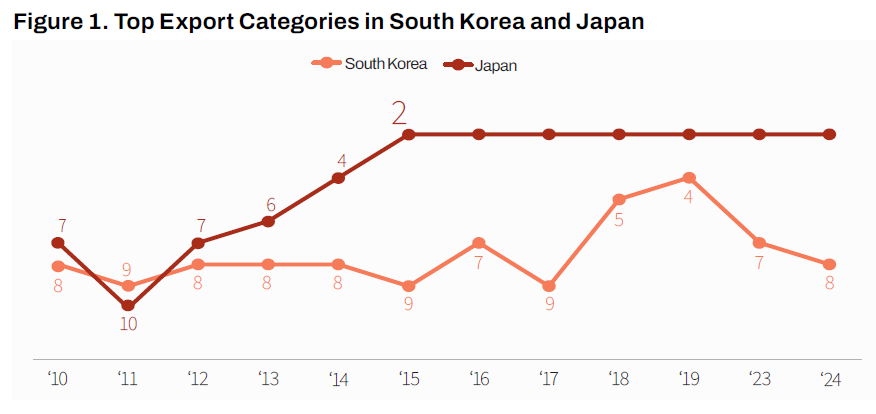
A definitive case demonstrating this potential is Japan. Figure 1 illustrates the dramatic divergence in the performance of South Korea and Japan over the past 15 years. As recently as 2011, the two nations held similar rankings in inbound tourism exports (Korea at 9th, Japan at 10th), with Korea often leading in absolute visitor numbers. However, Japan succeeded in a fundamental systemic overhaul through a pan-national "Tourism First Policy."
As a result, since 2015, tourism has emerged as a core national industry in Japan. Today, Japan's tourism revenue has ascended to become the nation's second-largest export sector—surpassing traditional heavyweights like semiconductors and steel—trailing only automobiles. Conversely, South Korea remains stagnant at 8th place in export rankings as of 2024. This discrepancy is a root cause of the chronic deficit in the service account and clearly illuminates the path forward.
If South Korea fosters tourism as a top-three key export industry alongside semiconductors and automobiles, the economic impact would extend far beyond a simple improvement in the balance of payments. It would undoubtedly serve as a decisive starting point for resolving the aforementioned structural challenges facing the nation.
In this macroeconomic context, this insight report aims to empirically verify the necessity of creating inbound tourism zones and to present concrete implementation plans. Specifically, we advocate for a rational approach based on the "Hub-and-Spoke" strategy—avoiding indiscriminate development in favor of organically connecting hub cities with surrounding areas to maximize synergy.
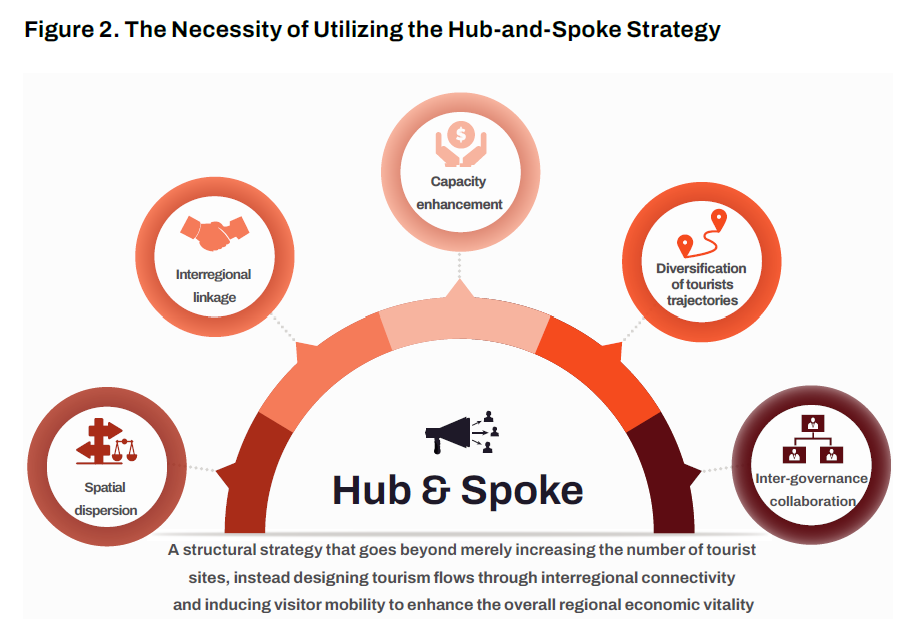
The Hub-and-Spoke Network Model for Tourism Zone Development
The Imperative of the Hub-and-Spoke Model:
The most pressing imperative regarding the creation of inbound tourism zones lies in the clear comprehension and application of the "Hub-and-Spoke" concept. Originally introduced to explain aviation cargo and passenger networks, the Hub-and-Spoke model maximizes structural efficiency by radially connecting multiple points ("Spokes") to a central base ("Hub").
The concept is easily visualized through the structure of a bicycle wheel: the central axle acts as the hub, while the radiating wires serve as the spokes. Extending this concept to a biological perspective, it is akin to the vascular system of a vast organism. If the hub acts as the heart, pumping the powerful "economic arterial blood" of tourist influx, the spokes—tailored to the unique characteristics of each region—act as capillaries, delivering vitality to every corner of the local economy and revitalizing the entire zone.
In the tourism industry, the Hub-and-Spoke strategy drives both quantitative and qualitative growth in the ecosystem by facilitating spatial connectivity, the dispersion and diffusion of demand, and the expansion of carrying capacity. According to modern spatial economics and the latest research in network design, such a hub-centered structure optimizes flow-based cost functions, going beyond simply connecting regions with lines. Compared to directly linking scattered points, this approach drastically reduces distance friction and transportation costs, serving as a key mechanism for generating massive economies of scale.
Particularly in the context of inbound tourism, this model completes an efficient travel structure. It satisfies the tourist's primary desire to visit major hubs while naturally funneling them to spokes to sequentially fulfill their "Marginal Needs." In other words, the Hub-and-Spoke strategy enhances travel convenience through spatial linkage and maximizes satisfaction by allowing tourists to experience exactly what they desire within a limited timeframe. Simultaneously, by offering a diverse array of attractions and content within a single zone, the model maximizes the utilization of tourism resources through the dispersion and diffusion of demand.
This expansion of carrying capacity is a prerequisite for elevating South Korea’s tourism competitiveness. Above all, this model is the key solution to "Overtourism," where excessive demand concentrates in specific megacities, degrading the quality of life for local residents. By spatially distributing the flow of tourists within the network, it operates as a powerful adjustment mechanism, alleviating congestion in the metropolitan area while simultaneously curing the "under-utilization" of neglected provincial tourism resources.
Conversely, the "Point-to-Point" method, which simply connects regional tourism resources on a one-to-one basis, results in structural inefficiencies due to increased travel distances, time consumption, and the spatial concentration of capacity. Therefore, the application of the Hub-and-Spoke strategy in South Korea is not merely a matter of physically increasing the number of tourism sites. It is a strategic necessity for the sophistication of the tourism industry—organically connecting regions to meticulously design tourism flows and inducing the voluntary movement of tourists to breathe vitality into the broader regional economy.
Defining and Typifying Hub-and-Spoke Tourism Cities
To efficiently construct the aforementioned tourism ecosystem, the roles of the Hub (center) and the Spoke (branch) must be clearly defined and structured. Fundamentally, a Hub City serves as a "Tourism Gateway," where human and material exchanges converge based on core infrastructure such as international airports and ports. It acts as a pivotal center that radiates incoming tourism demand to surrounding spokes. Correspondingly, a Spoke City is organically linked to the hub, absorbing the trickle-down effect of tourism demand while offering unique, localized content that complements experiences the hub cannot provide.
In modern tourism network design, the spatial movement of demand is explained by the "Gravity Model," a concept derived from Newton's Law of Universal Gravitation and widely applied in tourism studies. This theory posits that tourist flows are determined by the proportionality of a destination's attractiveness (mass of resources) and the inverse proportionality of the travel distance.
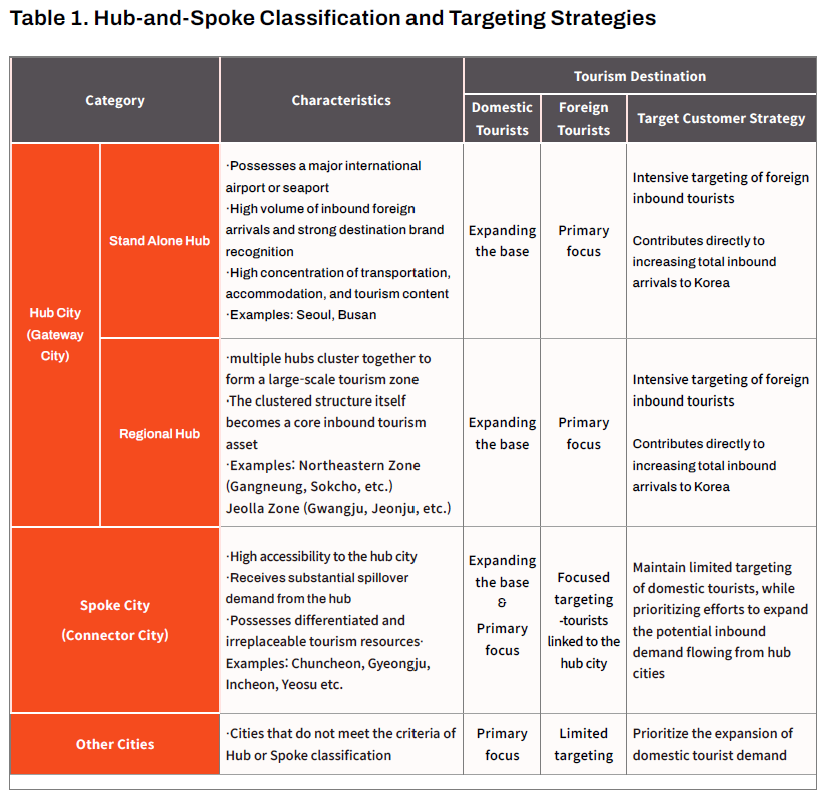
Based on this model, South Korea's "Stand-alone Hubs" like Seoul and Busan—possessing overwhelming gravitational pull and global recognition—must move beyond zero-sum competition for domestic tourists. Instead, they must function as "Anchors" that drive growth and expand the total pie of the national tourism industry by prioritizing the attraction of international visitors. Furthermore, "Regional Hubs" such as Sokcho and Gangneung in the Gangwon region, or Gwangju, Jeonju, Suncheon, and Yeosu in the Jeolla region, must compensate for the insufficient gravitational pull of individual cities through mutual combination. It is a critical time for strategic positioning that secures a "critical mass" of integrated tourism attractiveness to intensively target foreign tourists.
Adopting strategies commensurate with their status is an indispensable prerequisite for revitalizing inbound tourism. Moreover, Spoke Cities must not remain in a structure of simple subordination to Hub Cities. Hubs should not compete with Spokes for demand, but rather function as core gateways that enhance mutual connectivity to create efficient tourism zones. Accordingly, this study classifies Hub Cities into Stand-alone and Regional types and proposes tourism zone development plans optimized for their respective characteristics.
Meanwhile, Spoke Cities serve as the vanguard for expanding foreign tourism demand flowing from Hub Cities, while simultaneously maintaining a solid base of domestic visitors. Prominent examples include Incheon and Chuncheon for Seoul, and Gyeongju and Geoje for Busan. These Spoke Cities must possess distinct and unique tourism resources—ranging from natural landscapes and historical heritage to entertainment—that highly urbanized Hub Cities cannot replicate.
According to the core axiom of a successful Hub-and-Spoke network, a Spoke must offer "irreplaceable marginal value" that the Hub is unable to provide. If a Spoke functions merely as an inferior substitute or a compatible alternative to the Hub, there is no incentive to induce further tourist movement.
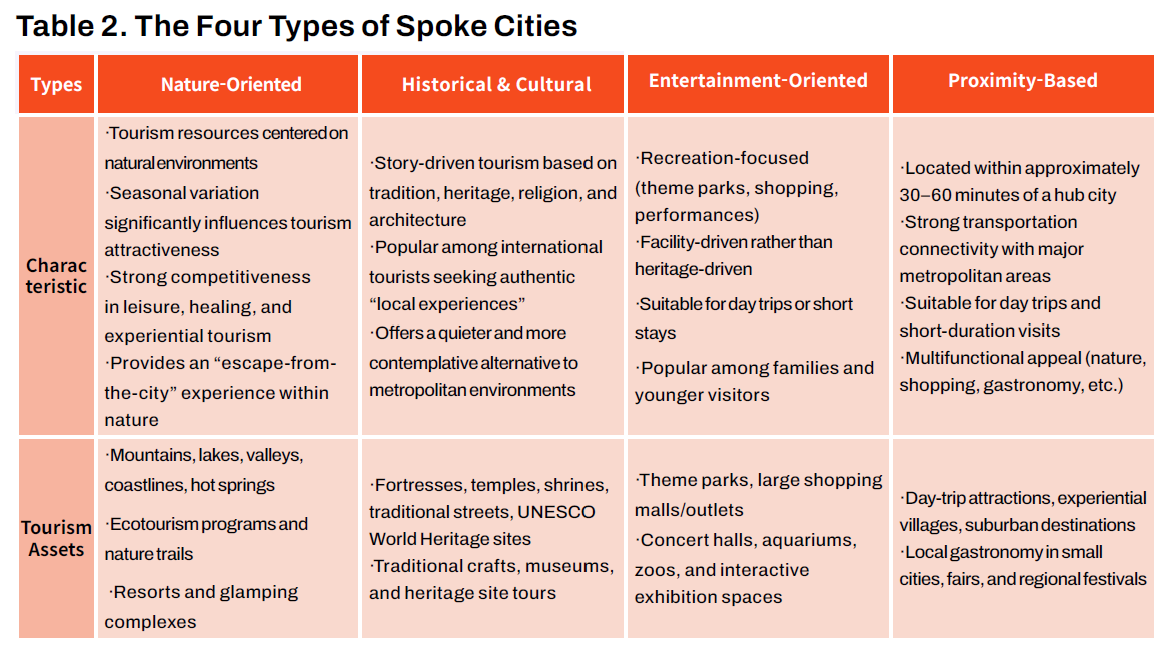
Therefore, this study refines the classification of Spoke types into four distinct categories based on the nature of the exclusive tourism resources they possess. Table 2 outlines the characteristics of these four Spoke City types and their representative tourism resources.
Redefining Tourism Zones Through Social Network Analysis
Tracking Movement Trajectories Based on Social Data and Network Analysis
To transcend the limitations of traditional tourism statistics—often confined by administrative boundaries—and to identify the dynamic, actual movement trajectories of foreign tourists, this insight report applies Social Network Analysis (SNA) techniques based on social data. Network analysis is a methodology that mathematically models relationships between objects to understand the structure and interactions within a system. Applying this to the tourism ecosystem allows for the visualization of tourism flows, analogous to mapping brain activity through the connections of neurons (nodes) and neural networks (edges). The three core elements of this analysis are defined as follows:
First, Nodes: These represent the individual objects within the network—the "Tourist Sites" themselves. Second, Edges: These are the connecting lines between nodes, representing the "Movement Paths" of tourists. This encompasses not merely undirected connections but also the directional flow (directed) of where tourists come from and where they go. Third, Weights: These values represent the strength of the connection, quantifying the "Frequency of Movement" or "Physical Distance" to precisely measure the qualitative and quantitative density of the relationship.
In essence, this analysis measures the Centrality and Cohesion of the vast organic network formed by tourist sites (nodes) through movement paths (edges). It is a process of empirically verifying the actual structure of the tourism ecosystem through data.
Specifically, this study harnessed the vast repository of social data from the global travel platform Tripadvisor. We reconstructed visit records—previously viewed as fragmented "Points"—into continuous "Lines" or "Journeys." To ensure statistical significance and reliability, we collected a total of 199,170 reviews written by foreign tourists visiting Korea over the past decade. Based on this, visit data for 2,386 major tourist sites nationwide were analyzed.
These records serve as "digital footprints" containing the most candid experiences of individual tourists, devoid of the artificial intervention common in surveys. As such, they constitute the most powerful and empirical foundational data for designing effective inbound tourism zones.
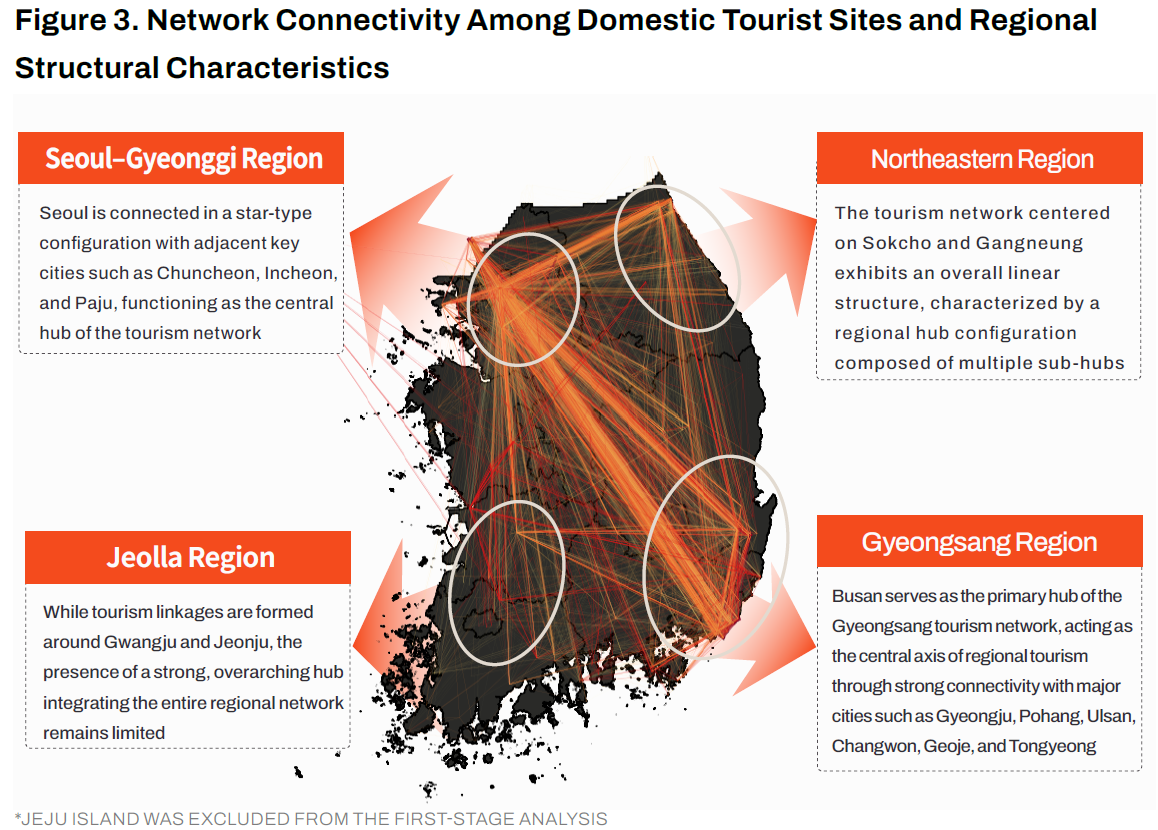
Primary Analysis Results and Capacity Verification Utilizing Isochrones
As revealed by the network analysis detailed later in this report, domestic inbound tourism zones have been typified into four major regions: the Capital Area, Gyeongsang, Gangwon, and Jeolla. (Jeju Island, given its geographical distinctiveness, is treated as an independent region and reviewed separately.)
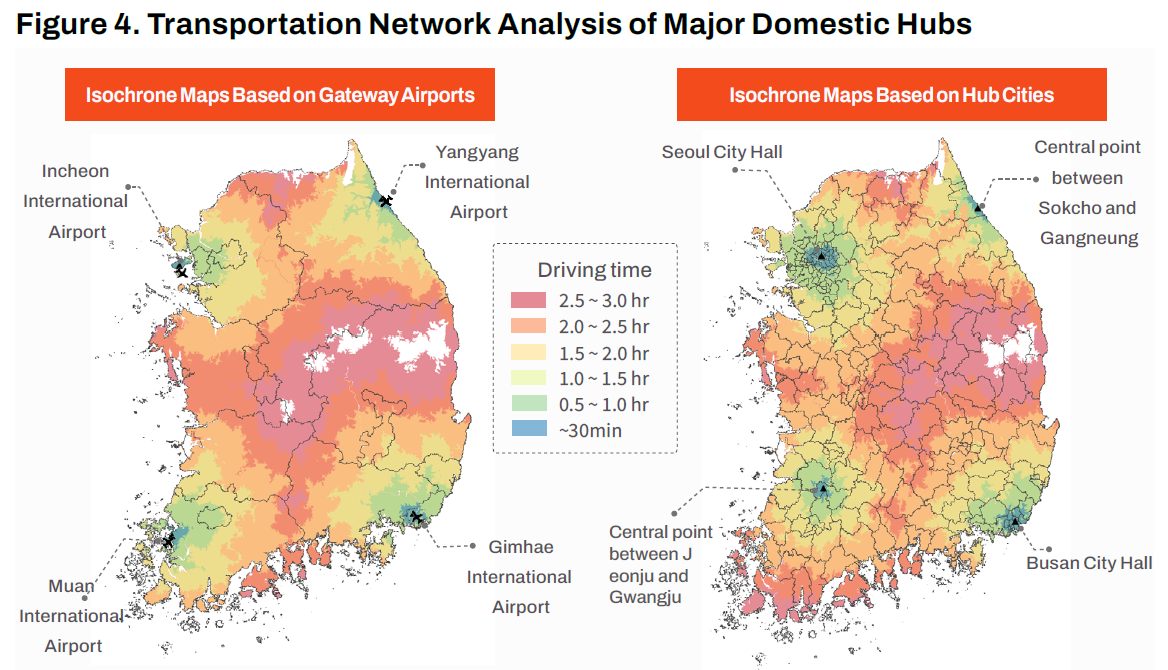
To verify the actual tourism capacity of these four derived zones and examine the physical connectivity between inland hubs, we conducted a transportation network analysis centered on the four major international airports—Incheon, Gimhae, Muan, and Yangyang—which serve as key gateways for each region. In this process, we applied "Isochrone Map" analysis based on the TIME API (Traffic & Infrastructure Mapping Engine), which reflects real-time road conditions and transportation infrastructure, rather than relying on simple straight-line distances.
An isochrone map visualizes lines connecting points accessible within the same travel time from a specific origin. For instance, it maps the geographic range reachable within two hours by car or rental vehicle departing from Gimhae International Airport.
The analysis demonstrated that utilizing these four hub airports enables efficient diffusion to major tourism hubs nationwide within a "2-hour isochrone" based on vehicular travel. This implies that diversifying entry routes—currently excessively concentrated on Incheon International Airport—would serve as a decisive foundation for drastically reducing travel time costs for tourists and lowering both the psychological and physical entry barriers to regional tourism.
Verification via GIS-Based Distance Weighting and the Gravity Model
Relying solely on simple zonal demarcation based on isochrone maps is insufficient for defining precise tourism zones. A prerequisite for finalizing the four tourism zones is the evaluation of "distance resistance" and "mutual interference" between hubs.
According to the aforementioned Gravity Model, if two hubs are situated too closely, they fail to generate mutual synergy. Instead, the "Straw Effect" occurs, wherein the city with greater gravitational pull absorbs the demand of the smaller city, rendering it difficult for them to function as independent economic zones. Generally, it is posited that a physical distance of at least 200 kilometers and a travel time exceeding two hours must be maintained between hubs to establish independent economic spheres. This principle is akin to the solar system, where planets must maintain appropriate distances to orbit without colliding.
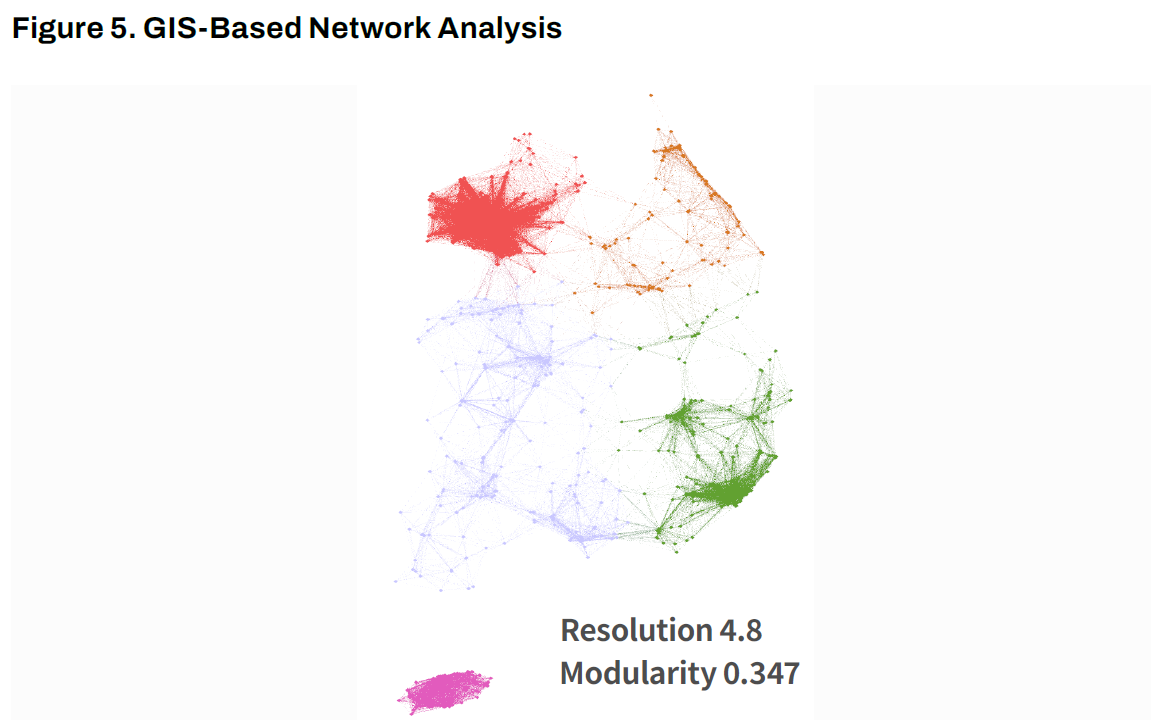
Based on this premise, we conducted additional, sophisticated network analysis applying GIS-based distance weighting to demarcate tourism zones with greater precision. Specifically, to extract routine and frequent movement patterns within zones, we established a threshold to eliminate noise from long-distance travel data, such as trips between Seoul and Busan or Seoul and Jeju.
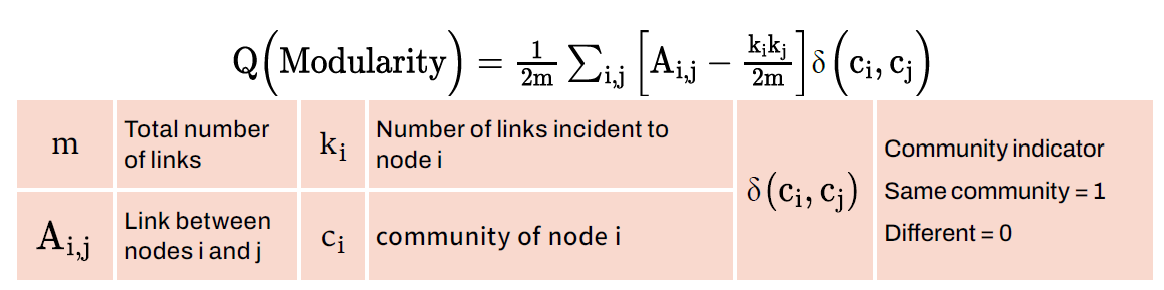
We then applied the "Louvain Algorithm," a community detection technique, to the refined network to maximize modularity. This process is analogous to identifying small groups engaged in intimate conversation within a massive party hall; a higher modularity score indicates that tourism sites within a specific zone are tightly interconnected.
Deriving the Five Core Tourism Zones
Synthesizing GIS-based distance weighting and modularity analysis, the results confirm that South Korea’s inbound tourism map is not defined by administrative boundaries but rather by the cohesion of actual movement. The data clearly converges into five core zones: the Capital Area, Gangwon, Gyeongsang, Jeolla, and Jeju.
Specifically:
- Capital Area: Centered on Seoul, it forms the densest and most complex network structure.
- Gangwon: It exhibits a linear structure stretching along mountainous terrain and coastlines.
- Gyeongsang: A distinct radial diffusion structure spreading outward from hub cities like Busan and Daegu is evident.
- Jeolla: It shows a relatively moderate diffusive structure, though its cohesive force is weaker compared to other zones.
- Jeju: Due to its geographical nature, it possesses a perfectly independent structure.
The derivation of these five zones holds profound significance; they represent not artificial administrative divisions, but empirical "behavioral spheres" forged by the choices and actions of international tourists.
The implications of this analysis are clear: future inbound tourism policy must transcend the fragmented, "fend-for-yourself" marketing approach of individual local governments. Instead, a strategic realignment is imperative—one that connects infrastructure and integrates content around these five data-proven "Mega-Tourism Zones."
Detailed Network Analysis of Regional Tourism Zones
① Seoul and the Capital Area: The Overwhelming Single Hub and the Aesthetics of Spillover
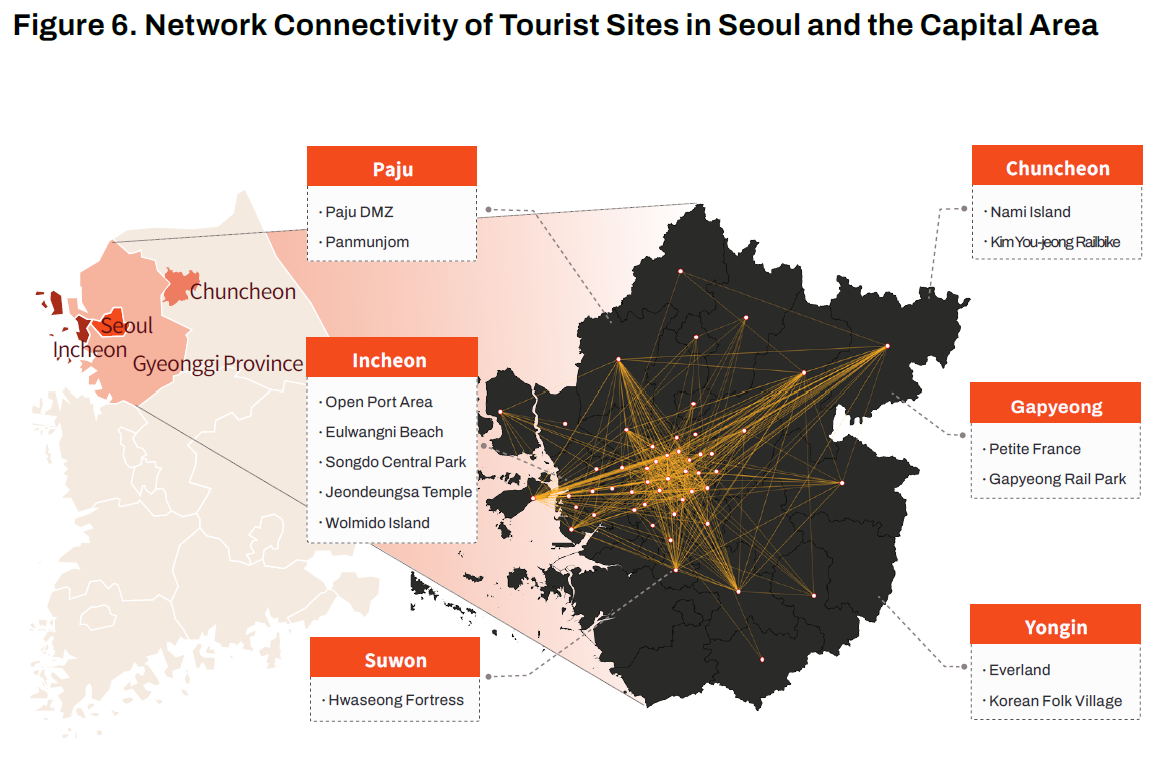
In network theory terms, the Seoul and Capital Area zone exemplifies a classic "Monocentric Radial Structure." The analysis reveals the strongest cohesion among intra-regional tourist sites centered on Seoul, the "mega-regional hub" of inbound tourism. Distinct trajectories of metropolitan movement between Seoul and bordering areas in Gyeonggi Province were clearly observed.
Specifically, the volume of movement to Paju (DMZ, Panmunjom), Chuncheon (Nami Island, Rail Bike), and Incheon (Open Port Area) recorded overwhelming "Link Strength." The data empirically verifies these cities as Seoul's most potent satellite destinations and core spokes. Following them, Suwon (Hwaseong Fortress), Gapyeong, and Yongin showed high connectivity, forming a secondary spoke belt. Internally within Seoul, the urban axis connecting Jongno-gu, Jung-gu, and Yongsan-gu was identified as the main artery of tourism flow.
The current structural dilemma of Korean tourism lies in the excessive concentration in the Capital Area, where three-quarters of arrivals enter via Incheon and Gimpo Airports and remain solely in Seoul. However, this should not be viewed merely as a problem; rather, it presents a strategic opportunity to utilize this "trickle-down effect" to channel the abundant flow of visitors into regional areas.
A genuine Hub-and-Spoke strategy is not about artificially dispersing tourists, but rather inducing a natural "spillover" by offering experiences that Seoul cannot provide. For instance, direct transportation networks—such as "daily tour buses" connecting the modernity of Jamsil Station in Seoul with the nature-friendly environment of Chuncheon—maximize the value of spokes as complements that relieve the density of the capital. Similarly, Incheon must be illuminated not merely as an airport city, but as a spoke with unique allure, possessing islands and a rich history as an open port.
In summary, if the expansion of metropolitan transport networks to narrow the physical and psychological distance between Seoul and major spokes, along with collaboration between DMOs (Destination Marketing Organizations), is prioritized, the Seoul-Capital Area has high potential to leap into a world-class "Mega Tourism Cluster" comparable to Japan's Kansai region (Osaka–Kyoto–Kobe–Nara).
② The Gyeongsang Region: Forming a Radial Network and the Challenge of Resolving Connectivity Bottlenecks
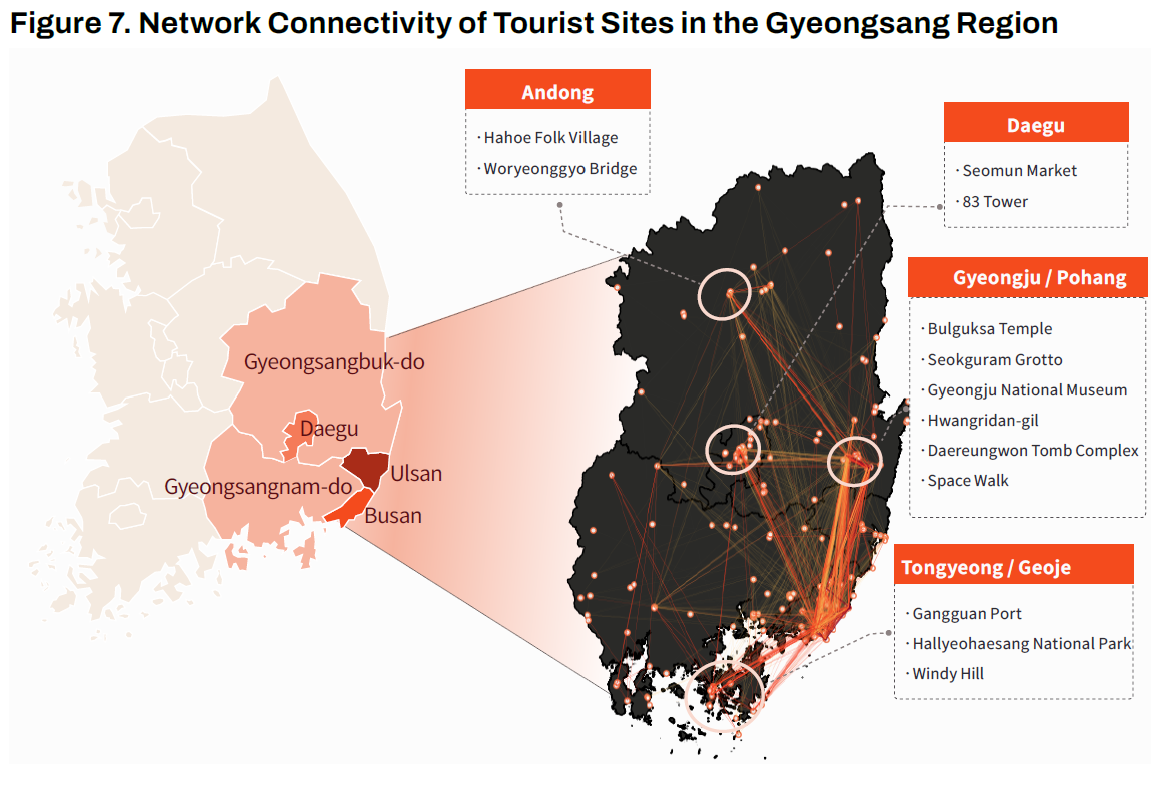
The tourism topography of the Gyeongsang region is characterized by a quintessential "radial network," wherein energy radiates outward to surrounding areas with Busan serving as the anchor hub. Major spokes—including Gyeongju, Pohang, Daegu, Tongyeong, Geoje, and Andong—possess the latent potential to organically integrate with Busan, thereby expanding the external scope of the zone.
In particular, network analysis reveals that the connectivity between Busan and Gyeongju exhibits an overwhelming density compared to other cities. This suggests that the combination of Busan’s modern marine and urban content with Gyeongju’s traditional historical and cultural assets is perceived by international tourists as a mutually complementary and essential itinerary.
However, a critical impediment lies in the inefficiency of connectivity. Traveling from Haeundae in Busan to Hwangnidan-gil in Gyeongju suffers from severe inefficiencies; due to a lack of "last-mile" connectivity, public transportation can take three to four hours. For tourists, time is directly equated with money. Time squandered on the road precipitates a sharp decline in travel satisfaction.
Therefore, it is imperative to resolve these bottlenecks by introducing "connectivity solutions," such as scheduled shuttle bus routes or one-stop tour packages. Furthermore, Geoje and Tongyeong hold irreplaceable content—such as exquisite natural landscapes and authentic fishing village lifestyles—that Busan does not possess.
For the Gyeongsang region, which harbors potential rivaling that of the Capital Area, to soar as a global tourism zone, two tasks are urgent: securing "sky roads" by expanding medium-to-long-haul direct flights at Busan’s international airports to connect directly with major global cities, and establishing "hyper-connectivity on land" with major surrounding spoke cities. Regarding air connectivity, actively utilizing Daegu International Airport—located within the same tourism zone—merits serious consideration as a strategy to alleviate congestion at Gimhae International Airport and induce a greater influx of foreign tourists.
③ The Gangwon Region: Regional Multi-Hubs and Chuncheon as the Bridge
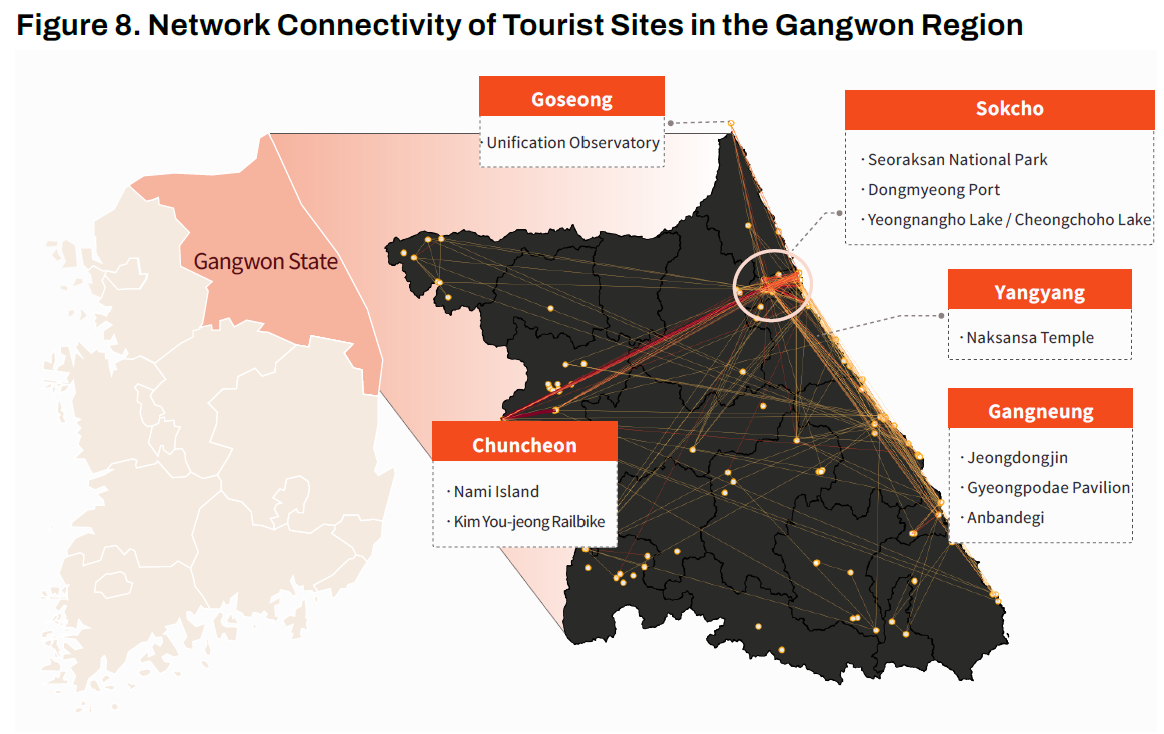
The Gangwon region is characterized not by a monocentric dominance but by a "Regional Hub" structure where Sokcho, Yangyang, and Gangneung share functional roles to drive the entire zone. This dynamic resembles three interlocking gears, signifying that each city forms a robust cluster through its unique content.
Specifically, Sokcho functions as the de facto center of the network, underpinned by overwhelming natural assets like Seoraksan National Park and Dongmyeong Port. Yangyang secures high centrality through the convergence of Naksansa Temple’s cultural value and the gateway effect of Yangyang International Airport. Meanwhile, Gangneung serves as a vital pillar of this regional hub, anchored by iconic marine tourism resources such as Jeongdongjin and Gyeongpo Beach. Furthermore, Goseong’s Unification Observatory, offering rare direct views of North Korean territory, provides a differentiated allure capable of leaving a profound impression on international visitors.
A critical focal point within the Gangwon region is the topological value of Chuncheon. Chuncheon functions simultaneously as a spoke of the Capital Area hub (Seoul) and a core spoke within the internal Gangwon network, acting as both a "Dual-Spoke" and a "Bridge Node." This metric quantitatively demonstrates Chuncheon's strategic role as a bridge, transferring the massive inbound demand from the metropolitan area deep into the Gangwon region.
In summary, the Gangwon region possesses the "perfect hardware" to leap forward as the "Alps of Asia"—boasting exquisite natural landscapes, four-season tourism resources, high-quality accommodations, and established infrastructure. Like the Gyeongsang region, it secures sufficient separation from other tourism zones while possessing an international airport, marking it as a potential mega-tourism zone with comprehensive capabilities spanning nature, history, culture, entertainment, and lodging.
Nevertheless, a glaring deficiency remains: the absence of regular international routes at Yangyang International Airport. Currently, most foreign visitors must endure long journeys via Seoul and the Capital Area, a structural constraint limiting demand expansion. If "sky roads" allowing direct access to Gangwon without transiting through Seoul are opened, the region has high potential to emerge as a four-season global resort destination. Therefore, aggressive efforts by local governments and the Korea Airports Corporation to attract foreign carriers and secure regular international routes are no longer optional but constitute an essential strategic imperative to elevate Gangwon into a core Asian tourism zone.
④ The Jeolla Region: A Distributed Network and the Necessity of "Linear Linkage"
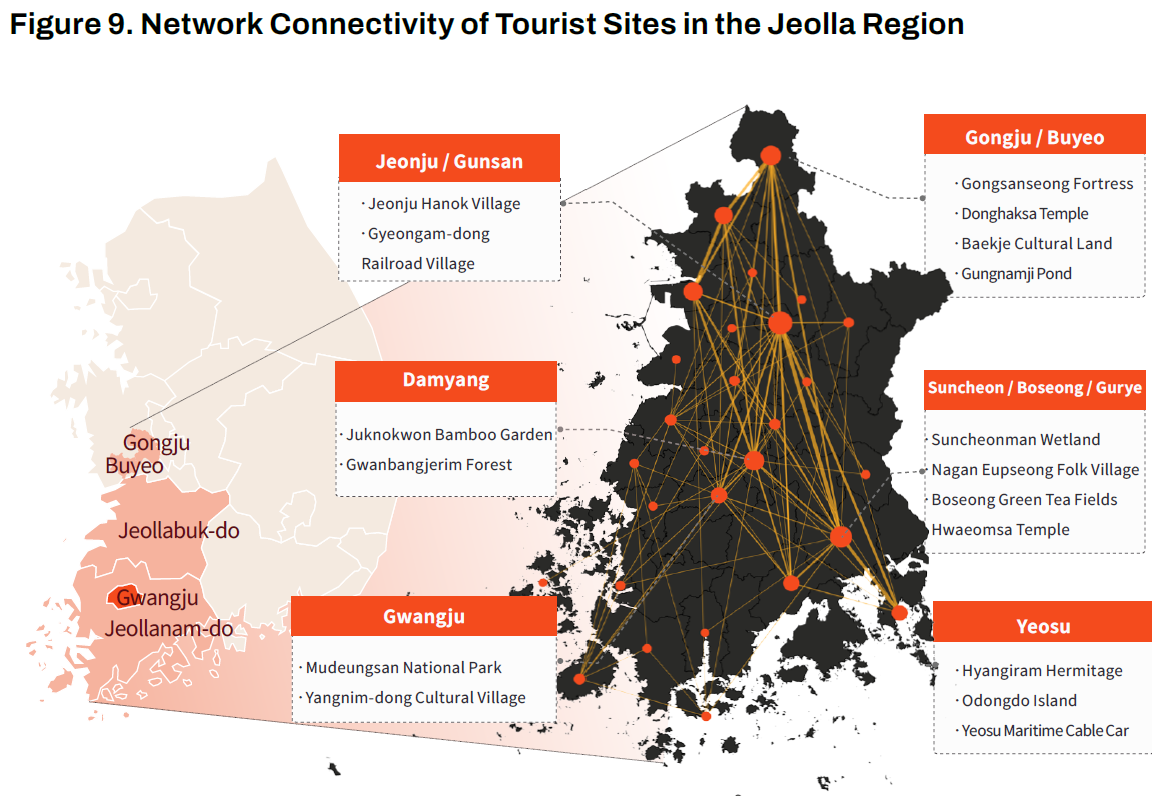
The Jeolla region is characterized by a "Distributed Network" structure, devoid of concentration in any single stronghold. Instead of a monolithic hub, Gwangju and Jeonju function as "Local Centers," forming a loose yet extensive network connecting with Suncheon and Yeosu in the south, and Gunsan, Buyeo, and Gongju (including parts of Chungcheong) in the north.
This structural configuration suggests that prioritizing "linear connectivity" over "point development" is paramount. In essence, the region is optimized for "Route Tourism," weaving the distinct allure of individual cities into a cohesive narrative. For instance, the development of regional tour passes or thematic routes that thread together Jeonju’s traditional culture, Gwangju’s arts, Suncheon’s ecology, and Yeosu’s marine resources is urgently required.
However, the most significant impediment facing the Jeolla region lies in its international airport. The current suspension of operations at Muan International Airport due to an aircraft accident acts as a severe structural constraint on the region's leap forward. While this issue may be entangled with political and administrative complexities, the rapid resumption of airport operations is a prerequisite for growth into a global tourism zone.
The Jeolla region serves as a strategic stronghold with a geographical advantage: it is the closest point of entry for visitors from China, Taiwan, and Southeast Asia, offering the most rapid access to Korea. Furthermore, boasting the breathtaking scenery of rias coastlines, a unique culinary culture, and diverse natural landscapes, the region possesses sufficient potential to evolve into a global gastronomy and eco-tourism destination.
However, tourism infrastructure, particularly accommodations, remains insufficient compared to other zones. If the reopening of the airport is coupled with the expansion of stay-oriented infrastructure, the Jeolla region holds the promise of emerging as a competitive, core tourism zone in Asia.
⑤ The Jeju Region: The 'Hyper-Connected Internal Ecosystem' of an Isolated Island
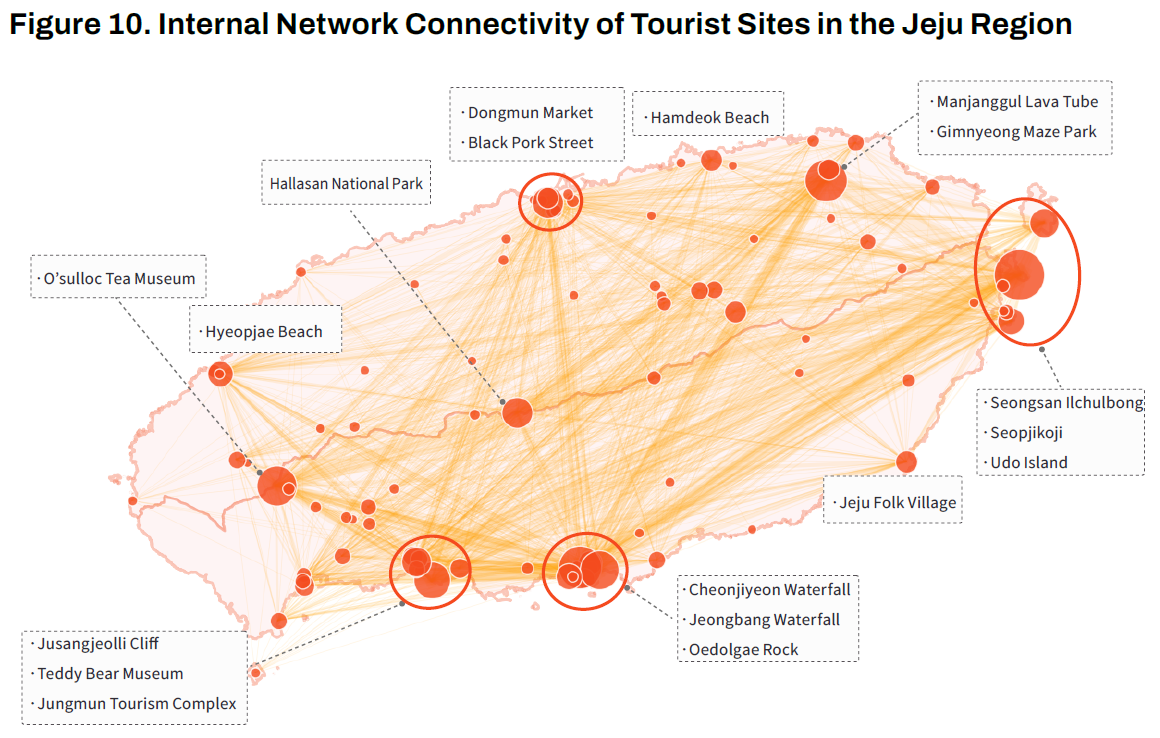
Characterized by its physical isolation from the mainland, the Jeju region exhibits a distinct "independent structure" wherein the endogenous cohesion among internal tourist sites is maximized.
Network analysis reveals that Seongsan Ilchulbong (Sunrise Peak), Jungmun Tourist Complex, and Seogwipo demonstrate exceptionally high "Degree Centrality." This implies that these locations function not merely as simple destinations, but as pivotal hubs and divergence points. They act as "core nodes" that effectively control and distribute the complex flow of tourist movement throughout the island.
Jeju already commands unassailable brand power as the premier resort destination in Northeast Asia. However, the strategic imperative now lies in pursuing qualitative growth. It is essential to reinforce high-value-added, stay-oriented content and strictly manage overtourism, all while sustaining the region's highly efficient internal connectivity.
Five Execution Tasks for the Development of Inbound Tourism Zones
The current government's initiative to develop inbound tourism zones advocates for a paradigm shift toward "Open Tourism Zones"—a concept that transcends administrative boundaries and is grounded in the actual movement trajectories of travelers.
This transition aims to overcome the chronic limitations of past tourism policies: the fragmented execution of projects at the municipal level, duplicative investments across ministries, and the delayed response to the rapidly evolving trends of Free Independent Travelers (FIT).
To ensure that this policy vision generates tangible economic effects rather than remaining a mere declarative slogan, this insight report proposes five imperative tasks that must be implemented during the creation of tourism zones.
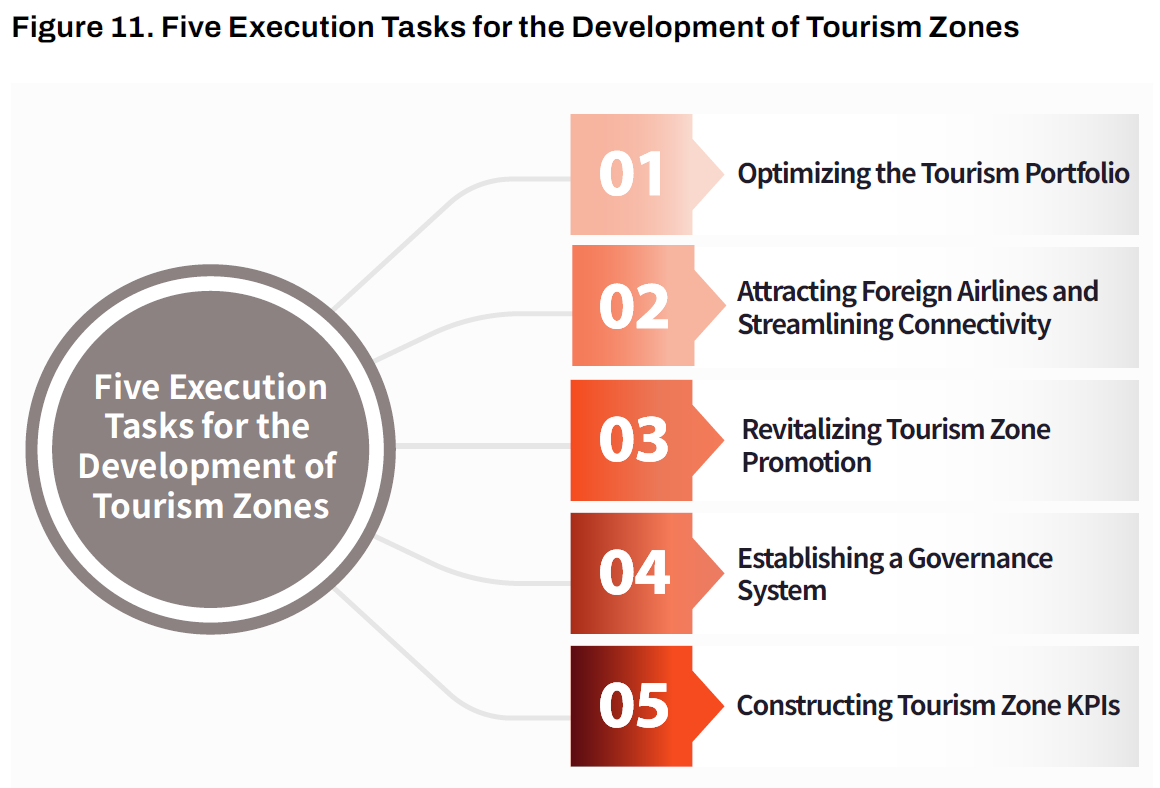
1. Optimizing the Tourism Portfolio: From 'Cannibalization' to 'Mutual Complementarity'
The primary task is to prevent "duplicative investment" in tourism resources within a zone and to construct a "mutually complementary portfolio" where the functions of each city are organically integrated. A chronic malady of the Korean tourism industry has been the phenomenon of "copycat tourism," where local governments, disregarding their unique locality, competitively replicate trendy facilities such as suspension bridges (254 nationwide) and cable cars (45). Such cookie-cutter development not only bores tourists but also triggers zero-sum competition between regions, ultimately degrading overall satisfaction.
A successful Hub-and-Spoke model must operate on principles akin to a well-orchestrated theme park. Just as a theme park diversifies the visitor experience by dividing into a thrilling "Dynamic Zone" and a restful "Relax Zone," a tourism zone requires a clear division of labor. The "perfect sum" of tourism utility is maximized only when a "Hub City," equipped with modern infrastructure, shopping, and entertainment, combines with a "Spoke City" possessing unique historical, cultural, and natural healing content.
Hub & Spoke Best Practices: The combination of Busan (Hub/Marine & Urban) and Gyeongju (Spoke/History & Tradition) stands as an optimal example of mutual complementarity, comparable to the Osaka (Gastronomy & Commerce) and Kyoto (Tradition & Culture) model in Japan. In this context, the core strategy for future tourism zone design must be to multidimensionalize the zone's appeal by combining heterogeneous content—such as Seoul (Shopping & Urban) with Chuncheon (Nature & Rest), Seoul (Modernity) with Incheon (Open Port History), and Sokcho (Marine) with Goseong (DMZ & Security).
2. Attracting Foreign Airlines and Streamlining Connectivity: Hyper-Connectivity of Sky and Land
South Korea’s inbound entry routes are excessively concentrated at Incheon and Gimpo Airports. The current structure, where approximately 75 percent of all foreign tourists enter solely through metropolitan airports, resembles the bottleneck of an hourglass. Meanwhile, Yangyang and Muan Airports have effectively devolved into a dormant state, having lost their international functions, and even Gimhae Airport, the secondary gateway, lacks flights from Japanese flag carriers. As of 2025, while Korean carriers operate direct flights to 31 Japanese cities, Japanese carriers fly only to Incheon and Gimpo. This asymmetry in the aviation network deepens the imbalance between inbound and outbound tourism and serves as a structural factor expanding the tourism deficit. Given the universal tendency to prefer domestic carriers when traveling abroad, the absence of foreign airlines at regional airports constitutes a clear "accessibility imbalance."
Historically, Korea’s regional airports have focused on transporting nationals abroad. They must now transform into strategic strongholds that generate inbound demand. In this regard, Japan’s "Regional Airport Revitalization Strategy" offers significant implications. Through organic cooperation among the central government, local municipalities, and transport agencies, Japan aggressively attracted overseas Low-Cost Carriers (LCCs) to small regional cities. Through the "Regional Airport Support Project for Inbound Tourists," they successfully established a trend where young Asians from Taiwan, Hong Kong, and Thailand visit small Japanese cities directly.
Korea must similarly concentrate policy capabilities on attracting "Anchor Foreign Airlines" to regional hub airports through bold incentives such as landing fee waivers, slot expansion, and flight subsidies. The success or failure of the inbound tourism zone initiative ultimately depends on how many foreign airlines can be drawn to regional airports.
Of course, attracting airlines is merely the starting point. To ensure tourists disembarking from planes can move smoothly to accommodations and sites, the "capillaries" of ground transportation must be densely constructed. By linking various mobility means—such as direct buses connecting Airport–Hub City–Spoke City, Demand Responsive Transport (DRT), regional tour passes, and foreigner-exclusive rental car systems—"Door-to-Door" convenience must be guaranteed. If opening the sky roads is the invitation, connecting the ground roads is the true hospitality.
While substantial initial fiscal injection is inevitable, cooperative investment between policy entities—including central and local government budget support and the Airports Corporation’s fee reductions—is a prerequisite. Although immediate cost-benefit returns may be difficult to realize in the first year, strategic investment in initial fixed costs will likely yield a leverage effect, visibly increasing tourist numbers in a relatively short period. The moment regional airports regain vitality and foreign tourists spread throughout the regions, the recovery of the local economy will be a natural consequence.
3. Revitalizing Tourism Zone Promotion: Targeted Marketing and Digital Incentives
Creating overseas demand for tourism zones requires, above all, a sophisticated, data-driven promotion strategy. In the initial settlement phase, "brand positioning" that imprints specific core zones in the minds of foreign tourists through "selection and concentration" must take precedence. It is urgent to clearly implant the perception that "Korea is not just Seoul, but also has OO City or the OO Zone." To this end, mass media and SNS channels appropriate for target countries and age groups must be strategically selected to maximize advertising efficiency.
This is a technical and professional domain requiring organic collaboration between the Korea Tourism Organization and local governments. The central government, too, rather than supporting all zones equally, should concentrate budgets on a few strategic zones based on policy judgment to first elevate awareness. Awareness eventually leads to visitation; in the early stages, creating a "recallable name" is more critical than the nuance of the image.
However, securing brand awareness alone is insufficient. More important is a "Lock-in" strategy that induces actual consumption. Once tourists arrive, the system must be designed to naturally facilitate movement, experiences, and shopping within the zone. Japan’s examples illustrate this well: Matsuyama’s free shuttles, Hakodate’s free streetcar coupons, and Takamatsu’s coupon book policies provided a clear utility of "benefit upon arrival," simultaneously boosting satisfaction and consumption. This strategy framed the experience not as a cheap trip, but as a trip with benefits.
Korea must also consider an "Integrated Digital Voucher" support strategy linking movement, accommodation, experiences, and product purchases within the zone. While standard discount and usage coupons are basic, paper-based provision has limitations. The target demographic—the MZ generation in their 20s and 30s—is digital-native and accustomed to smartphone-based consumption. Therefore, by integrating with global OTAs (Online Travel Agencies) and travel platform apps, tourists should be able to access transportation, tickets, experiences, and discounts via a single smartphone. Travel platforms are the direct touchpoint with tourists and the most efficient promotion channel.
Although such initial promotions require significant budgets, this should be perceived not as a simple expense but as an investment to secure future customers. While initial fixed cost input is unavoidable to attract a certain level of inbound tourists, once consumption within the zone activates and re-visitation and word-of-mouth effects accumulate, the impact will spread rapidly. Ultimately, a successful strategy depends on a sophisticated design that imprints the brand overseas and induces consumption locally.
4. Establishing a Governance System: 'Mega-Regional DMOs' Transcending Administrative Boundaries
The success of creating tourism zones ultimately hinges on the existence of a "powerful control tower." Historically, local governments have viewed neighboring cities not as cooperative partners but as competitors. However, for tourists, administrative boundary lines on a map are meaningless. From the tourist's perspective, neighboring regions are merely options within a single travel experience; the core issue is how conveniently they can connect and enjoy desired content. Therefore, to substantively revitalize broad-area tourism zones connected by Hub-and-Spoke, it is essential to establish an operating system that institutionally guarantees collaboration between local governments and DMOs (Destination Marketing Organizations).
In this respect, Japan’s "Setouchi DMO" model is a compelling benchmark. Seven prefectures—Okayama, Hiroshima, Yamaguchi, Ehime, Kagawa, Tokushima, and Hyogo—united to build the single brand "Setouchi." They shared unique tourism resources, coordinated duplicative projects, introduced an integrated transport system called the "Setouchi Area Pass," and unified decision-making authority for tourism policy under the regional DMO. They transcended the limits of municipal tourism to secure both a mega-regional brand and an execution system.
If tourism zones are designated in Korea, we must establish a "Mega-Regional Tourism Governance" system equipped with budget execution and project coordination rights, moving beyond simple consultative bodies. The central government needs to innovate its support system, shifting from distributing budgets to individual municipalities to allocating lump-sum budgets to this integrated governance body and managing performance. In a structure without authority to coordinate interests, duplicative investments and conflicts are bound to recur, posing a high risk of budget waste from a cost-benefit perspective.
Furthermore, once a broad tourism zone is formed, the first task is to set a clear target and establish a differentiated blueprint. While the Gyeongsang, Gangwon, and Jeolla regions may appear similar on the surface, their actual resources and tourism narratives are entirely distinct. Each zone must establish its own brand concept and storyline, branding them from an integrated perspective. The desirable strategy is to first connect transport systems around core tourist sites with high appeal, then phase in diffusion to surrounding areas. In other words, the principle of "selection and concentration" is necessary even within the tourism zone.
Ultimately, mega-regional governance is not simple administrative integration, but an integrated execution system encompassing brand strategy, transport linkage, budget allocation, and performance management. Only when the system crosses boundaries to match the movement of tourists who cross administrative lines can the tourism zone project lead to tangible results rather than mere declarations.
5. Constructing Tourism Zone KPIs: Introducing a Performance-Based Management System
Tourism zones must be defined not merely as units of administrative cooperation, but as "Strategic Business Units (SBU)." This is a declaration to manage tourism zones not as loose coalitions, but as policy project units with clear goals, performance metrics, and accountability. Just as corporations dramatically improved performance by moving from functional organizations to responsible management systems by business unit, tourism zones must be set as "Strategic Regional Tourism SBUs" and adopt a management-type control system where Plan–Do–Control–Feedback operates.
Above all, we must move beyond one-dimensional statistics relying on simple visitor counts. The performance of tourism zones must be managed through concrete figures, requiring the construction of a multi-layered Key Performance Indicator (KPI) system. Examples of major indicators include:
- Economic Indicators: Expenditure per capita, average length of stay, revisit rate, induced effects on consumption, production, and employment within the zone.
- Tourism Indicators: Brand awareness, product sales performance, promotion effectiveness, level of tourism readiness.
- Satisfaction Indicators: Social media buzz volume, Net Promoter Score (NPS).
- Co-prosperity Indicators: Local resident acceptance, trickle-down effect of local consumption, level of local capacity enhancement.
Furthermore, a comparative and trend analysis system reflecting the unique resources and characteristics of each region must be established to evaluate performance between zones and regions over the long term. Tourism zones, formed by combining resources from multiple municipalities, must also be subjects of clear evaluation; without a rational evaluation and compensation system, sustainable development of public tourism projects cannot be expected.
Accordingly, a comprehensive evaluation based on KPIs should be conducted annually. A "Feedback Loop" of rewards and penalties must be established: providing radical budget incentives to high-performing zones while demanding consulting, restructuring, or strategic redesign for underperforming ones. This is not control for the sake of punishment, but a mechanism to simultaneously elevate the accountability and competitiveness of the tourism zone as a policy unit.
Moreover, this performance system must be linked with the expansion of tourism readiness—accommodation, dining, transport, information—and the construction of digital infrastructure. In a rapidly changing digital environment, tourists' information search, booking, payment, and movement are all digital-based. Therefore, performance management of tourism zones must presuppose data collection, analysis, and linkage with digital platforms.
Ultimately, viewing a tourism zone as an SBU represents a paradigm shift: recognizing that "tourism is not a matter of intuition, but an object of management." Only when clear goals, measurable indicators, objective evaluations, and a budget-linked feedback system function together can tourism zones establish themselves as sustainable growth models rather than mere declarative slogans.
Conclusion: Inbound Tourism Zones—The Gateway to a Tourism Powerhouse
The Japanese traveler I encountered by chance on the white sands of Haeundae in Busan; the Chinese couple savoring the aroma of coffee in a café in Gangneung; and the Hong Kong family marveling at the taste of Tteokgalbi in fluent English at a restaurant in Jeonju. As I pen this conclusion, the faces of those I brushed past in the field flash vividly through my mind.
I am suddenly struck by a question. They were not part of a package tour. How did they manage to travel down to Busan, cross over to Gangneung, and reach Jeonju? In all likelihood, they landed at Incheon Airport, navigated through the complexities of Seoul, and endured a long journey involving transfers between KTX trains and express buses. Looking back now, while I am grateful for their visit, a deep sense of apologetic introspection precedes my gratitude. Despite possessing magnificent tourism resources in every corner of our provinces—resources that would stand tall anywhere in the world—I ask myself: Did we truly provide them with a satisfying experience sufficient to offset the "fatigue of mobility"?
Ultimately, the essence of creating "Inbound Tourism Zones" is about opening wider and more convenient doors to the world. We already possess four or five potential tourism zones. If we simply add the effort to reconnect the severed "veins of mobility" and reorganize hidden resources, South Korea will secure multiple global tourism hubs possessing competitive power rivaling that of the Capital Area.
Seoul alone can no longer shoulder the burden of inbound tourism demand, which is surging by more than 10 percent annually. It is time to induce the spatial dispersion and diffusion of tourists through the creation of new inbound tourism zones. This is by no means a zero-sum game of siphoning tourists from Seoul to the provinces. While Seoul continues to function as the absolute gateway and premium hub of Korean tourism, the provinces must provide differentiated allure that Seoul cannot offer, moving toward a symbiotic structure that expands the pie of the entire market.
What is clear is that the core of developing inbound tourism zones lies not merely in the expansion of physical hardware like airports and roads. It is closer to an innovation in software—weaving scattered content into narratives, organically connecting severed zones, and managing performance through data. Only when a system operates that meticulously designs tourist trajectories, fills them with consumption content that opens wallets, and institutionalizes cooperation between regions, can a tourism zone function as a living, breathing economic unit.
To achieve this, omni-directional cooperation is essential among central government bodies—including the Ministry of Culture, Sports and Tourism; the Ministry of Land, Infrastructure and Transport; the Ministry of Justice; the Ministry of Economy and Finance; the Ministry of Agriculture, Food and Rural Affairs; and the Ministry of SMEs and Startups—as well as local governments and DMOs. There may be resistance stemming from the old habits of silos between ministries and regional egoism. However, we no longer have the luxury of tolerating such policy avoidance and excuses. We must coalesce as a "One Team" under the singular goal of sharing the massive added value created by tourism and cultivating the tourism industry as the "second semiconductor industry" and a pillar of export.
The era of 30 million foreign tourists within the next five years is no longer a vague expectation but an imminent reality. Will we greet this massive wave of influx with the chaos and lost opportunities brought by "Overtourism"? Or will we sublimate it into a powerful growth engine that drives the qualitative leap of the national economy?
The key to that success ultimately lies in the "structural reorganization of tourism zones" to drastically disperse and expand capacity, and the "sophistication of systems" to maximize the value of the visitor experience. Therefore, the creation of inbound tourism zones is not merely one of many policy options. It is an urgent "primary national survival task" that cannot be postponed, essential for guaranteeing the sustainability of South Korea's tourism industry and marching toward the future.
 Prev
Prev  Back
Back 