
Seminar on “Future Directions and Strategies for Inbound Medical & Wellness Tourism”
- Date
- 2026-03-20 13:30 ~ 2026-03-20 17:30
- Location
- Seoul Dragon City Halla Hall 3
On March 20, 2026, the seminar "Future Directions and Strategies for Inbound Medical & Wellness Tourism" was held at Seoul Dragon City. Despite a quantitative recovery in the number of inbound tourists, this seminar was organized to overcome structural limitations, such as the tourism balance deficit caused by a surge in outbound travel by Koreans and a decrease in per capita spending by foreign visitors. The discussions focused on a paradigm shift, identifying "Medical and Wellness Tourism" as a high-value core sector to lead the qualitative leap of the Korean tourism industry.
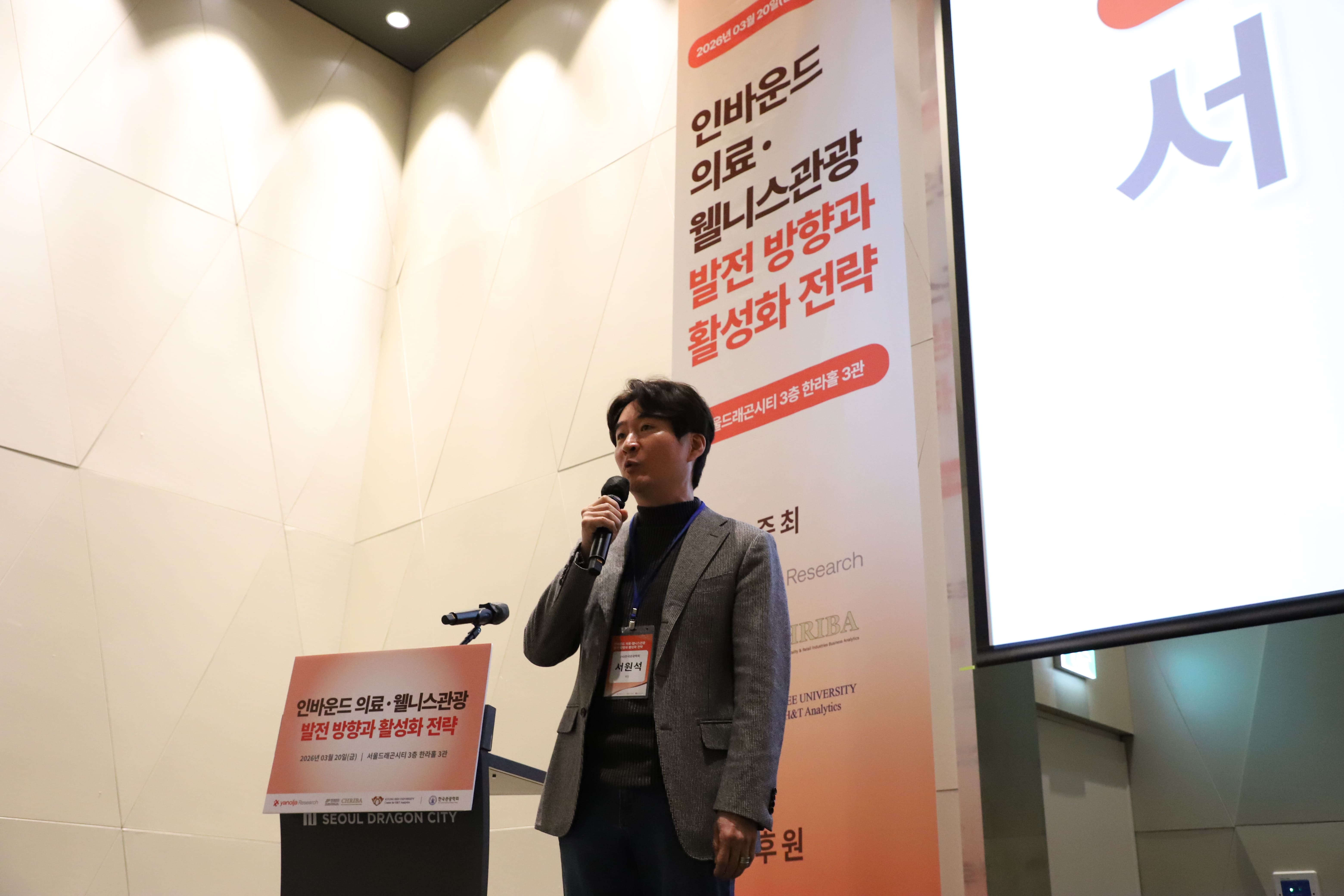
The seminar began with welcoming remarks by Soocheong (Shawn) Jang, Director of Yanolja Research and Professor at Purdue University, followed by congratulatory remarks from Won-seok Seo, President of the Tourism Sciences Society of Korea.
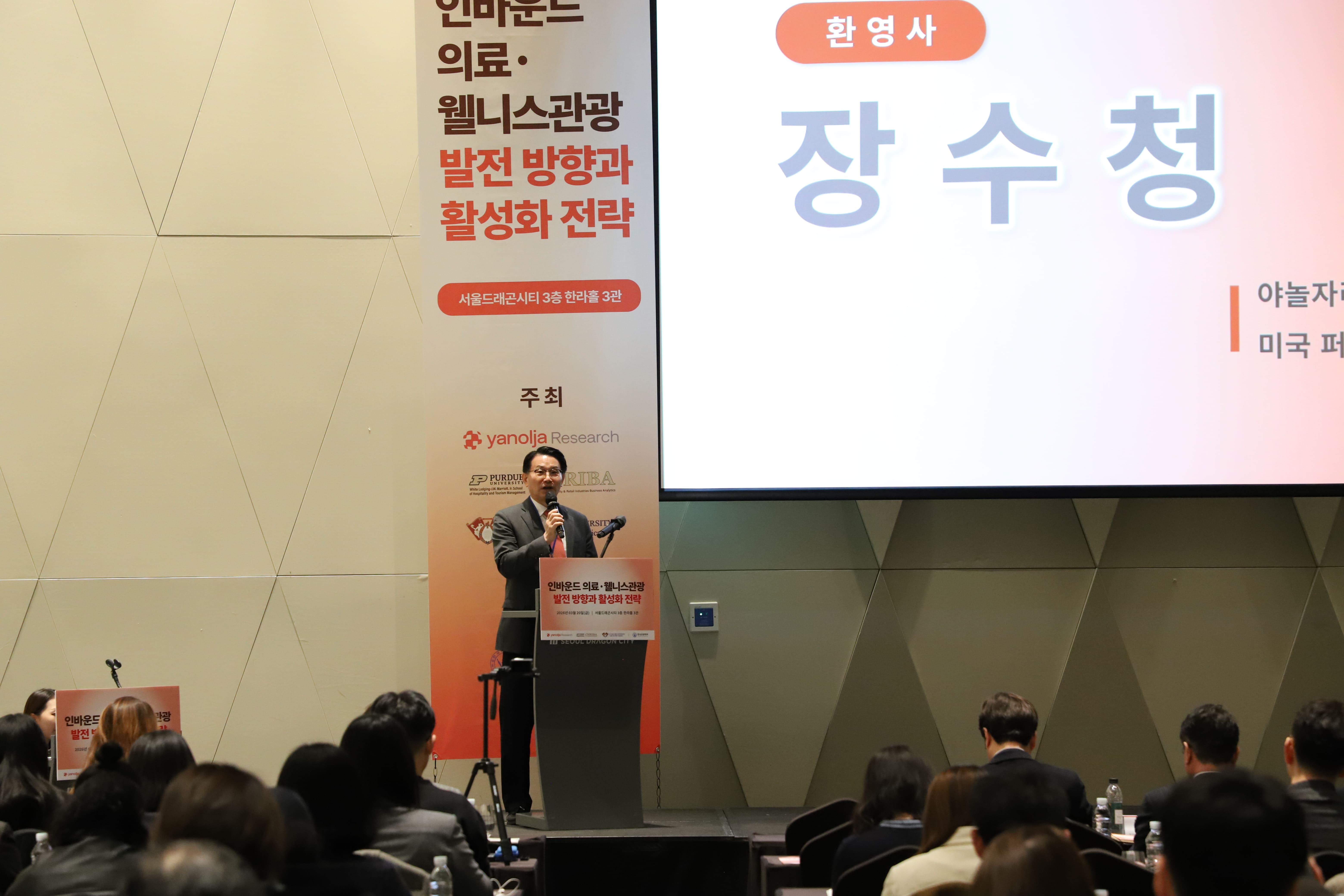
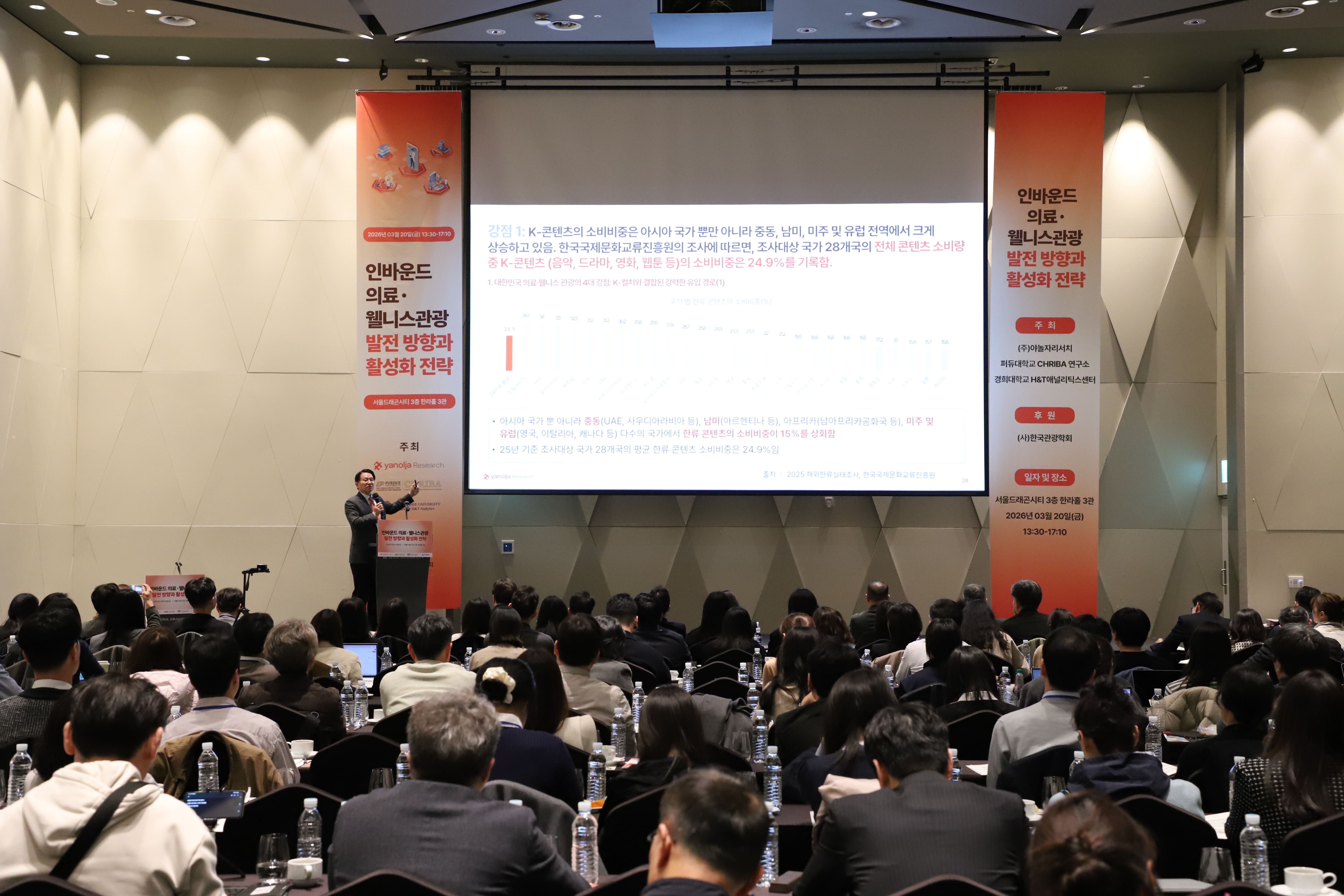
Keynote Presentation 1 | Future Directions for Medical & Wellness Tourism
Speaker: Soocheong (Shawn) Jang, Director of Yanolja Research / Professor at Purdue University
Director Jang predicted that the global medical tourism market would grow at an average annual rate of 12.3%, reaching $996.9 billion by 2036. He diagnosed that "the era where medical and wellness operate separately is over."
He emphasized that medical and wellness tourism—characterized by high per capita expenditure, long stays, and high revisit rates—is an essential solution to the tourism trade deficit. In 2024, Korea achieved record results by attracting 1.17 million foreign patients, with medical bill payments alone totaling at least 1.4 trillion KRW. However, Director Jang pointed out critical limitations: "We are failing to connect the surging demand for medical tourism to wellness tourism. The fact that 94.3% of wellness visitors remain domestic is a gap that must be addressed." He also noted the severe concentration of medical subjects (Dermatology and Plastic Surgery) and regions (85.4% concentrated in Seoul).
As a solution, he proposed the construction of the "K-MediWell" ecosystem, an integrated healthcare tourism value chain encompassing "Prevention-Treatment-Management." He stated, "We must seamlessly connect foreign tourists—drawn in by the charm of K-Culture—to world-class medical technology and regional natural/traditional wellness resources to leap forward as a true global healthcare tourism hub."
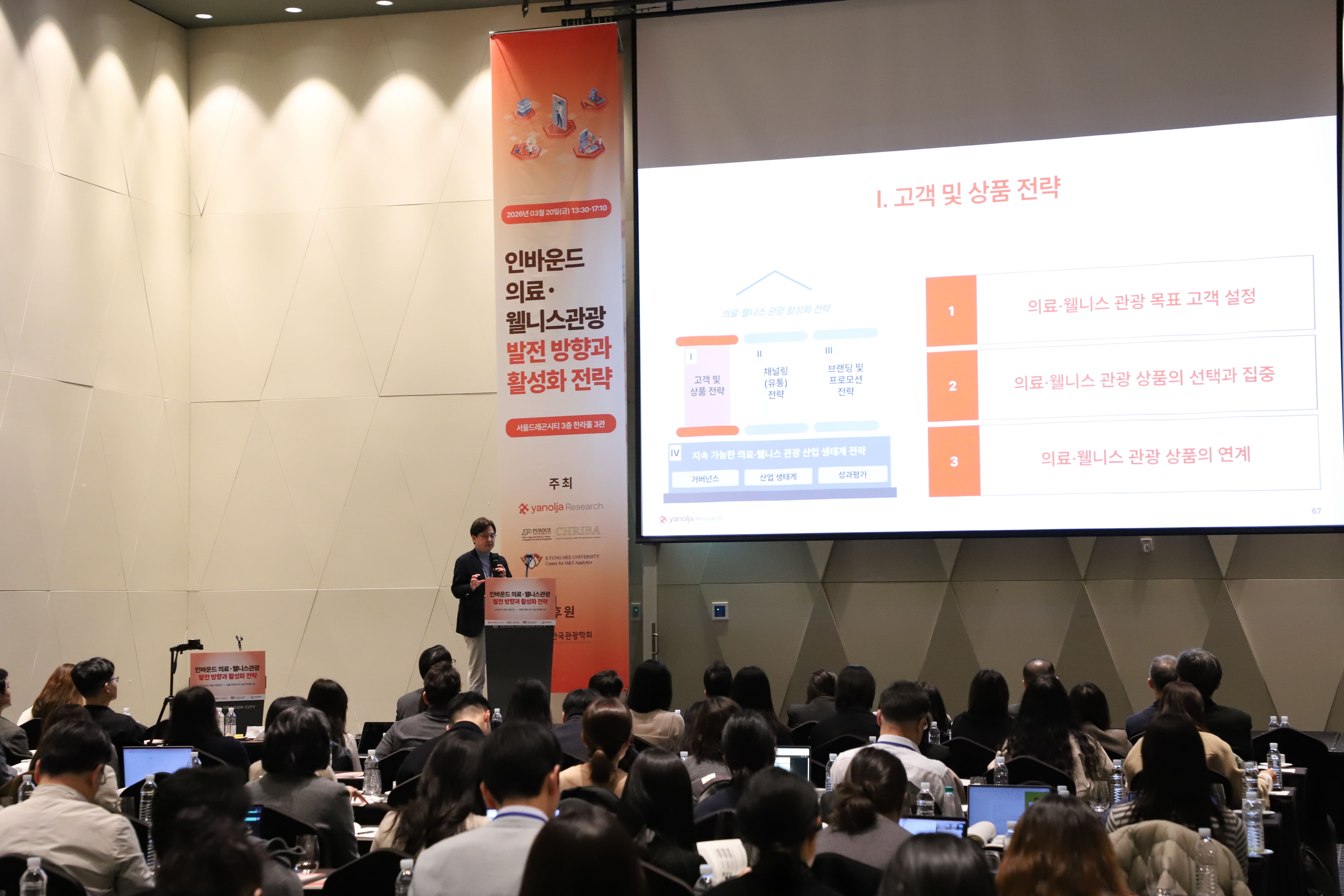
Keynote Presentation 2 | Strategies for Medical & Wellness Tourism
Speaker: Kyu-wan Choi, Professor at the College of Hotel & Tourism Management, Kyung Hee University
The second speaker, Professor Kyu-wan Choi, presented specific action plans to build a sustainable medical and wellness tourism ecosystem, focusing on:
- Customer and Product Strategy
- Channeling (Distribution) Strategy
- Branding and Promotion Strategy
Professor Choi emphasized the need to clearly define primary target countries based on data-driven attractiveness and growth potential, such as China, Japan, the USA, Taiwan, and Singapore. He analyzed that a customized portfolio strategy is necessary because consumption characteristics vary by country—Asian countries focus on aesthetic medicine, while the U.S. market is more distributed across various medical departments.
Above all, he stressed the urgency of establishing a consistent national integrated brand rather than selling fragmented individual products. He argued, "Through the tentative 'K-MediWell' branding, we must move beyond the narrow image of just dermatology and plastic surgery to make tourists recognize a broader value that includes check-ups, well-aging, and natural/traditional healing resources."
Regarding the distribution structure, he urged that existing medical tourism facilitators, who currently focus on simple interpretation and reservation assistance, must evolve into "Medi-Well Concierges" (healthy distributors) with expertise and planning capabilities. He added that a healthy ecosystem where consumption and production are smoothly linked is vital for the high-value-added transformation of the entire industry.
Panel Discussion
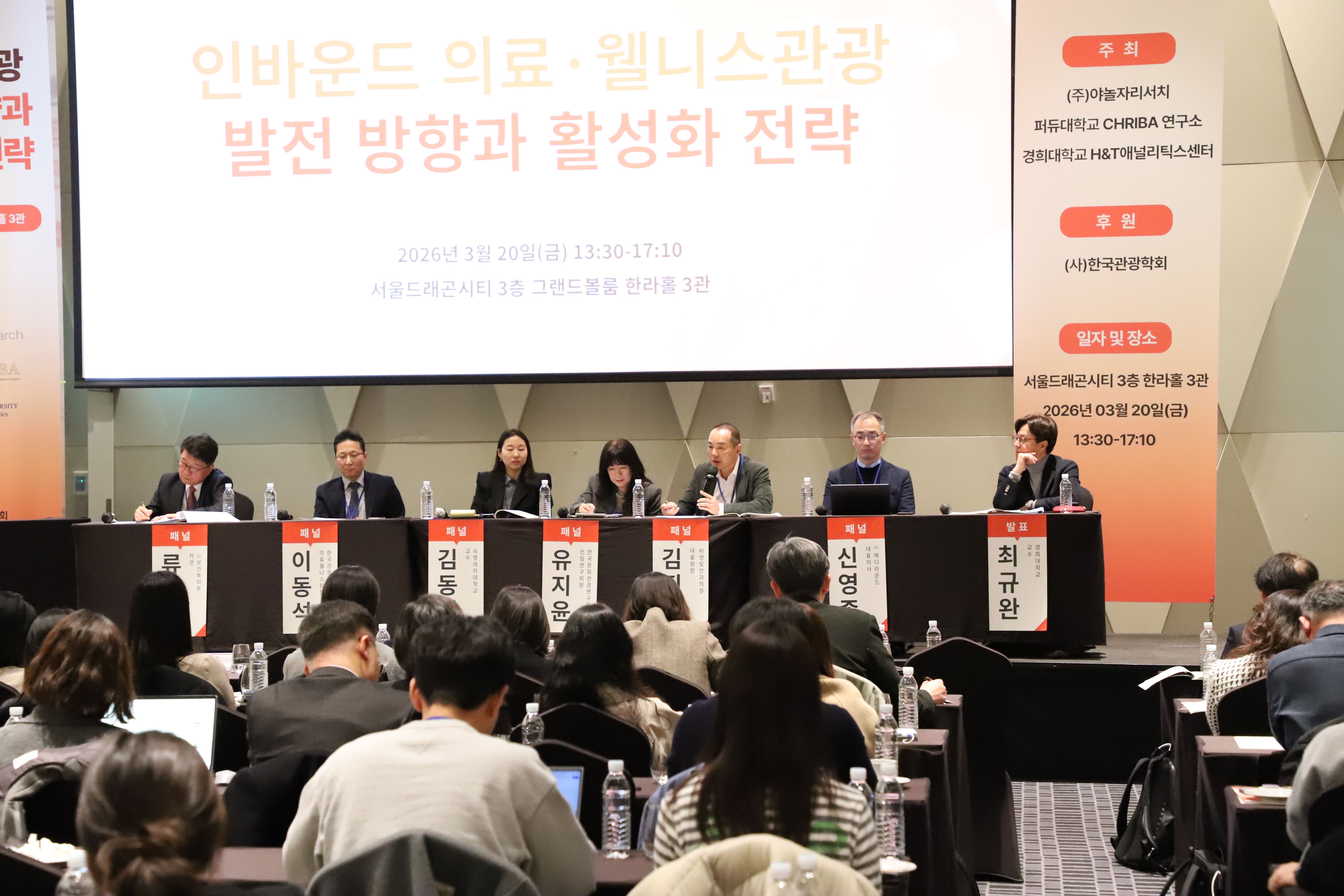
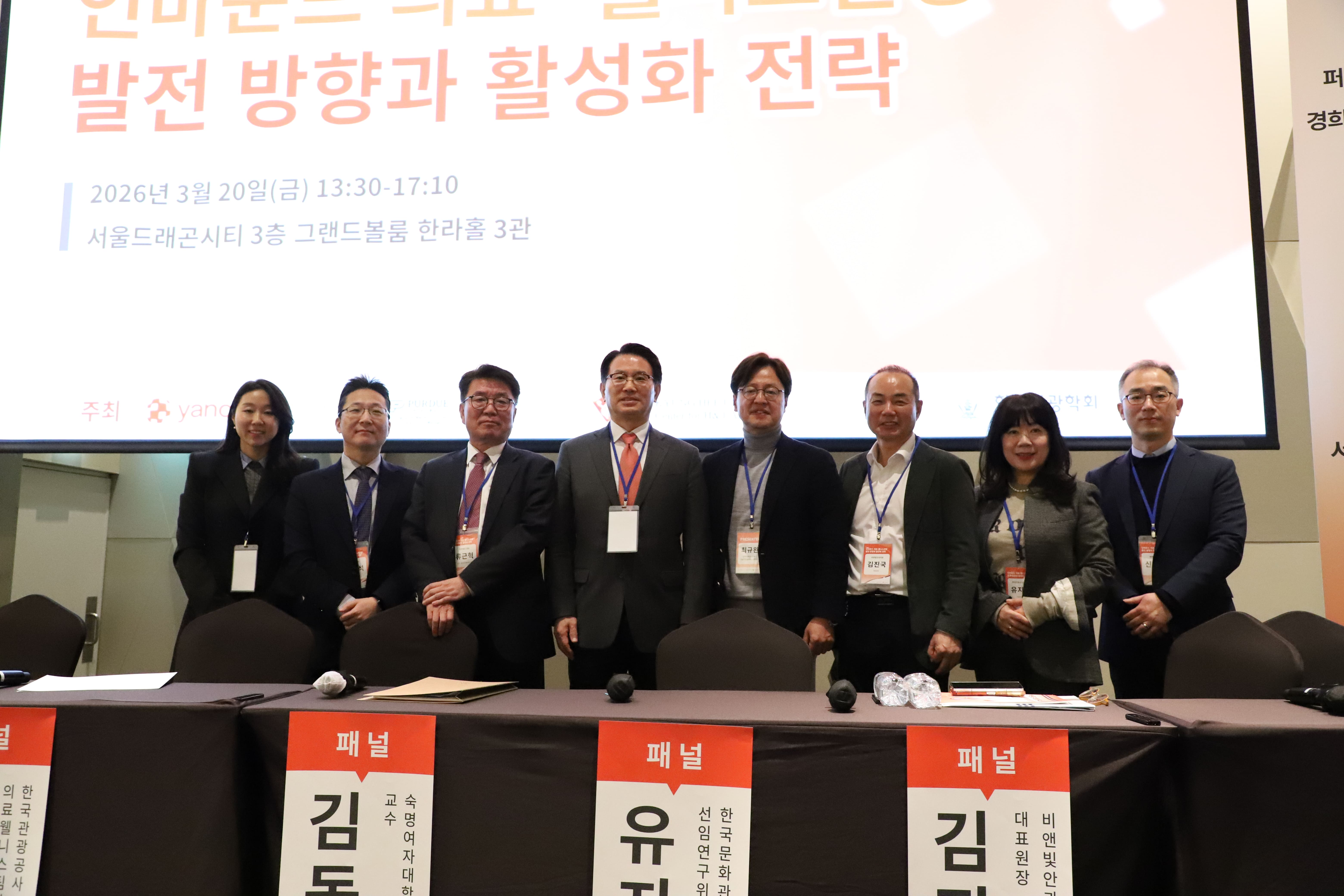
Following the presentations, a panel discussion explored practical tasks across policy, industry, and regional tourism. Moderated by Director Soocheong Jang, the panel included:
Geun-hyeok Ryu, Advisor at Bae, Kim & Lee LLC (Former Vice Minister of Health and Welfare)
Dong-seok Lee, Team Leader of Medical & Wellness at the Korea Tourism Organization
Dong-hee Kim, Professor at the Department of Culture, Tourism, and Food Service Management, Sookmyung Women's University
Ji-yoon Yoo, Senior Research Fellow at the Tourism Industry Research Office, Korea Culture & Tourism Institute
Jin-kook Kim, Representative Director of B&VIIT Eye Center (President of the Korea Medical Tourism Promotion Association)
Young-jong Shin, CEO of Mediround
The participants reached a consensus that medical and wellness tourism should be fostered as a strategic industry that fundamentally transforms the nature of Korean tourism, going beyond simple patient attraction.
An official from Yanolja Research stated, "We will continue to conduct in-depth research and provide policy recommendations to shift the paradigm of the Korean tourism industry and enhance its global competitiveness, including the medical and wellness sectors."
 Prev
Prev  Back
Back 