
Seminar
- Date
- 2026-06-22 13:30 ~ 2026-06-22 17:30
- Location
- Seoul Dragon City Grand Ballroom
Seminar on “Evaluating and Strengthening the Competitiveness of Korea’s Tourism Cities” Held in Seoul
Yanolja Research held a seminar titled “Evaluating and Strengthening the Competitiveness of Korea’s Tourism Cities” on June 22, 2026, at Halla Hall, Grand Ballroom, Seoul Dragon City. The event was jointly organized with the CHRIBA Research Institute at Purdue University and the H&T Analytics Center at Kyung Hee University. At the seminar, Yanolja Research officially announced the Korea Tourism City Competitiveness Index, or YCCI, Korea’s first consumer-centered tourism index based on social big data.
Attended by approximately 360 industry stakeholders, the seminar was designed to present empirical strategies for elevating tourism beyond a supplementary domestic industry into a national strategic industry and a new “export engine” that can complement Korea’s manufacturing sector. The discussion was held amid growing concerns over rapid population decline and the deepening risk of regional decline outside the Seoul metropolitan area.
The event began with welcoming remarks by SooCheong Jang, President of Yanolja Research. President Jang emphasized that Korea’s tourism industry must move beyond quantitative growth centered on visitor numbers and begin diagnosing and improving the competitiveness of tourism cities and the quality of consumer experiences through data-driven approaches.
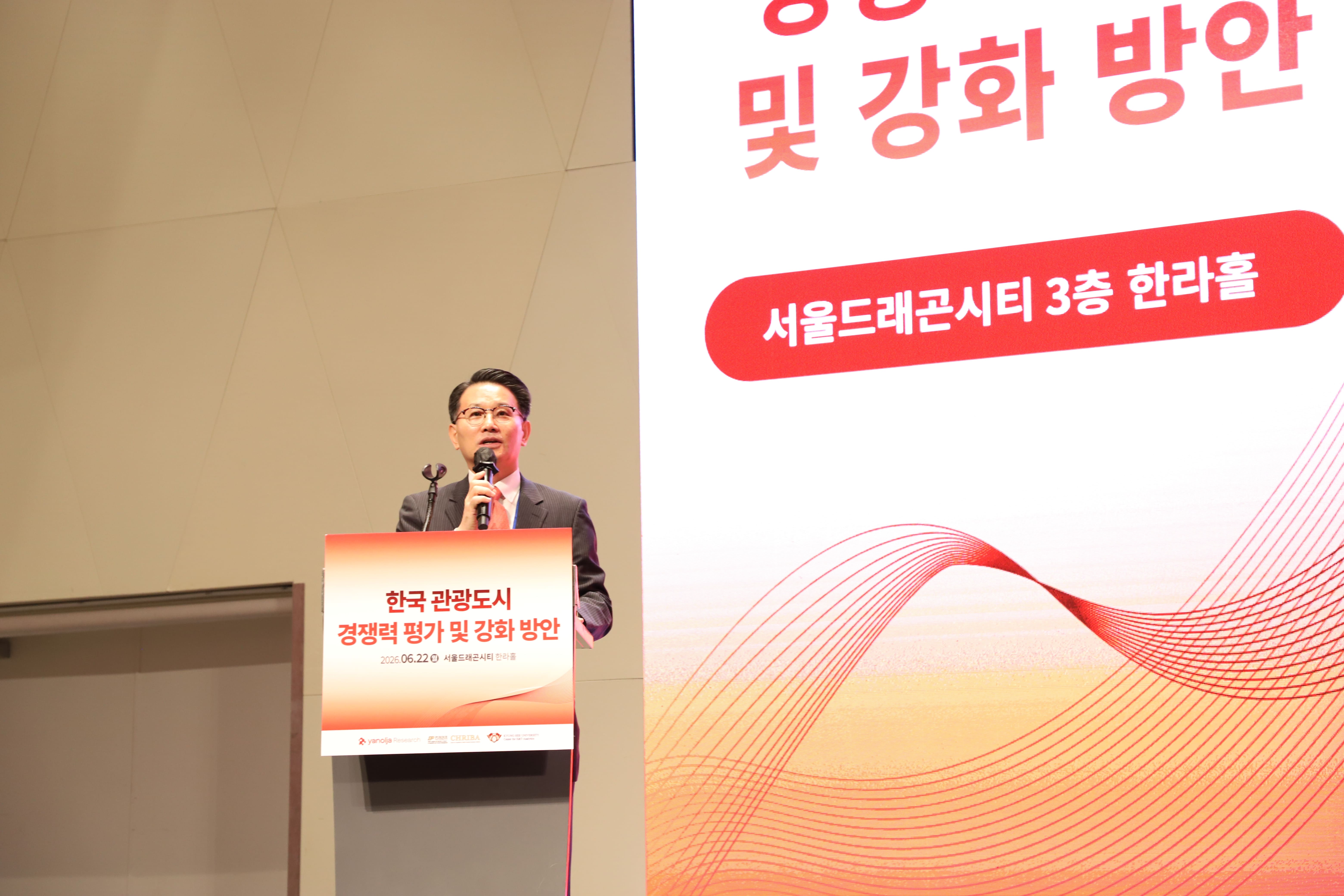
Congratulatory remarks were then delivered by Sujin Lee, Chief Executive Officer of Yanolja, and Jeongwon Kang, Director General of the Tourism Policy Bureau at the Ministry of Culture, Sports and Tourism. In their remarks, they highlighted the future growth potential of Korea’s tourism industry and the importance of strengthening the competitiveness of tourism cities.
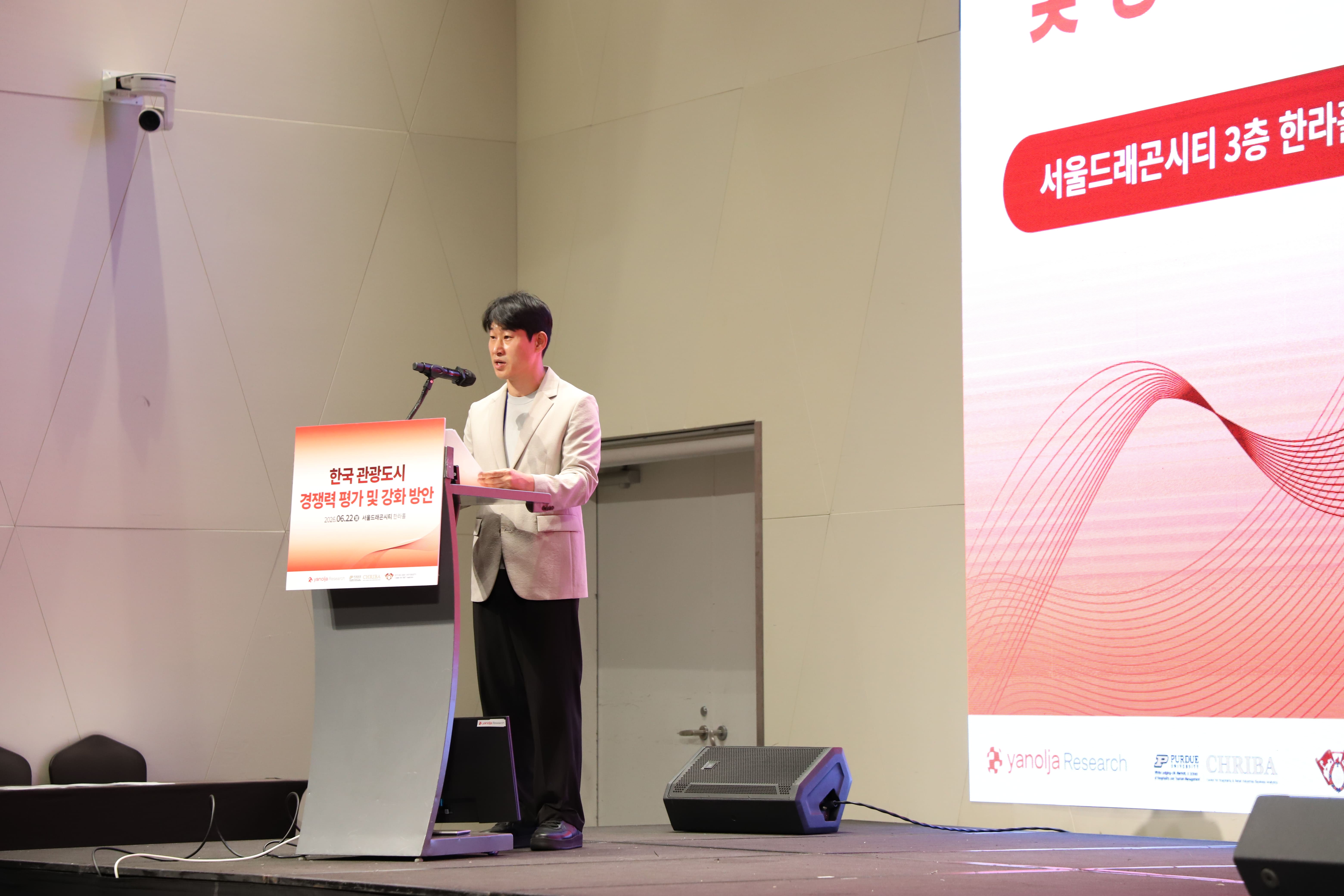
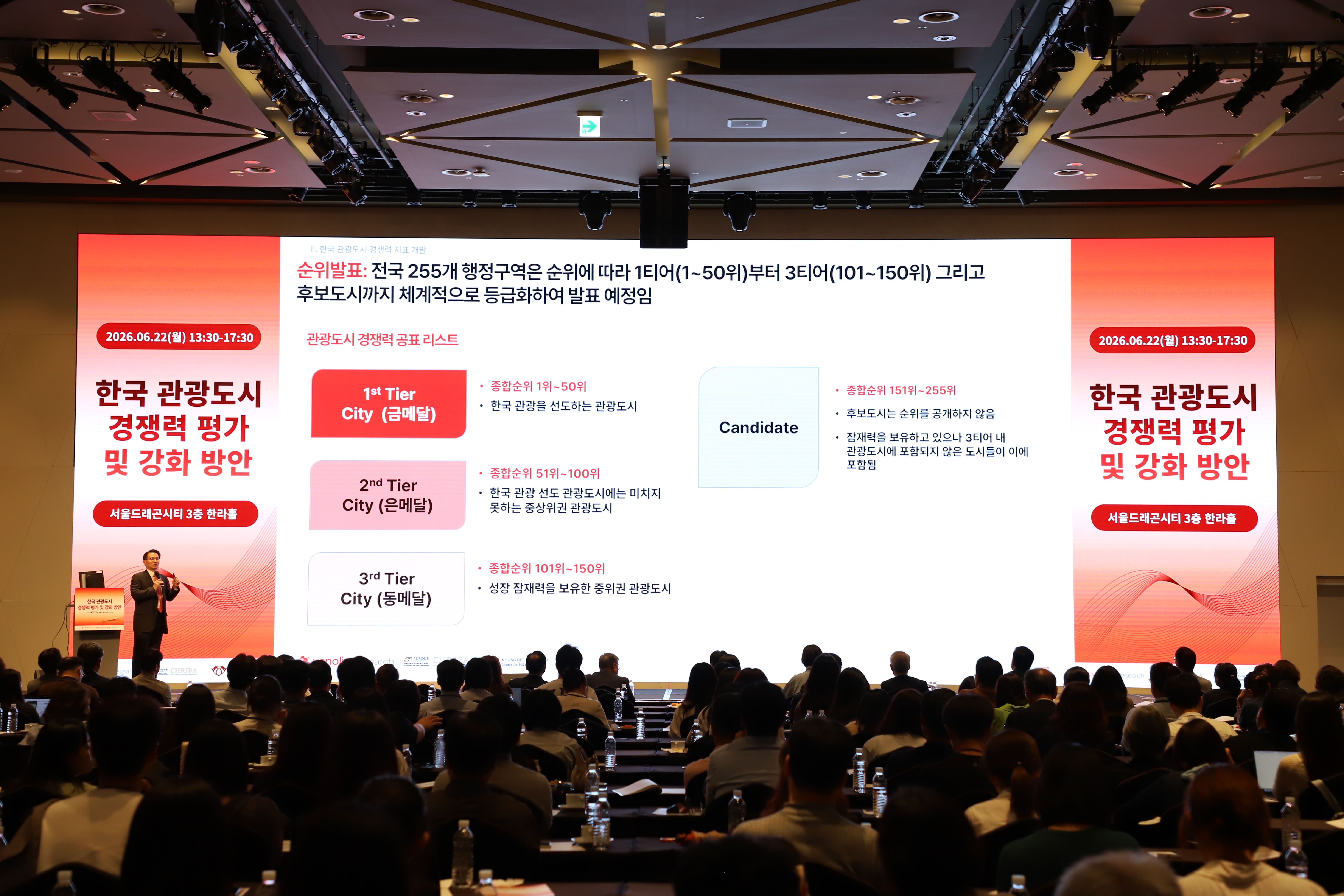
Presentation 1 | Advancing Korea’s Tourism Industry and Developing a Tourism City Competitiveness Index
SooCheong Jang, President of Yanolja Research / Professor at Purdue University
In the first presentation, SooCheong Jang, President of Yanolja Research and Professor at Purdue University, examined the current state of Korea’s tourism industry and outlined the direction Korea should take to advance its tourism sector. He also explained the theoretical background, data structure, and analytical methodology behind YCCI as a data-driven framework for evaluating tourism cities.
YCCI is a consumer-centered tourism city evaluation model that moves beyond conventional administrative assessments based primarily on supplier-oriented and quantitative indicators. Instead, it reflects the voluntary voices of actual tourism consumers expressed online. In collaboration with VAIV Company, Yanolja Research analyzed 29,336 tourist attractions across 255 administrative districts nationwide. The analysis drew on unstructured data collected from major social channels, including YouTube, Instagram, blogs, Facebook, X, and online communities, and applied AI-based sentiment analysis to measure the tourism competitiveness of each city.
YCCI consists of two key dimensions. The first, “Reputation,” measures how widely a city is known and recognized in social data, based on buzz volume. The second, “Attractiveness,” measures how positively visitors perceive a tourism city, based on emotional responses and the share of positive sentiment derived through sentiment analysis. By incorporating both the extent to which a city is mentioned and the degree to which it is evaluated positively, YCCI provides a multidimensional diagnosis of tourism city competitiveness.
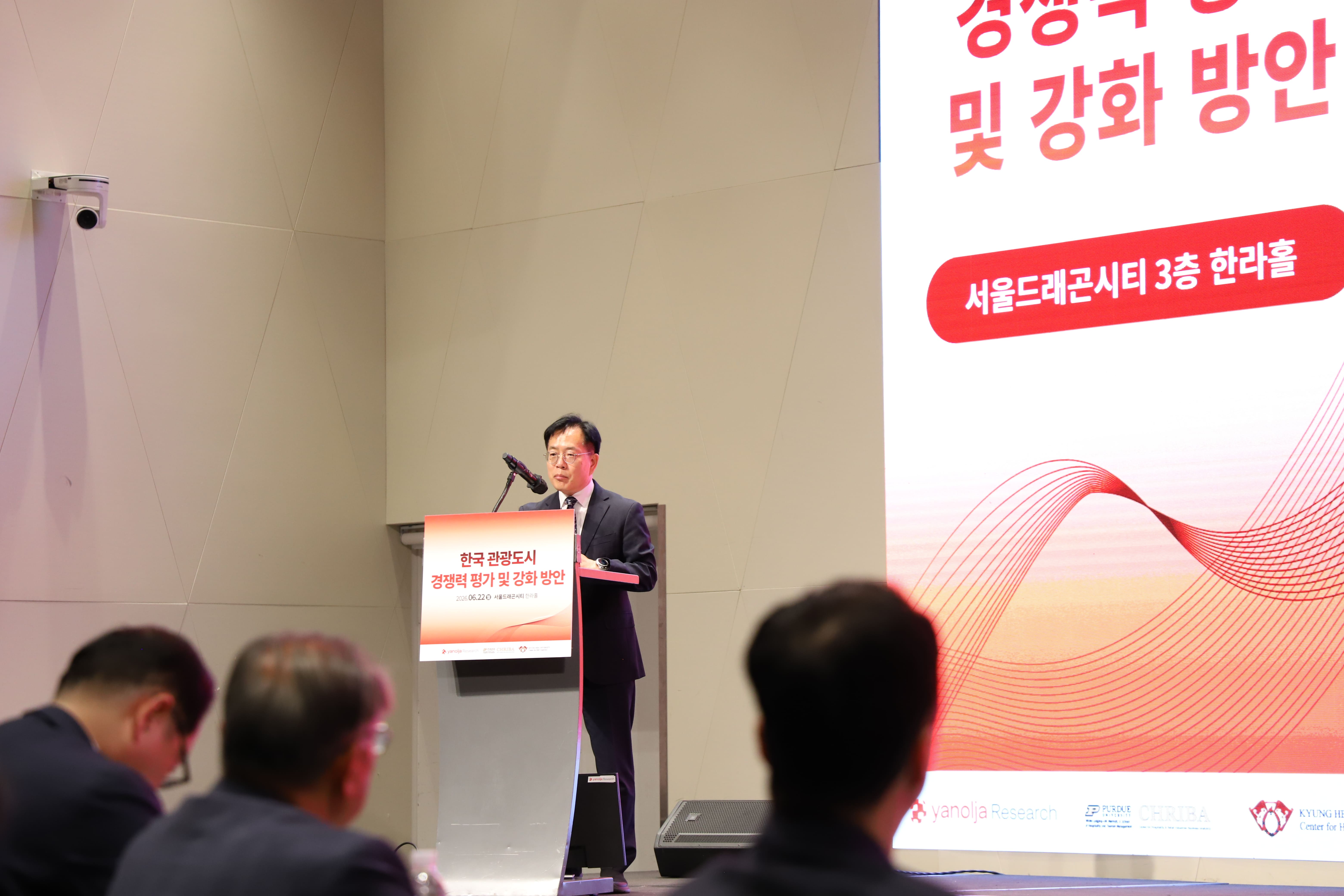
Presentation 2 | Results of the Korea Tourism City Competitiveness Assessment and Strategies for Strengthening Competitiveness
Kyuwan Choi, Professor at the College of Hotel & Tourism Management, Kyung Hee University / Director of the H&T Analytics Center
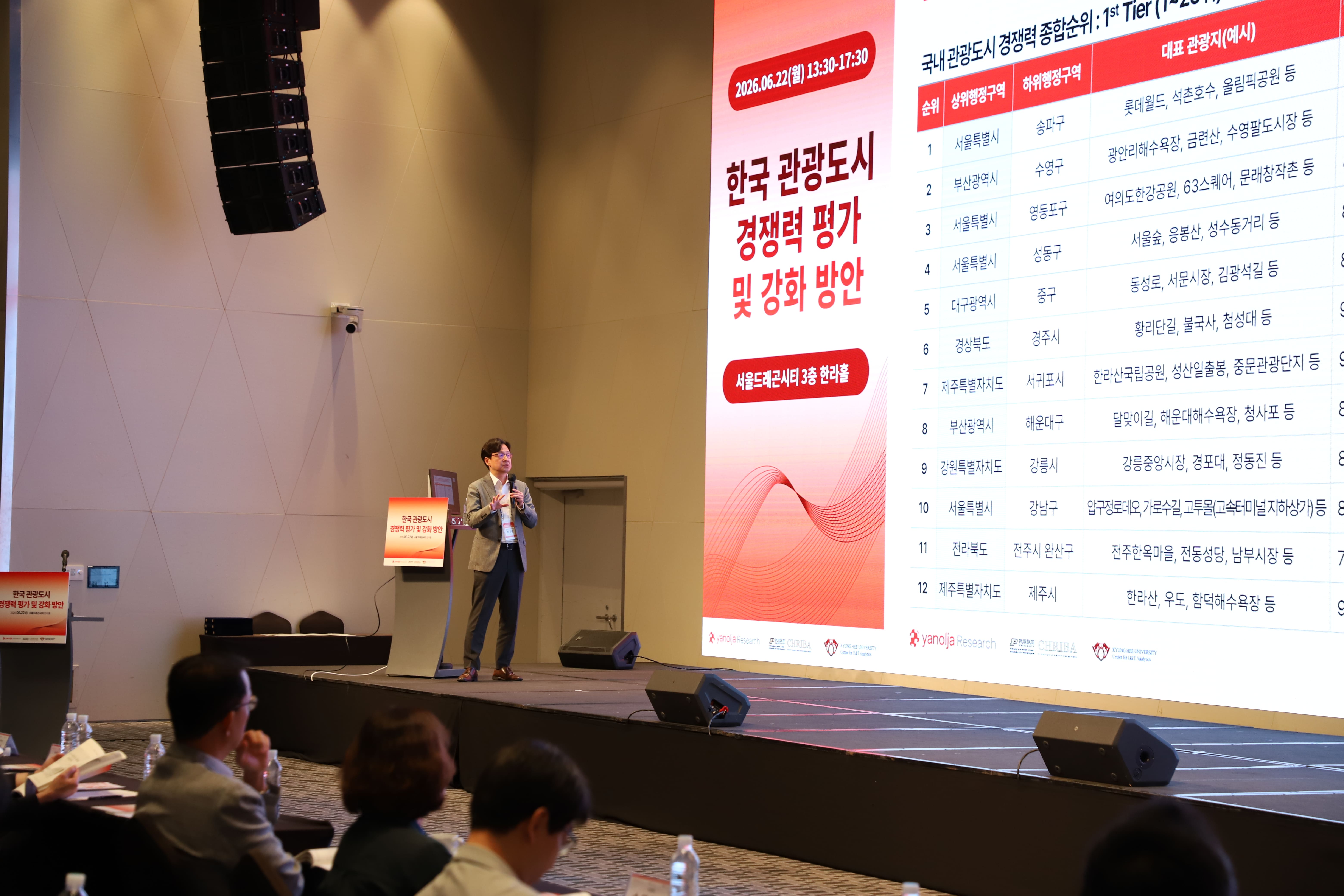
The second presentation was delivered by Kyuwan Choi, Professor at Kyung Hee University’s College of Hotel & Tourism Management and Director of the H&T Analytics Center. Professor Choi presented the results of the YCCI analysis. According to the findings, Songpa-gu in Seoul ranked first overall in tourism city competitiveness, supported by its diverse and large-scale tourism assets such as Lotte World, Seokchon Lake, and Olympic Park. Suyeong-gu in Busan ranked second, followed by Yeongdeungpo-gu in Seoul in third place. By category, Jongno-gu in Seoul, known for its rich historical and cultural assets, ranked first in Reputation, while Suyeong-gu in Busan, recognized for its drone shows and waterfront content, ranked first in Attractiveness, demonstrating distinct sources of competitive advantage.
The results indicate that tourism city competitiveness is not determined solely by the popularity of individual attractions. Rather, it is shaped by a combination of anchor tourism assets, accessibility, city image, experiential content, and consumers’ emotional responses. In particular, major metropolitan districts such as Songpa-gu and Yeongdeungpo-gu in Seoul showed strong performance based on large-scale complex tourism assets, while Suyeong-gu in Busan also demonstrated high competitiveness by combining waterfront scenery, nighttime content, and lifestyle-oriented experiences.
Professor Choi also introduced strategic directions for strengthening tourism city competitiveness. He proposed six key tasks: customer diversification, tourism city branding, optimization of tourism attraction and product portfolios, promotion efficiency, infrastructure efficiency in transportation and information systems, and the establishment of an effective governance system.
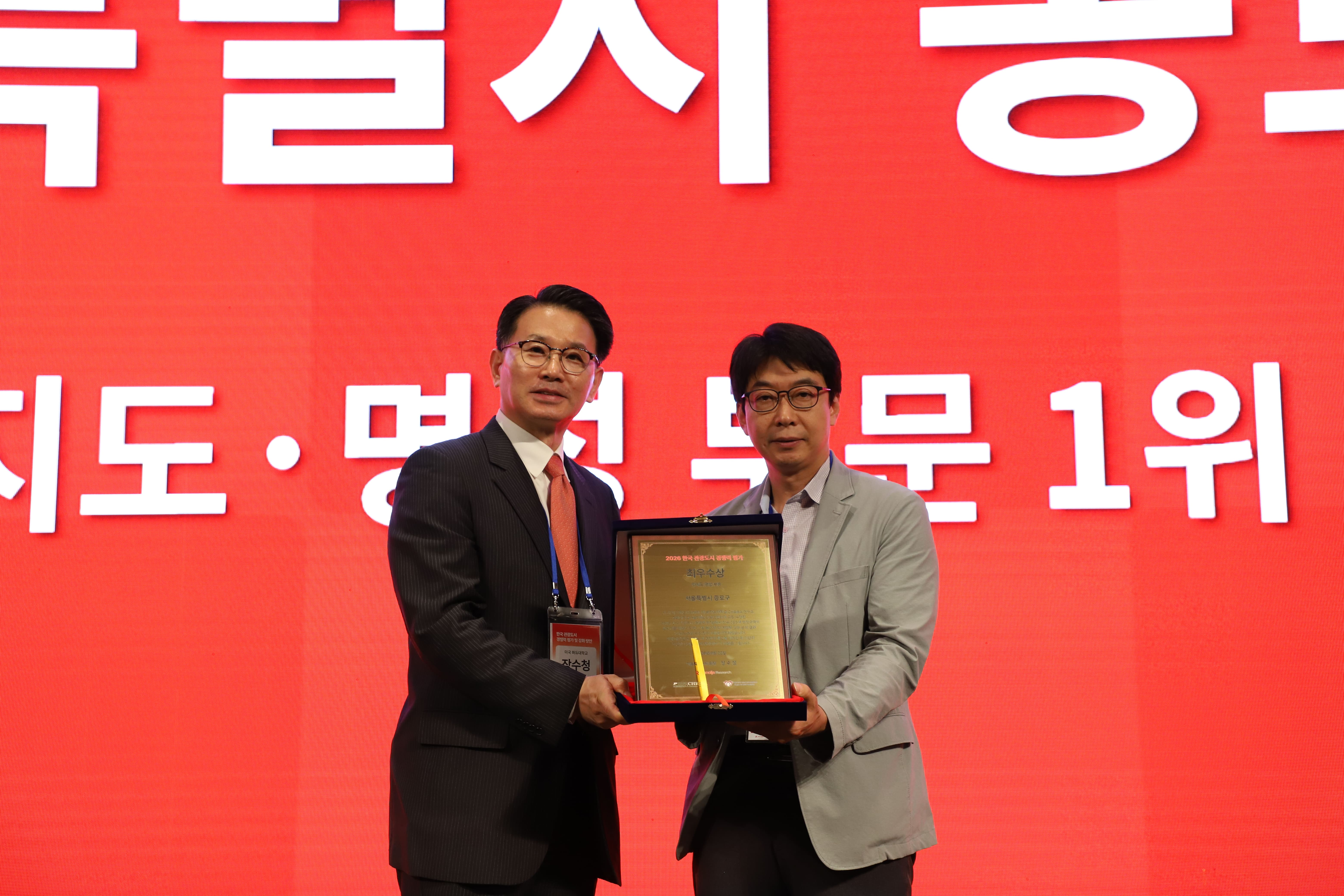
Korea Tourism City Competitiveness Awards
Following the presentations, an awards ceremony was held to recognize outstanding tourism cities based on the YCCI results. The first award, for the top-ranking city in the Reputation category, was presented to Jongno-gu, Seoul. The district was recognized for its strong public recognition and high level of social media attention, supported by its rich historical and cultural tourism assets. Chul-Soo Kim, Head of the Tourism Policy Team at Jongno-gu Office, accepted the award on behalf of the district.
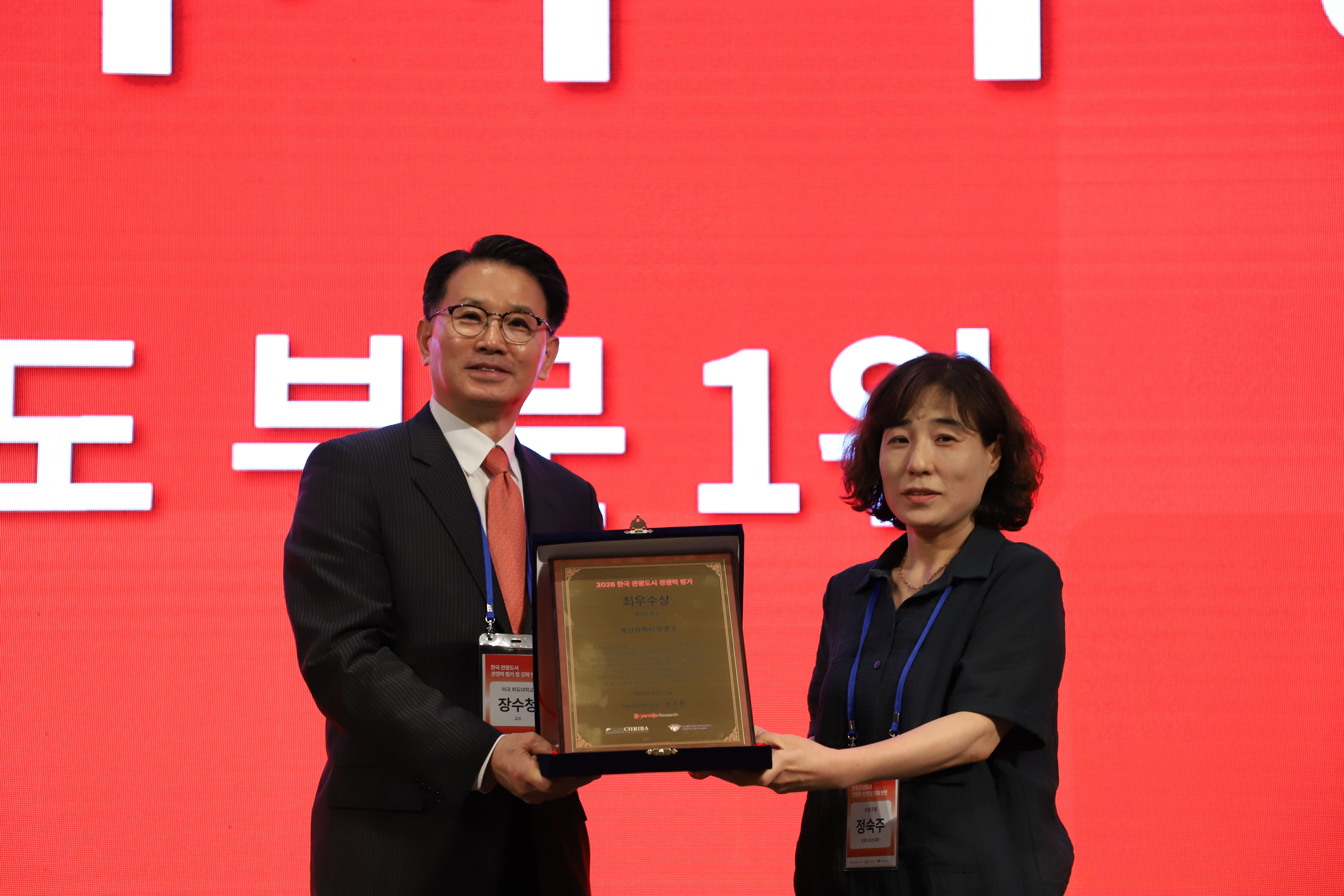
The next award, for the top-ranking city in the Attractiveness category, was presented to Suyeong-gu, Busan. Suyeong-gu was recognized for generating highly positive visitor responses through its waterfront scenery, drone shows, nighttime content, and lifestyle-oriented tourism experiences. Sook-Joo Jung, Director of the Tourism and Sports Division at Suyeong-gu Office, accepted the award.
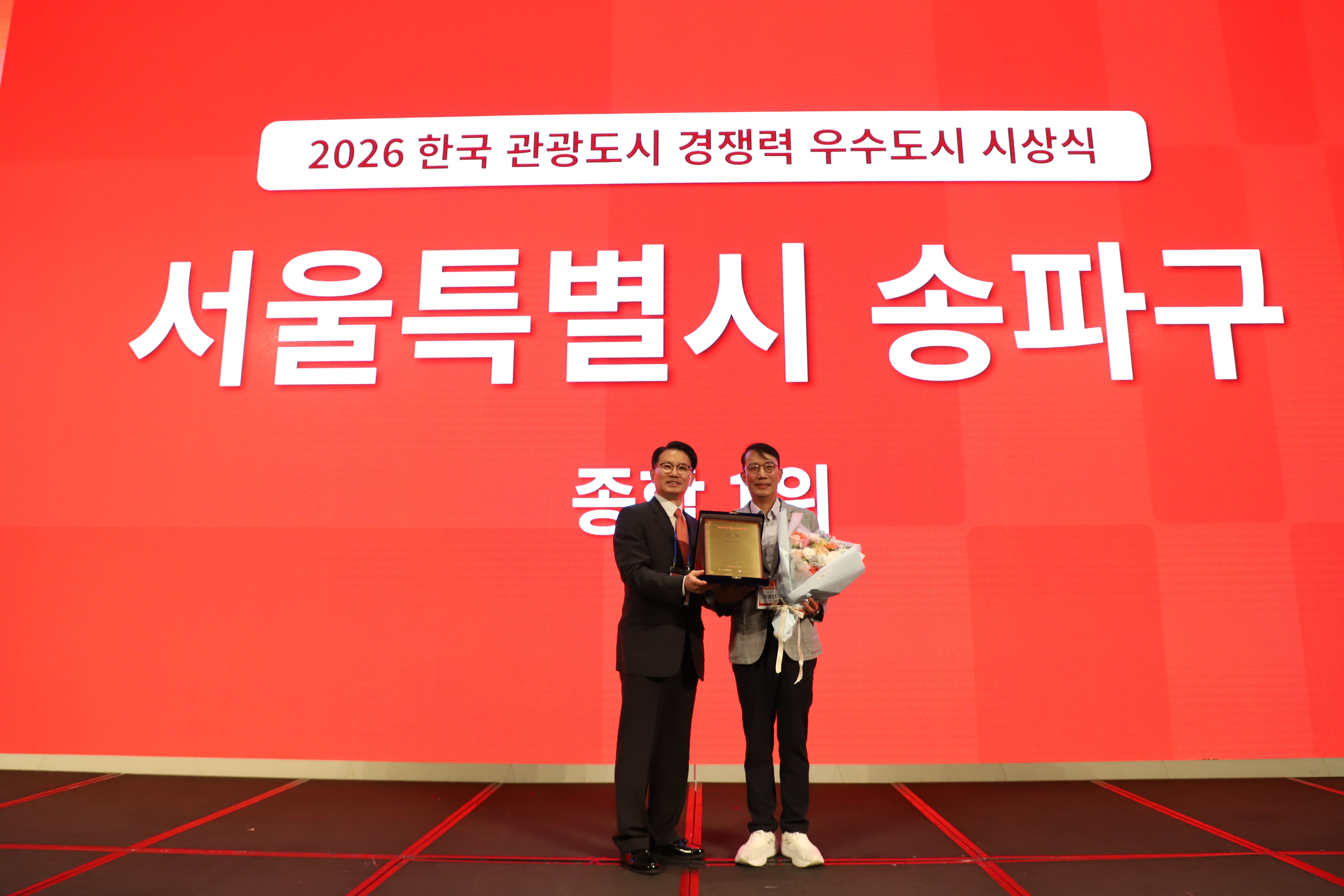
Finally, the grand award for first place in the overall ranking was presented to Songpa-gu, Seoul. Songpa-gu was recognized for its strong tourism competitiveness, supported by large-scale and diverse tourism assets such as Lotte World, Seokchon Lake, and Olympic Park. Hong-Yeon Choi, Deputy Mayor of Songpa-gu Office, accepted the award on behalf of the district.
Panel Discussion
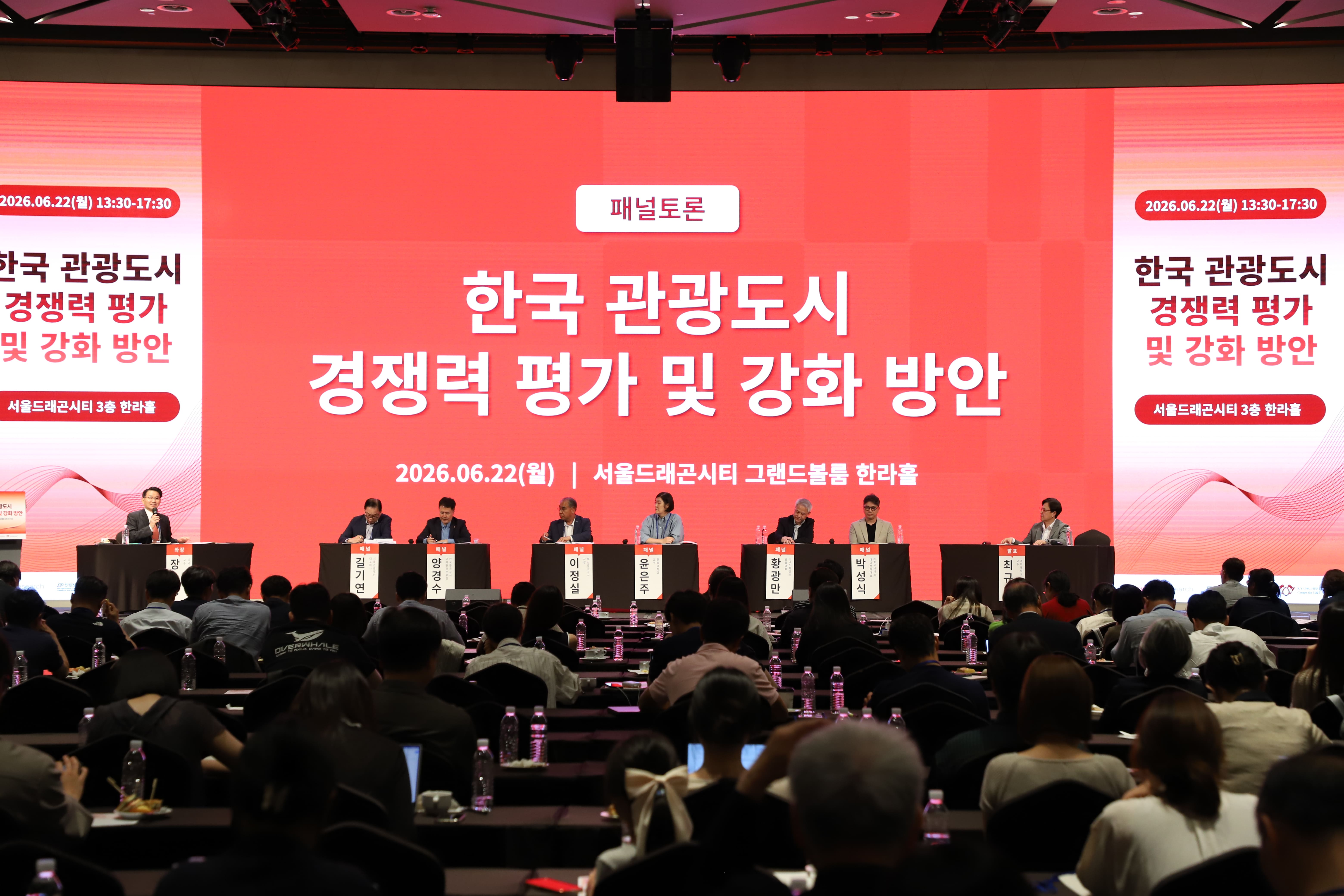
The seminar was followed by a panel discussion moderated by President SooCheong Jang. The discussion covered a wide range of topics, including the policy applications of YCCI, strategies for strengthening the tourism competitiveness of Seoul and Busan, regional dispersion strategies for the era of 50 million inbound visitors, the linkage between MICE and city branding, tourism data infrastructure and digital transformation, and collaboration models between public institutions and private platforms.
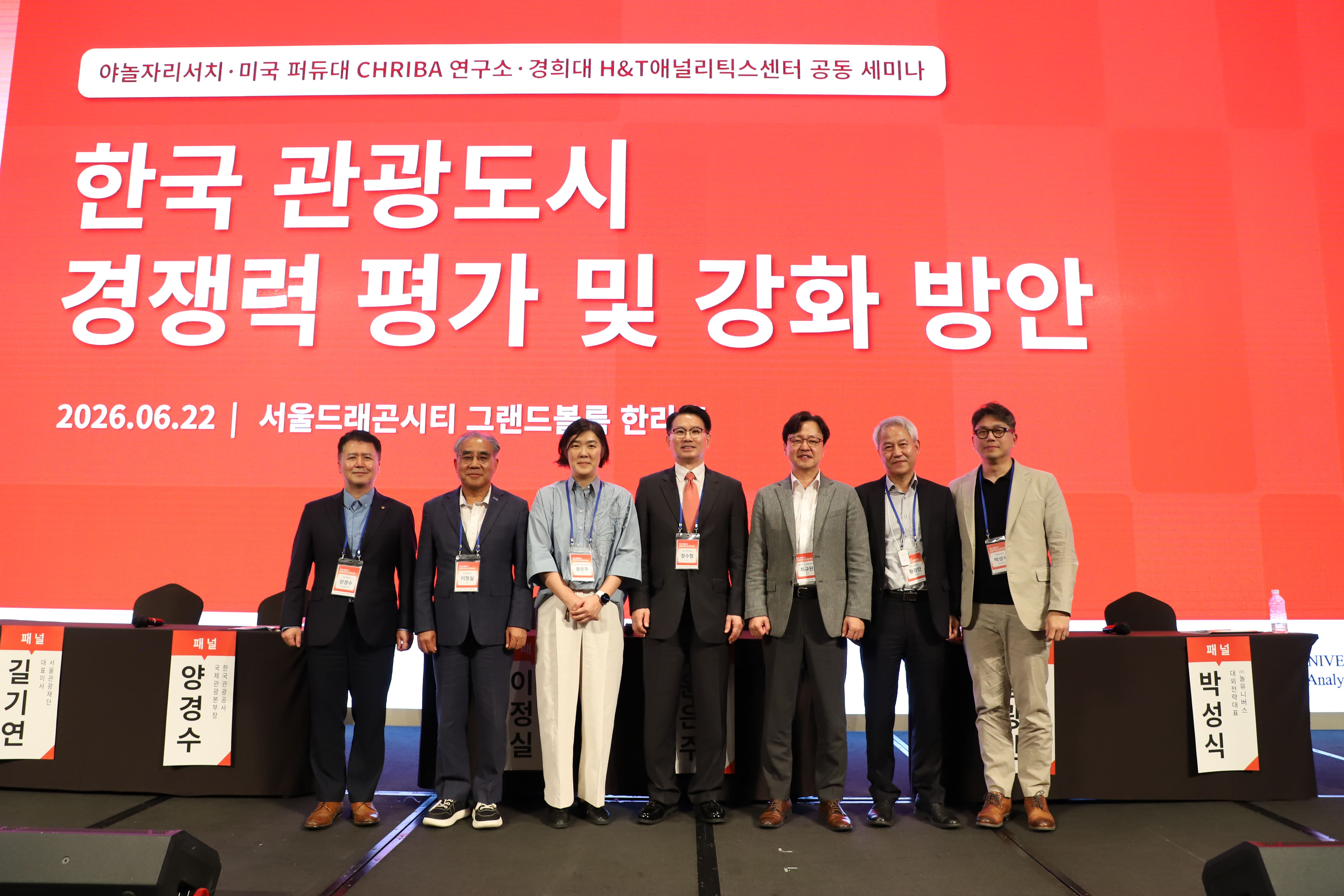
Panelists included Ki-Yon Kil, President and CEO of the Seoul Tourism Organization; Jeong-Sil Lee, President of the Busan Tourism Organization; Kyung-Soo Yang, Executive Vice President of the International Tourism Division at the Korea Tourism Organization; Eun-Joo Yoon, Professor of MICE Planning and Management at Hallym University; Kwang-Man Hwang, CEO of EZPMP; and Sung-Sik Park, Executive Vice President of External Strategy at NOL Universe.
The discussion emphasized that strengthening tourism city competitiveness requires moving beyond promotional competition among individual local governments. Instead, national-level overseas marketing, the on-the-ground execution capabilities of regional tourism organizations, the city-branding effects of the MICE industry, and the customer data and distribution channels of private OTA platforms must be organically integrated.
“The Korea Tourism City Competitiveness Index is not merely a ranking system. It will serve as a strategic map that helps local governments understand their current position in the domestic tourism market and identify where they should focus their resources and budgets going forward,” said President Jang. “We will continue to publish this index annually and contribute to the advancement and balanced development of Korea’s tourism industry based on data-driven insights.”
Yanolja Research plans to continue enhancing YCCI on an annual basis, tracking changes in the reputation, recognition, and attractiveness of Korea’s tourism cities. The index will be further developed into a data-driven strategic map that can be used by local governments, public institutions, and private platforms.
 Prev
Prev  Back
Back 